Munduk Bali Travel Guide: Explore the Islands Green Heart 💚
Our Munduk Bali travel guide with the best things to do, where to stay, eat and travel tips.
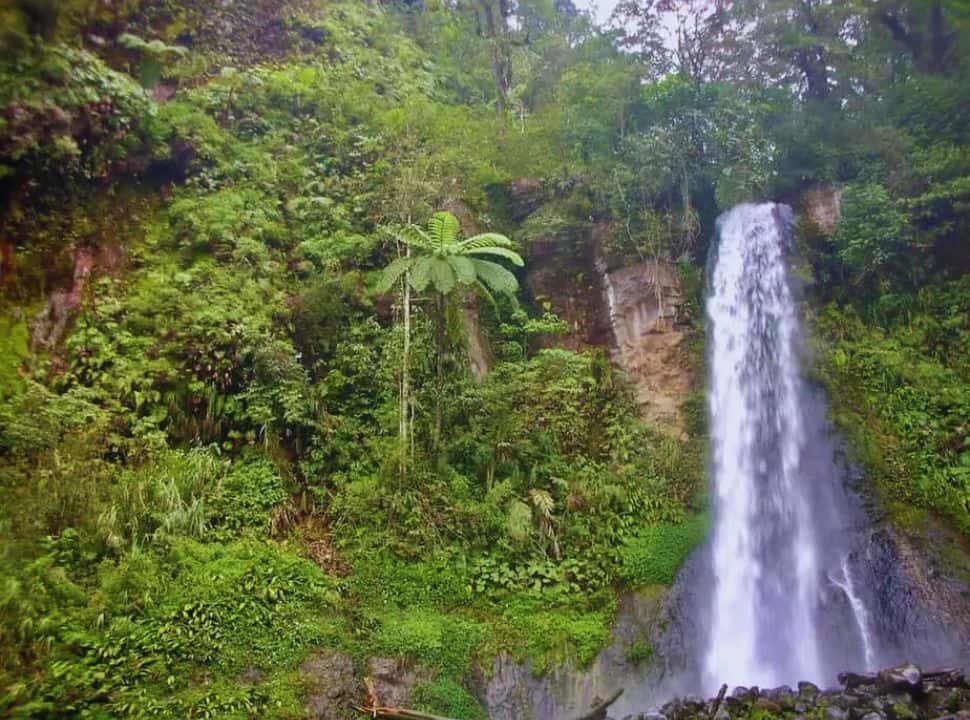
Munduk feels like the complete opposite of southern Bali—and we mean that in the best way. We usually make a beeline for the beach, but here we happily traded sandy shores for waterfalls and lush jungle.
With no main roads passing through, there are hardly any trucks or day-tour buses, and most travelers heading north take another route instead of detouring through Munduk. Forget the party crowds, boutique shops, and upscale restaurants of Seminyak or Canggu—here it’s all about nature, village life, and the rooster that becomes your sunrise alarm.
In Munduk, your daily rhythm will change: waking up early with the sun, chasing waterfalls, soaking up the stillness, and unwinding as daylight fades. It’s a peaceful escape from the heavy crowds—and one we always need badly when traveling in Bali.
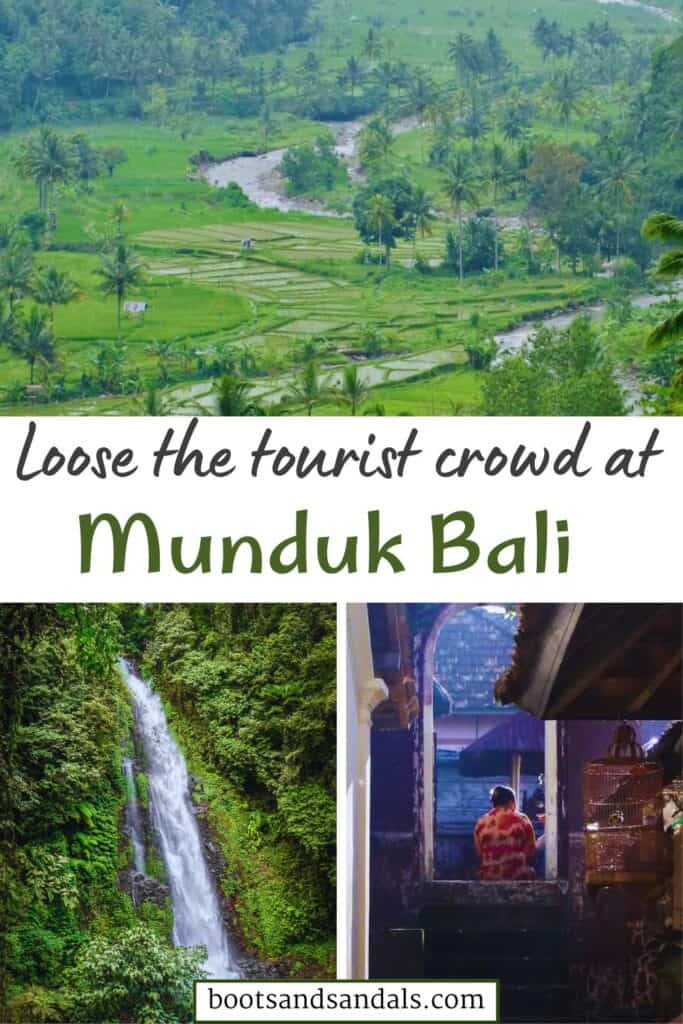
In our Munduk Bali travel guide, we’ll share the best things to do in Munduk, plus all the practical tips you need to plan your trip.
Disclaimer: This post may contain affiliate links. If you make a purchase or booking through one of our links we may earn a small commission (don’t worry, it’s at no extra cost to you).
What is Munduk Bali Like?
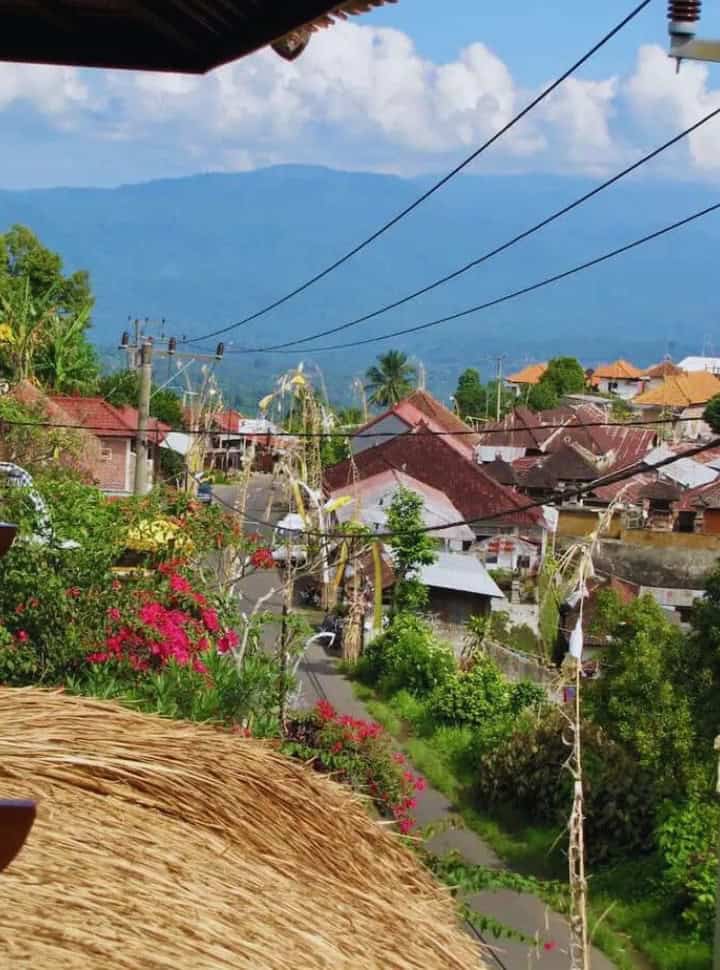
Even though Munduk is small, it’s definitely not the kind of place you can see in one quick stroll and tick off your list. The village stretches along one main road, where most of the homestays, little warungs, and shops are lined up. But the real magic? That’s hidden down the tiny side roads—and that’s where the fun begins!
Because Munduk clings to the mountain slopes, you never quite get a full view of the village from the road. Everything is so lush and green that hotels and viewpoints are tucked away behind winding paths. More than once, we found ourselves thinking, “Wait… is this really the right way?”
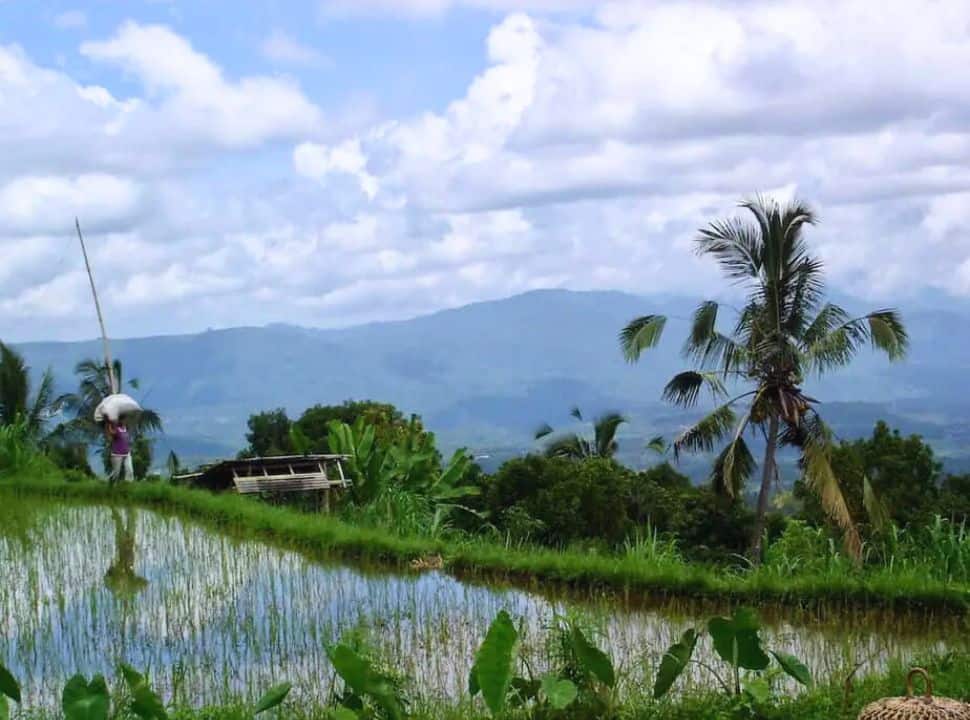
Life is different here. Most locals work with coffee, cloves, coconuts, fruit, cocoa, and rice. And as in the rest of Bali, ceremonies and traditions play a big role—don’t be surprised if you come across a procession or hear gamelan music drifting through the hills.
Tourism is slowly growing as more people catch on to this hidden gem, but what we really loved is how the community is involved in shaping it. For example, Nyoman Bagiarta from Puri Lumbung Cottages trains locals to become nature guides and helps families start their own guesthouses. It’s tourism with heart.
Want to see how you can add Munduk in a 10 day itinerary? We have created a diverse eco itinerary that will show you the best of Bali.
Is Munduk worth visiting?
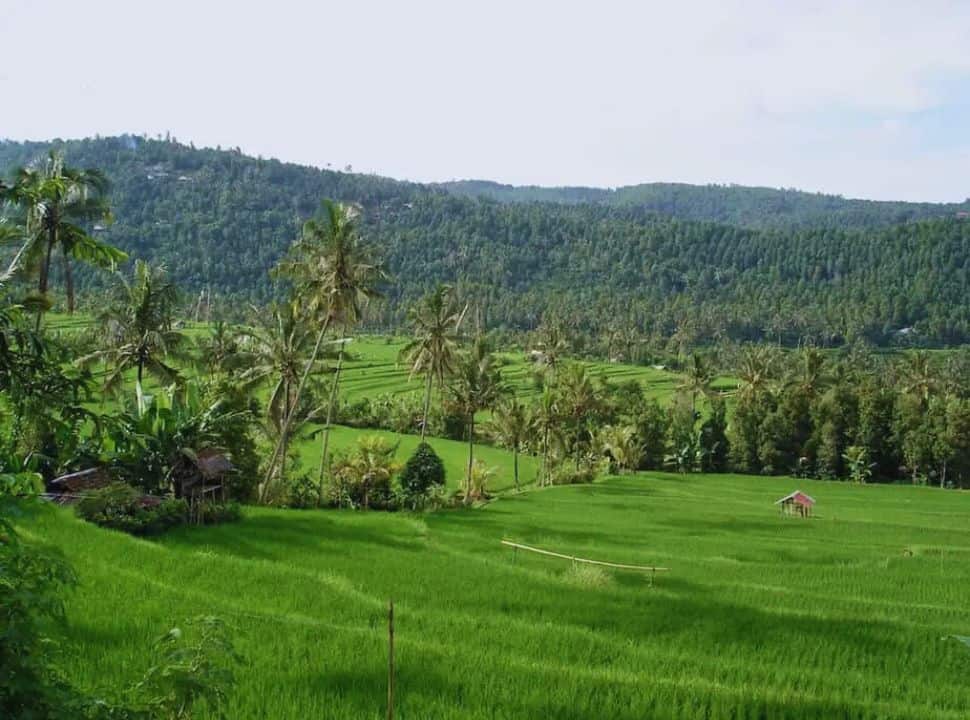
For us, the answer is an easy yes, Munduk is worth visiting! If you love eco-friendly travel, nature, and supporting local communities, Munduk is absolutely worth a spot on your Bali itinerary. The hiking here is great for all levels, and tourism is still very locally driven—which we love.
As we mentioned before, a “quick visit” to Munduk just won’t do. If you only swing by for an hour, you’ll see some rice fields and parhaps a waterfall… that’s about it. There’s so much more to this village that you’ll miss if you rush through!
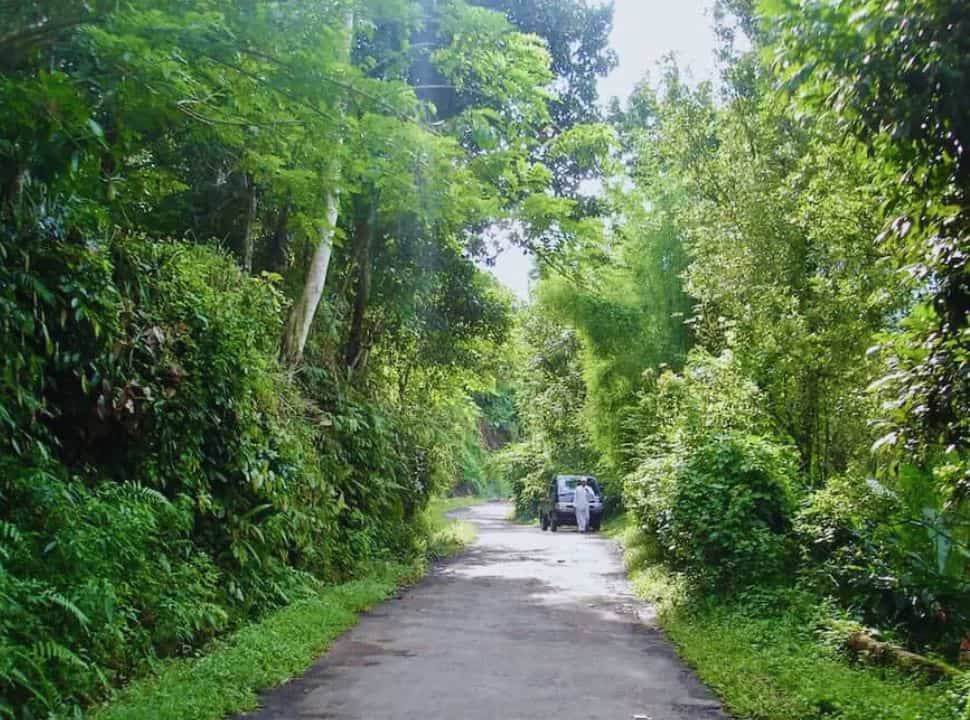
The vibe here feels just like a cosy mountain village should. People are friendly, calm, and genuinely going about their day. No pushy sales, no one trying to lure you into shops—just smiles, hellos, and daily life unfolding around you.
The air is cool and fresh, and there’s always a hint of forest in the breeze. You’ll spot hiking signs everywhere, which means that within minutes you’ll probably catch yourself thinking, “Maybe we should just go on a quick hike…” (That’s how it starts!)
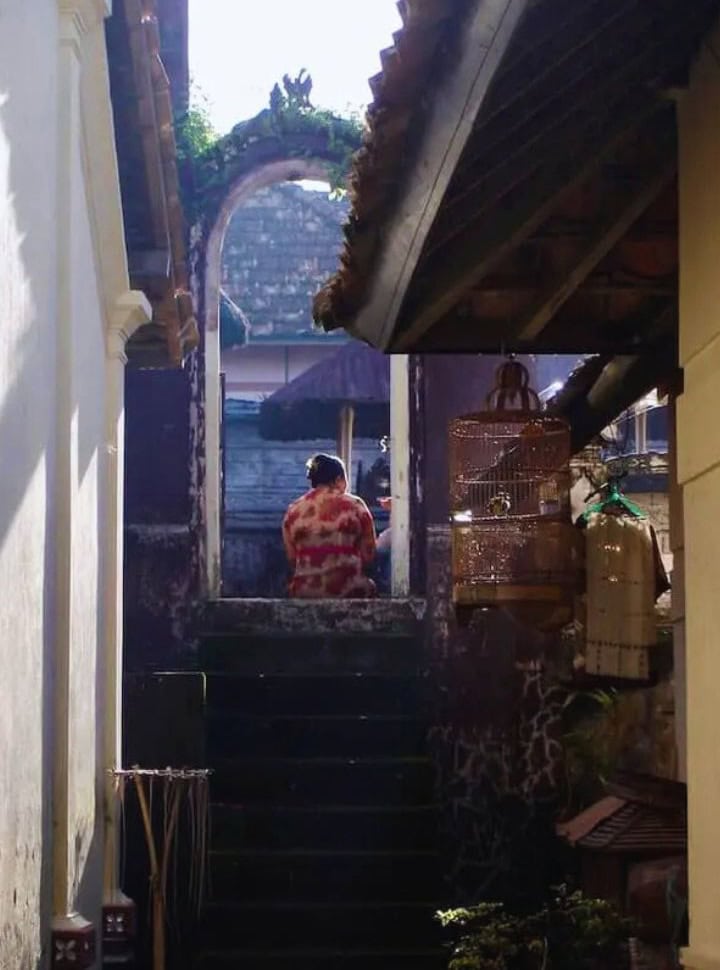
The ‘real’ Bali?
Another thing we adore about Munduk is the lack of international chain shops. Instead, life still feels beautifully traditional. Locals are busy with their ceremonies, working in the fields, and gathering in their family courtyards. It feels authentic in a way that’s getting rare in Bali.
We think Munduk is perfect for solo travelers looking for peace and nature—it’s safe, easy to navigate, and the local guides are truly trustworthy. Families with kids aged 10+ will also have a blast with all the outdoor activities.
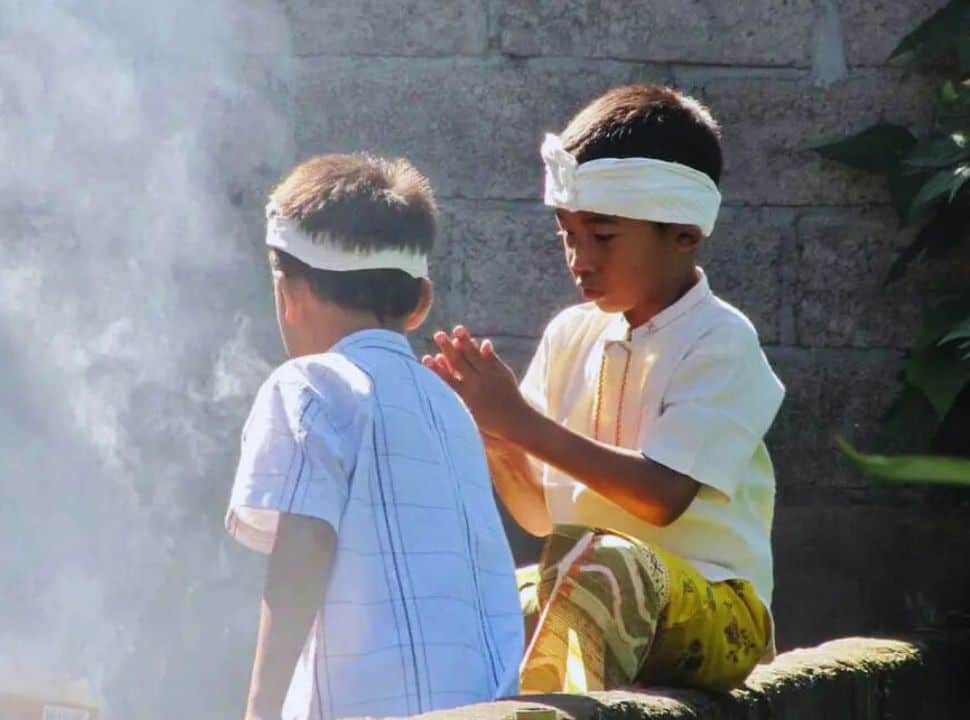
Don’t worry: if hiking isn’t your thing (or your kids’), some of the waterfalls are easy to reach by car or scooter. You can skip the trek and head straight to the refreshing pool under the waterfall for a splash and cool-down.
Not enough time in your Bali itinerary to stay in Munduk? A day trip still gives you a taste of its magic. Hop on a tour and you can cover the main waterfalls and viewpoints in one unforgettable day.
Check the options HERE for visiting Munduk Area in a day
Top 5 Things To Do In Munduk Bali
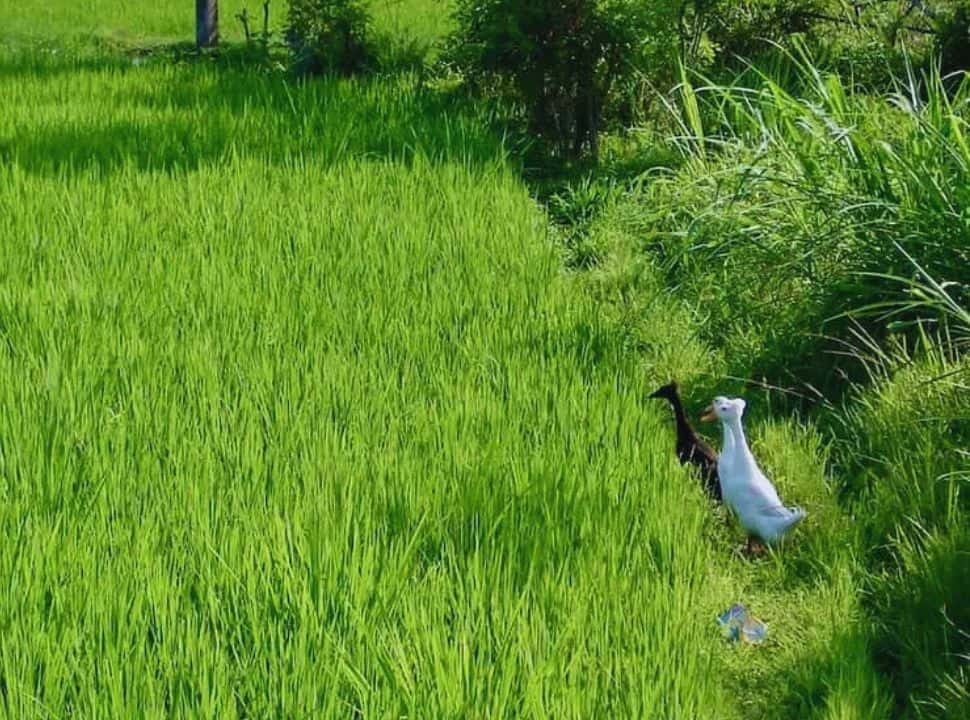
There may not be tons of attractions in Munduk, but that’s exactly the charm. This is the place to soak up mountain views, wander through rice terraces, follow jungle trails, and chase waterfalls to your heart’s content.
Expect early nights and early mornings here—you’ll likely wake up with the birds, chickens, roosters, and the rest of the village!
Munduk is a dream for nature lovers and anyone wanting a break from Bali’s busy beach towns. The hiking trails are endless and lead to waterfalls, mountain streams, plantations, shrines, tiny villages, and even hot springs.
👉 Tip: head out early before the sun gets too strong. In rainy season, avoid hiking between 1 pm and 4 pm—based on our experience, that’s when the heavens usually open. But do ask around because local weather has a mind of its own!
1. Hike to the Munduk Waterfalls
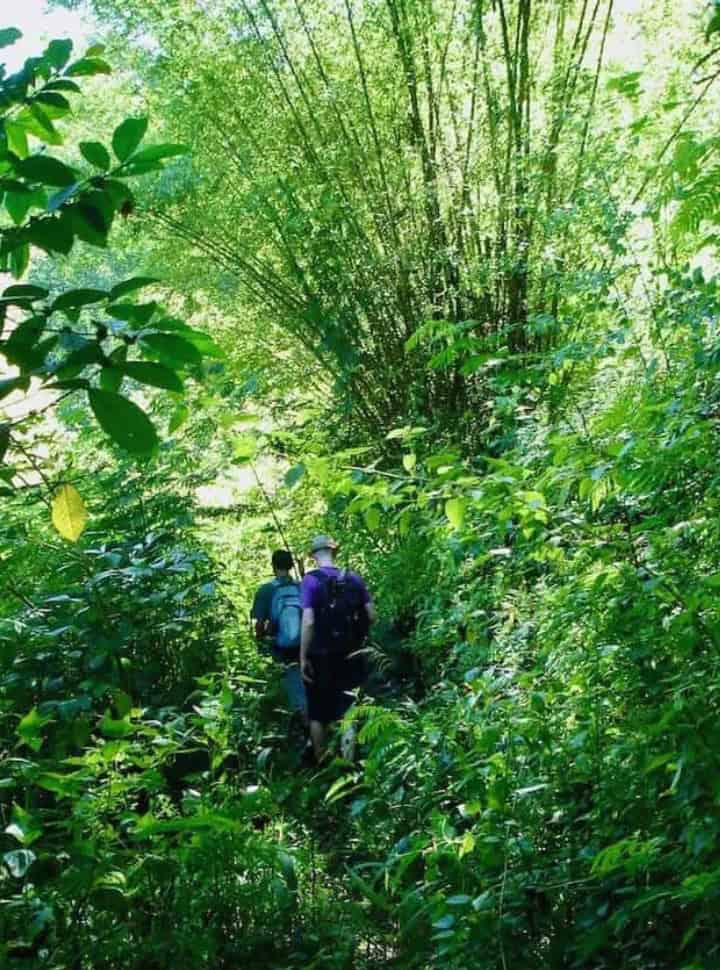
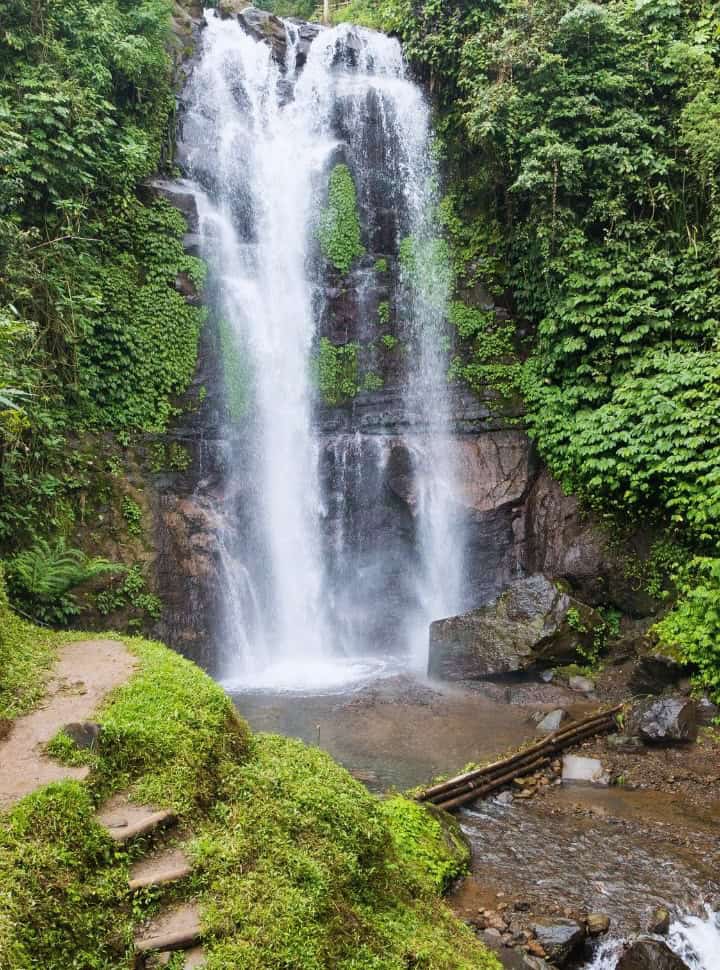
If there’s one thing Munduk does exceptionally well, it’s waterfalls. And not just one—but a whole string of them, all connected by scenic jungle paths, stairways, and the occasional warung offering coconuts and fresh juice as a reward.
Munduk 4-Waterfall Trek
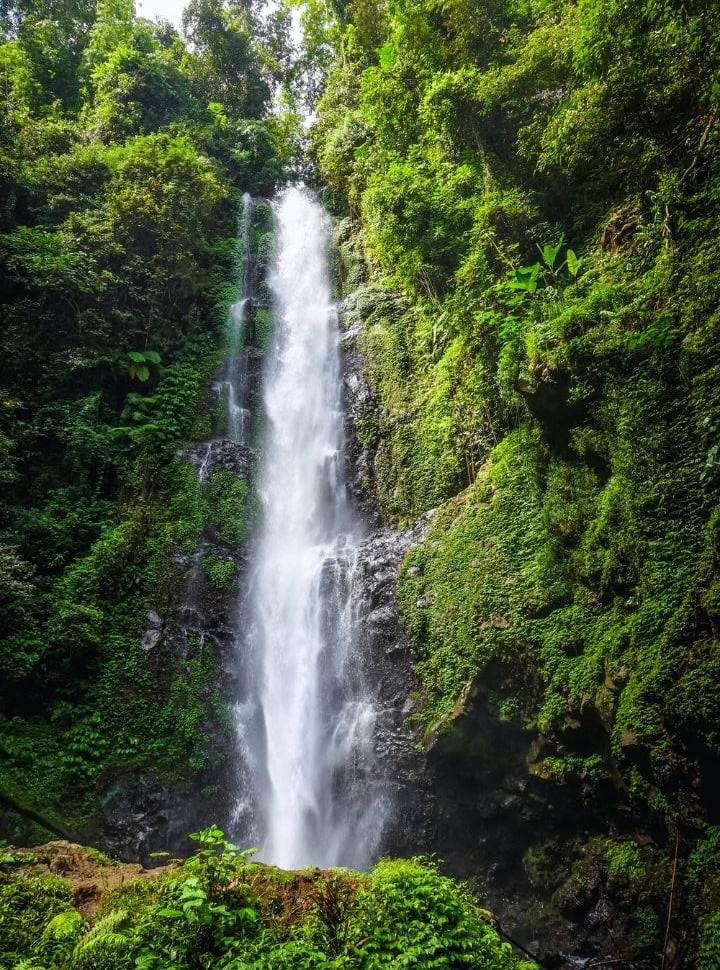
The most popular way to chase waterfalls here is the Munduk 4-Waterfall Trek, a beautiful half-day adventure that takes you to Labuhan Kebo, Melanting, Munduk (also called Red Coral), and Golden Valley Waterfall—all on foot.
What to Expect
- Duration: 4–6 hours (depending on how often you stop to swim, snack, or take 200 photos… which you will)
- Difficulty: Moderate — there will be stairs
- Best for: Nature lovers, kids 10+, and waterfall fanatics
- Starting Point: Around Melanting Cottages or Munduk village
The trails are a mix of paved paths, jungle tracks, and plenty of steps. Signs make the route easy to follow, and you’ll stumble upon small cafés and warungs where you can fuel up on fresh juice, coffee, or banana fritters with a view.
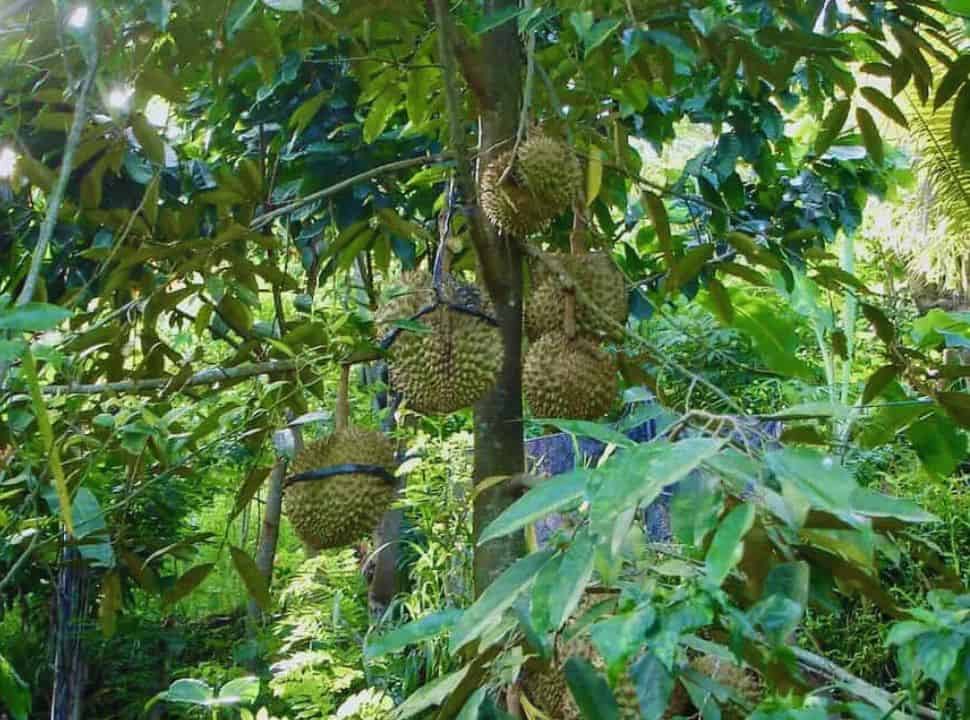
The 4-Waterfall Route (In Order)
1. Labuhan Kebo Waterfall
A great warm-up fall reached via a paved path through lush greenery.
Entrance fee: ~10,000 IDR
Perfect for those “first waterfall of the day” photos.
2. Melanting Waterfall
Continue along the trail and get ready for some stair action down into the valley. It’s powerful, refreshing, and the perfect place to cool down in the mist.
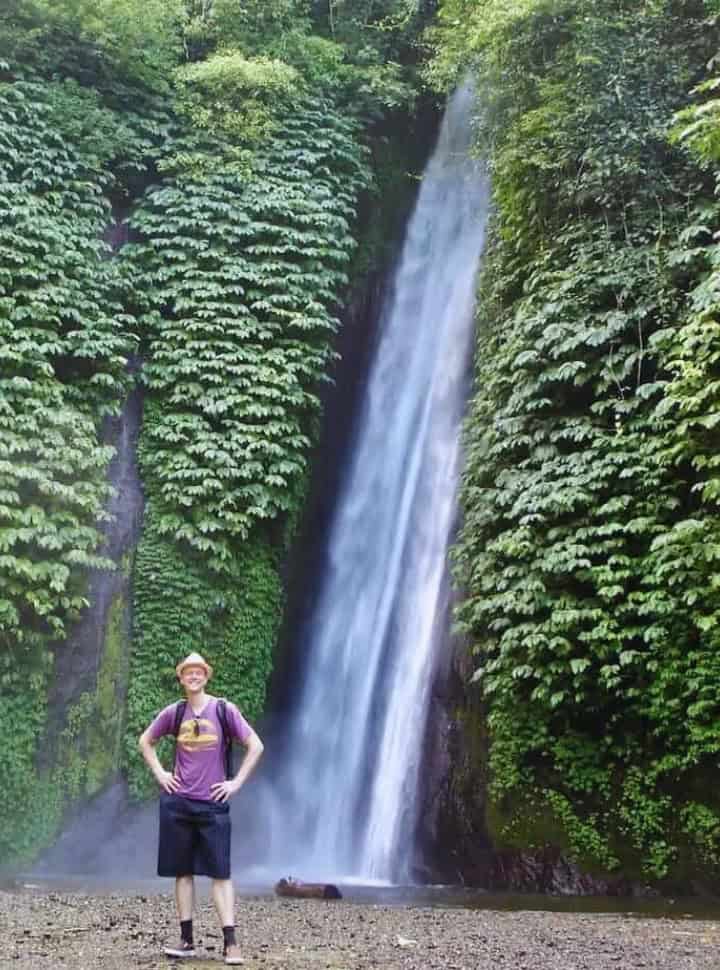
3. Munduk Waterfall (Red Coral)
The most famous of the four—and usually the busiest. A tall, elegant cascade framed by greenery, and the kind of place you’ll want to sit for a while just listening to the water crash down.
4. Golden Valley Waterfall
A peaceful final stop where you can unwind at the nearby eco-café overlooking the falls. Coffee with waterfall views? Yes, please.
How Long Does It Take
- Classic 4-Waterfall Loop: ~4 hours
- Leisurely version with swims + snacks: 5–6 hours
- Speedy version: Some claim 3 hours… but where’s the fun in rushing?
If you only have a morning or afternoon to spare, these four are your best combo.
There are many organized trips that will take you to these and/or other waterfalls, giving you the opportunity to swim and enjoy the surroundings but also to learn more about the coffee plantation, rice cultivation and Balinese life.
If you want to leave the marked trails behind—trek through the jungle, work up a sweat, and swim in waterfalls most travelers never see—book a waterfall tour. Local guides take you further off the beaten path for a real adventure.
Fair warning: it’s for those who don’t mind a challenge (and a good dose of mosquito repellent). But the reward at the end makes it all worthwhile.
Book a jungle waterfall tour HERE
2. Do the Munduk Loop Trek
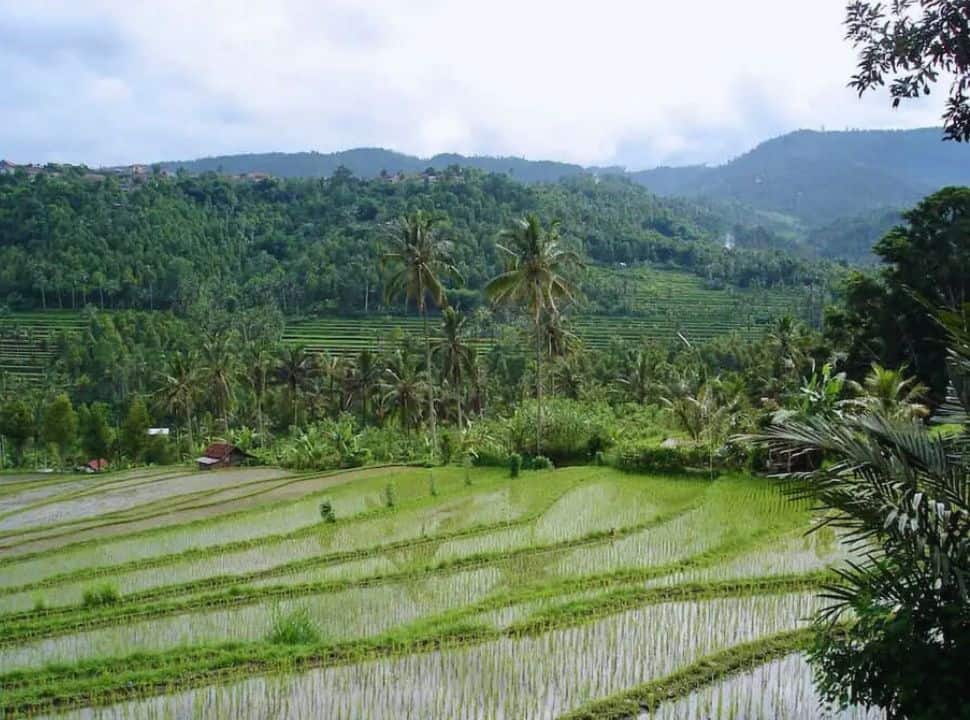
If you want a beautiful walk without disappearing deep into the jungle, the Munduk Loop Trek is perfect.
It’s a lovely route through rice fields and narrow village paths where cars can’t go—just you, locals, birds, and sweeping views.
A simple route to follow:
- Start at Meme Surung Guesthouse or Guru Ratna Guesthouse on the main road
- Walk west and turn left at Jalan Pura Puseh
- Follow the signs to Made Darma Homestay and Puri Sunny Cottages
- Check Google Maps and follow the path to Dayang Rice Terraces
- Stay on the path and it loops you back to the main road
You’ll pass the warung Tea Party—ideal for a break, tasty snacks, or well-deserved cold drink.
3. Visit the Largest Banyan Tree in Bali
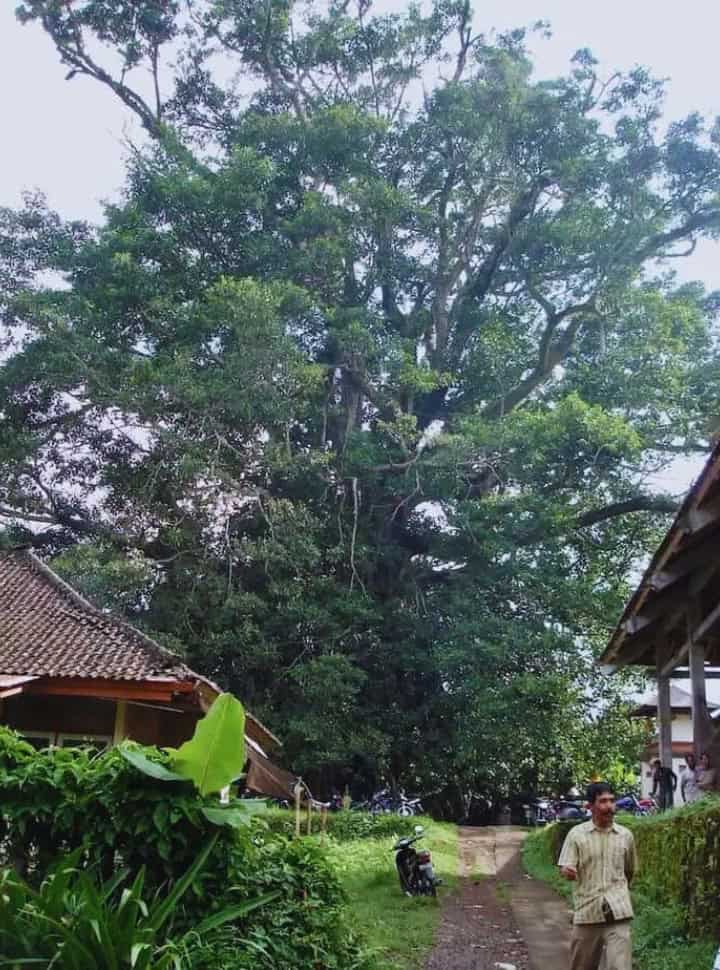
Banyan trees are considered sacred in Bali, and you’ll see them near temples offering shade and a sense of calm. But the one near Munduk? It’s the largest in Bali—and it looks like it’s trying to embrace the entire temple complex with its roots.
It’s super tempting to climb into the twisted, magical-looking roots, but please resist. This tree is ancient and precious, and it needs protection to survive for generations to come.
4. Join a Cooking Class
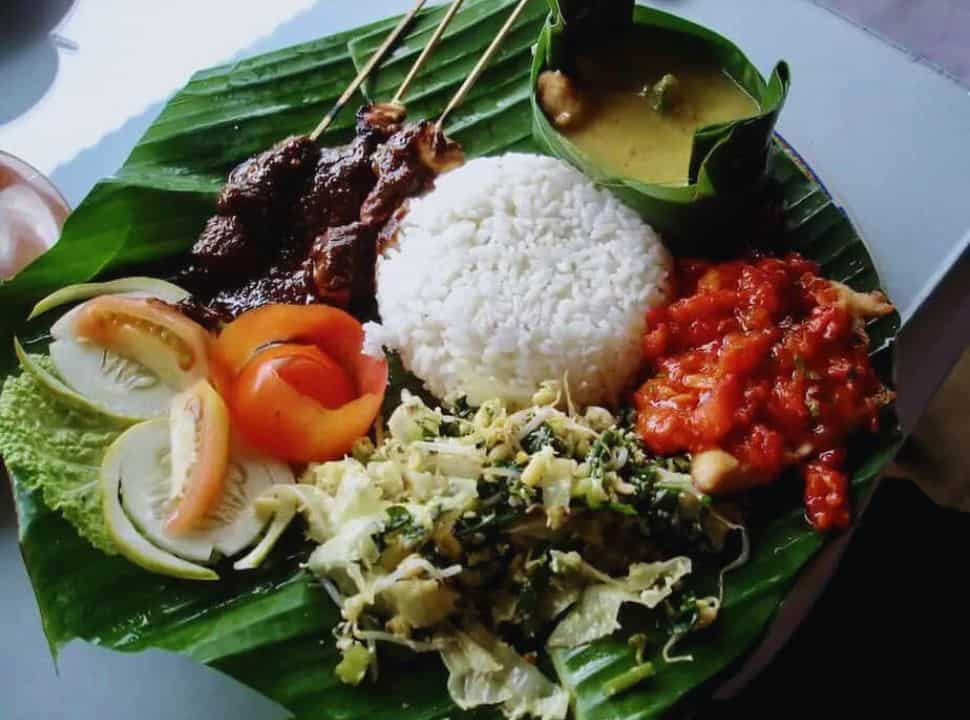
If you love Balinese food (and who doesn’t?), a cooking class in Munduk is a must. You’ll learn the secrets behind dishes you’ll want to recreate at home—like the delicious Nasi Campur.
Classes usually last around three hours and take place in a relaxed, home-style setting. Along with learning to cook, you’ll get a glimpse into everyday Balinese life—and kids are welcome to join too.
A cooking class in Munduk is the perfect way to discover Balinese food and culture—and enjoy a delicious meal afterwards. Book your class HERE.
5. Enjoy a Cup of Local Coffee
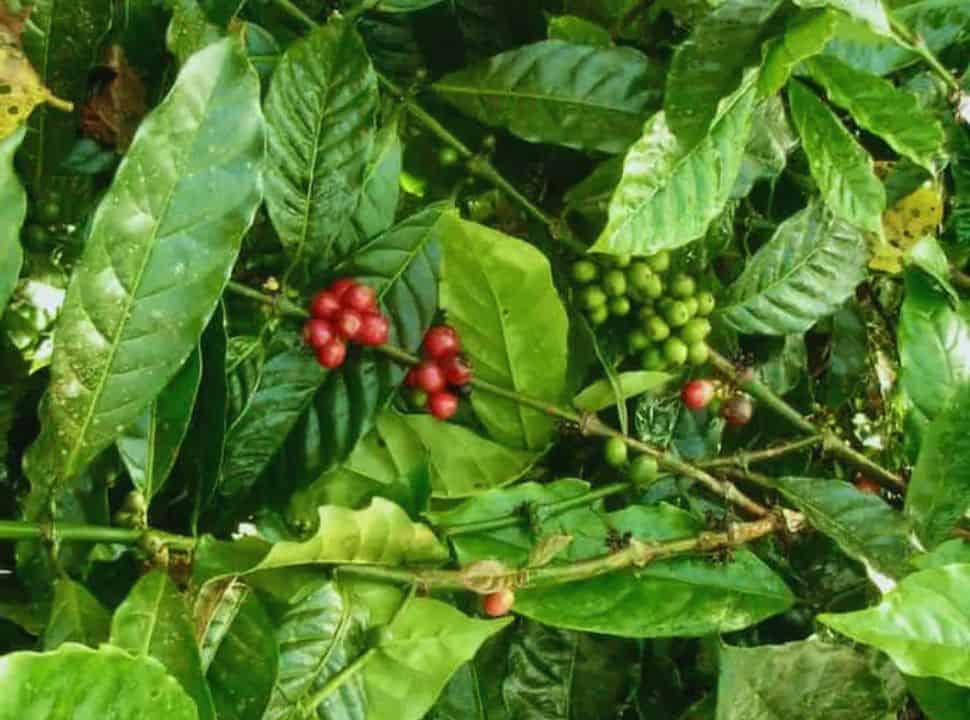
Coffee is a key source of income for farmers in Munduk, and you’ll find plenty of places to learn (and taste!) more.
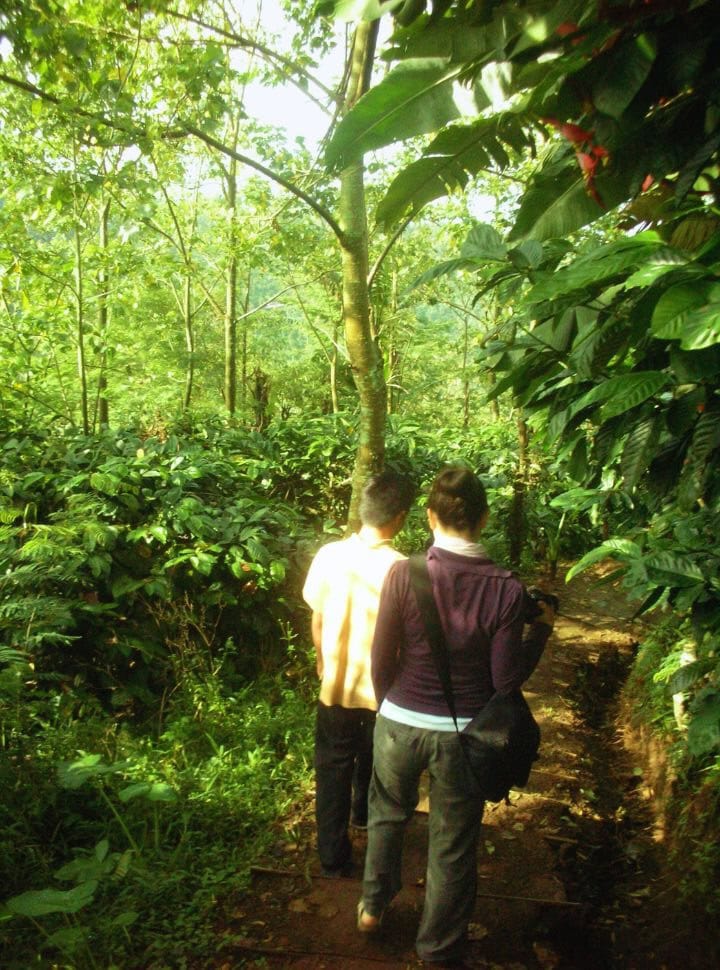
At Munduk Moding Plantation, they’ve revived old plantations in an eco-friendly way and increased yields through organic practices. You can join a tour to learn all about it.
Another lovely spot is Golden Valley Breeze Munduk Eco Café, (close to the waterfall) where the owner can walk you through the coffee-making process—followed by a fresh cup with a waterfall view. Not a bad way to spend the afternoon.
You’ll also hear about Kopi Luwak here—the “famous” civet coffee made from beans collected from the droppings of the Asian Palm Civet. While it sounds exotic, the demand has led to animal cruelty and caged civets. Many Kopi Luwak products are not even authentic.
So our friendly advice: skip Kopi Luwak and choose delicious, cruelty-free local coffee instead.
Best Day Trips & Nearby Things to Do Around Munduk
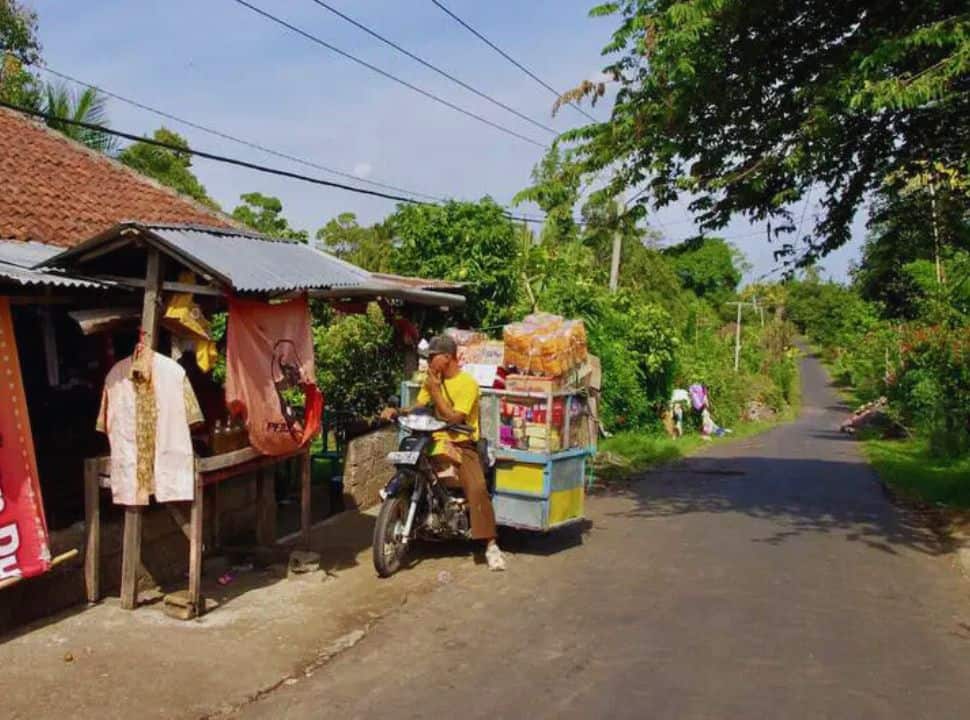
Munduk is not only a nature lover’s dream—it’s also a great base for exploring North Bali. You can hop on a scooter or arrange a private driver for easy day trips.
The main roads between Bedugul, Singaraja, Lovina, and Gilimanuk can get busy, but the smaller roads are scenic and peaceful, winding through rice fields, mountain forests, and tiny local villages.
6. Soak in the Banjar Hot Springs
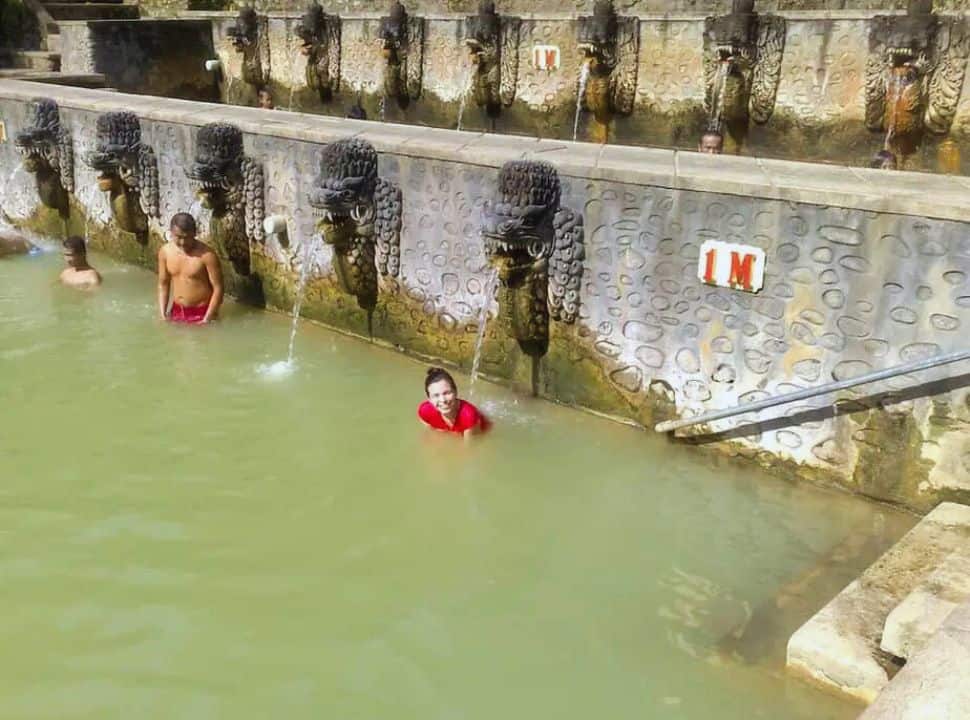
Munduk doesn’t have hot springs of its own, but there’s a lovely one just 45 minutes away drive away. Head towards Lovina and turn right at Bestala Village to reach Banjar Hot Springs.
Relax in the warm volcanic pools with stone statues spouting water into the baths—pure bliss after a hike!
📍 Open: 8am–6pm
💰 Entrance: Around Rp 40,000
🚫 Avoid Sundays if you don’t like crowds.
👉 Add Banjar Hot springs to a day trip to Lovina (see next on the list!)
7. Discover the Waterfalls Near Munduk
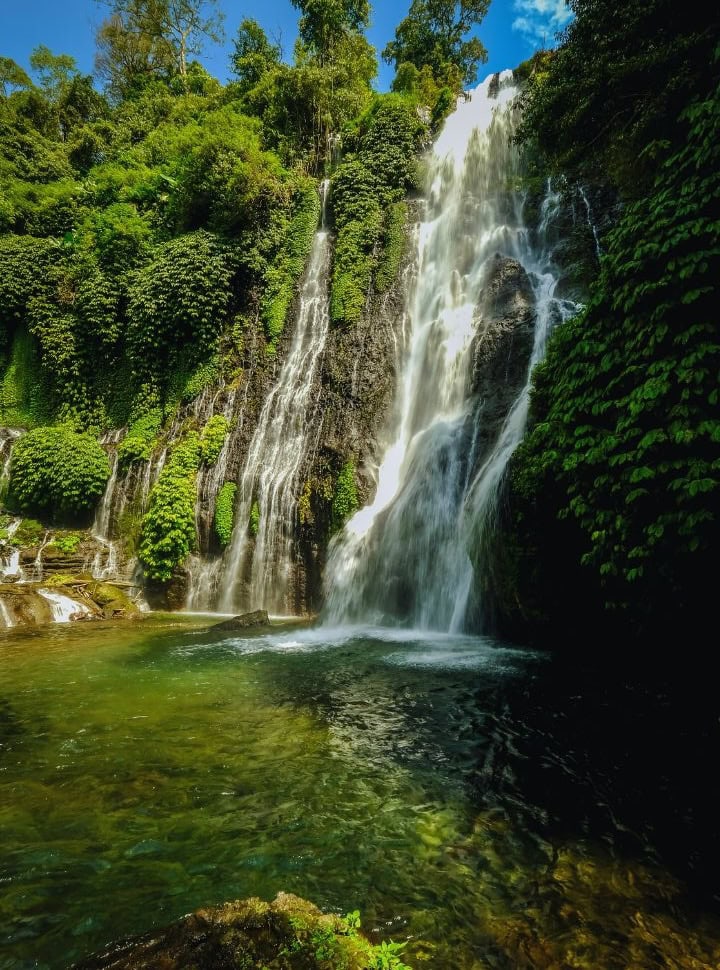
If you want to extend the adventure over multiple days, there are more waterfall gems nearby—but they require separate trips, as they’re not part of the 4-waterfall loop.
Here are the biggest names worth adding to your Munduk itinerary:
| Waterfall | Distance from Munduk | Why Go |
|---|---|---|
| Banyumala Twin Waterfalls | ~30 min | Two falls side-by-side, gorgeous natural pool |
| Banyu Wana Amertha Waterfall | ||
| Sekumpul Waterfall | ~1 hr | Bali’s tallest + most impressive waterfall |
| Fiji Waterfall | Near Sekumpul ~1 hr | Usually combined with Sekumpul—beautiful triple falls |
8. Take a Day Trip to Lovina Beach
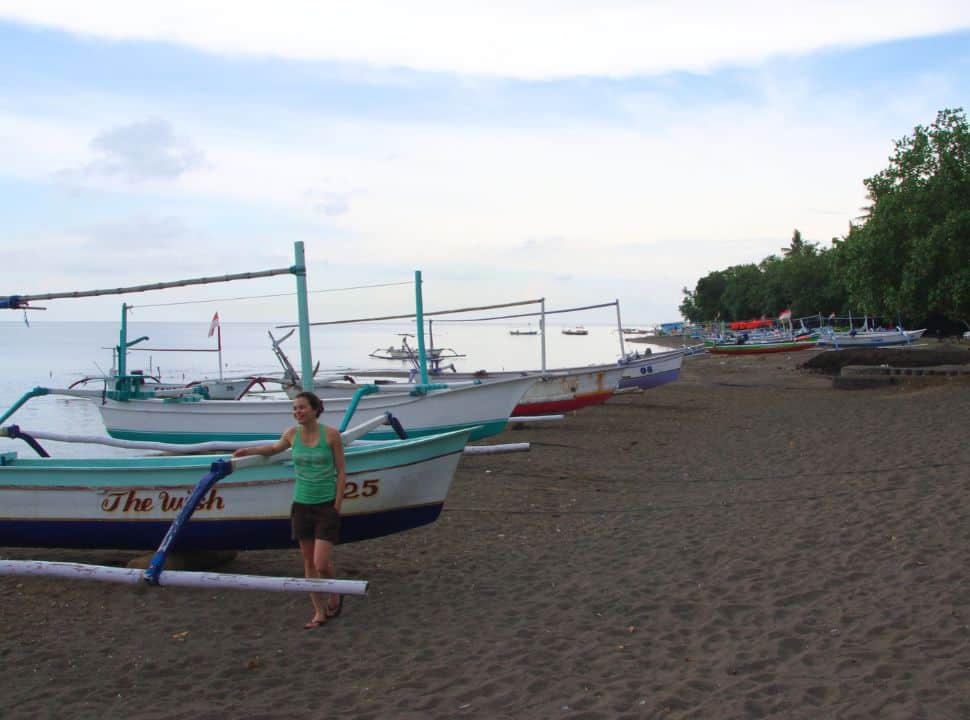
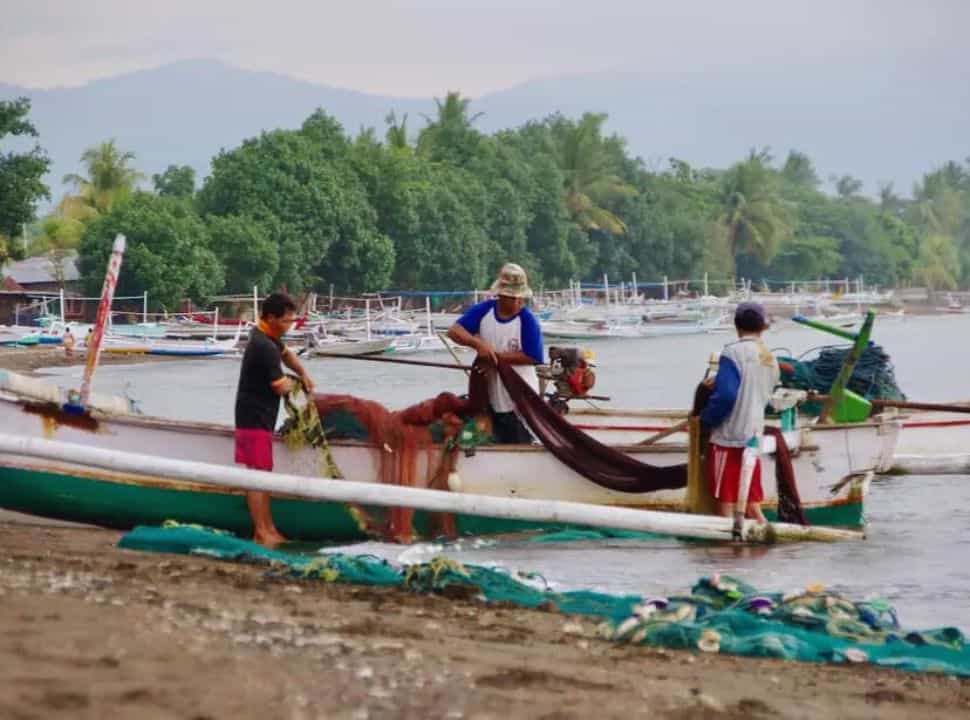
Only 45 minutes from Munduk, Lovina Beach is perfect if you’re craving sand and sea for a day. The beach has black volcanic sand—not your typical tropical postcard—but it’s clean, calm, and great for swimming.
While we usually recommend staying at least one night to soak in the vibe, a day trip from Munduk will give you enough to get an impression of this beach town.
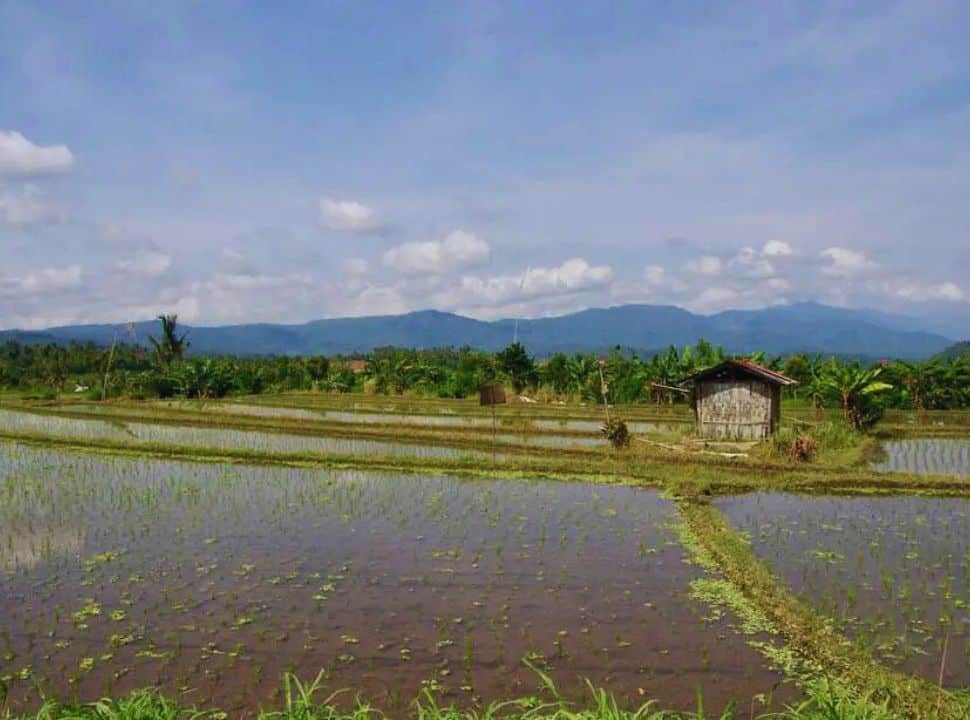
👉 Route tip:
Take the eastern road from Munduk towards Singaraja for a stunning downhill drive. It adds about 30 extra minutes, but it’s a scenic detour that road-trip lovers will appreciate.
Leave early to avoid traffic.
Make at least one stop at one of the many waterfalls along the way such as:
- Banyumala Waterfall
- Git Git Waterfall
- Aling Aling Waterfall
After your visit to Lovina head back to Munduk via Banjar and take a moment to soak in the Banjar Hot Springs. (only if it’s still light—these roads are not night-friendly!)
9. Visit Bedugul & Lake Bratan
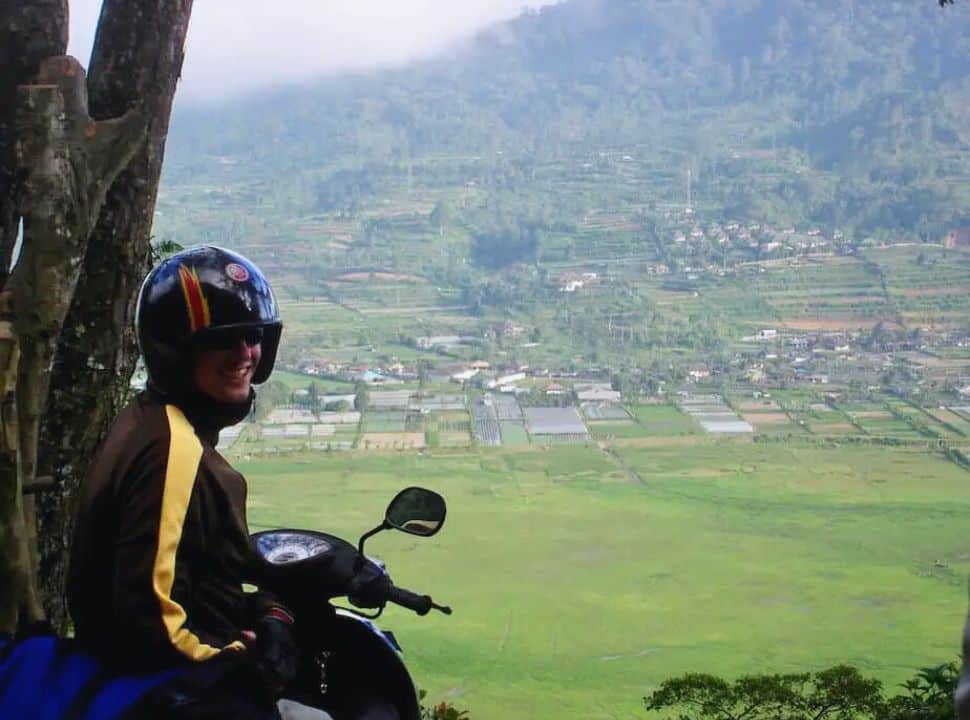
Bedugul is an easy and lovely trip from Munduk. We recommend visiting two highlights:
Ulun Danu Beratan Temple
The most important temple in the region—and one of Bali’s most iconic images. Sitting right on Lake Bratan, it looks magical when the mist rolls in. This temple is vital to Bali’s Subak rice irrigation system, as the lake feeds the surrounding fields.
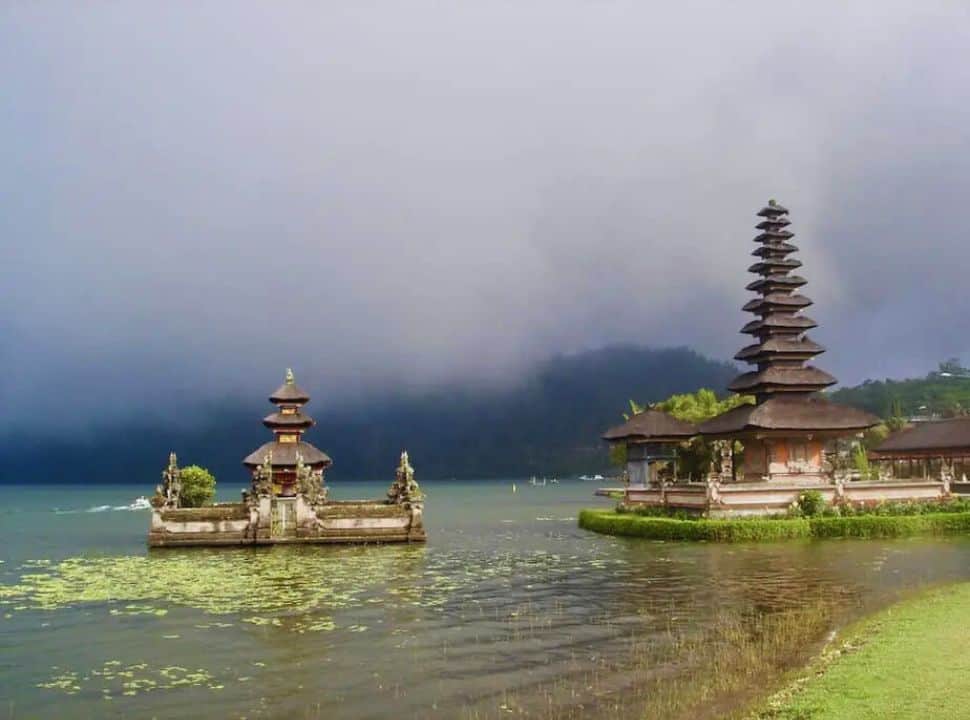
Bali Botanical Garden
Just a short drive further. A peaceful place to stroll, picnic, or enjoy Bali’s cooler highlands. On the way, you’ll pass stalls selling fresh strawberries and corn. Perfect moment for a snack!
The Instagram Famous Handara Gate
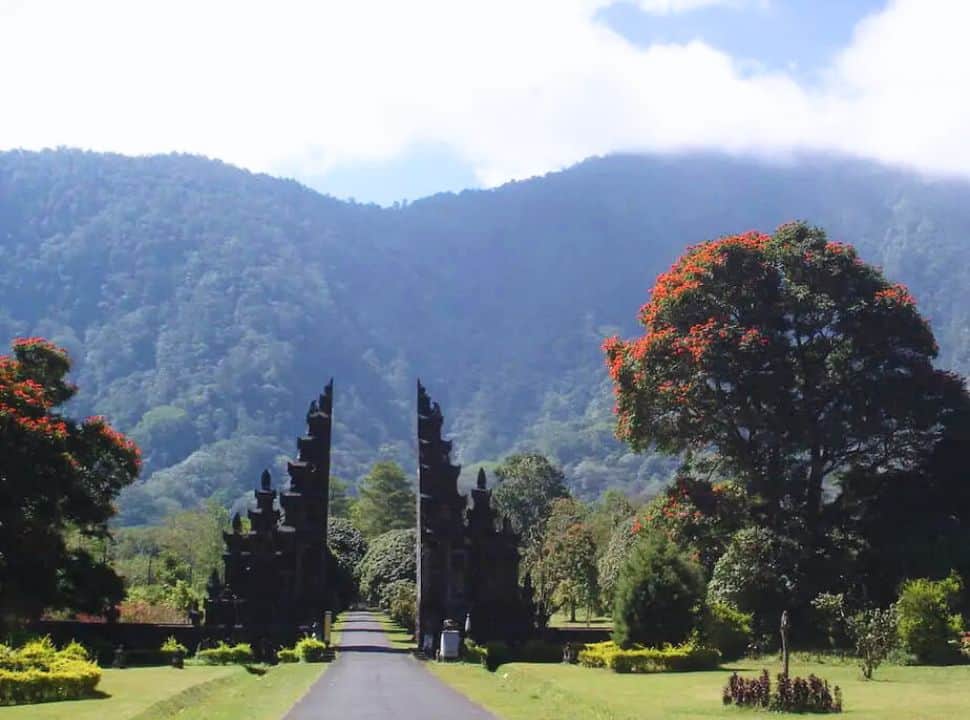
Okay, full honesty moment: we weren’t sure if we should even include this one. If you’ve seen that iconic Bali “temple gate” photo all over Instagram—this is it. Except… it’s actually the entrance to a golf course. Yep. The gate has completely stolen the spotlight from the golf itself.
Because of its fame, Handara Gate has basically become a tourist attraction on its own, and you now have to pay for the privilege of taking a photo. Prices start around Rp 50,000 for a 2-minute photo session (yes, timed!), and go up to Rp 200,000 for selfies + drone, all the way to Rp 850,000 for a 30-minute wedding shoot.
Is it a bit… crazy? Absolutely. But hey—if you’re into iconic photo spots and don’t mind the fee, go for it. If not, you won’t be missing an essential piece of Bali culture by skipping it. It’s completely up to you.
10. Trek the Jungle & Canoe the Twin Lakes
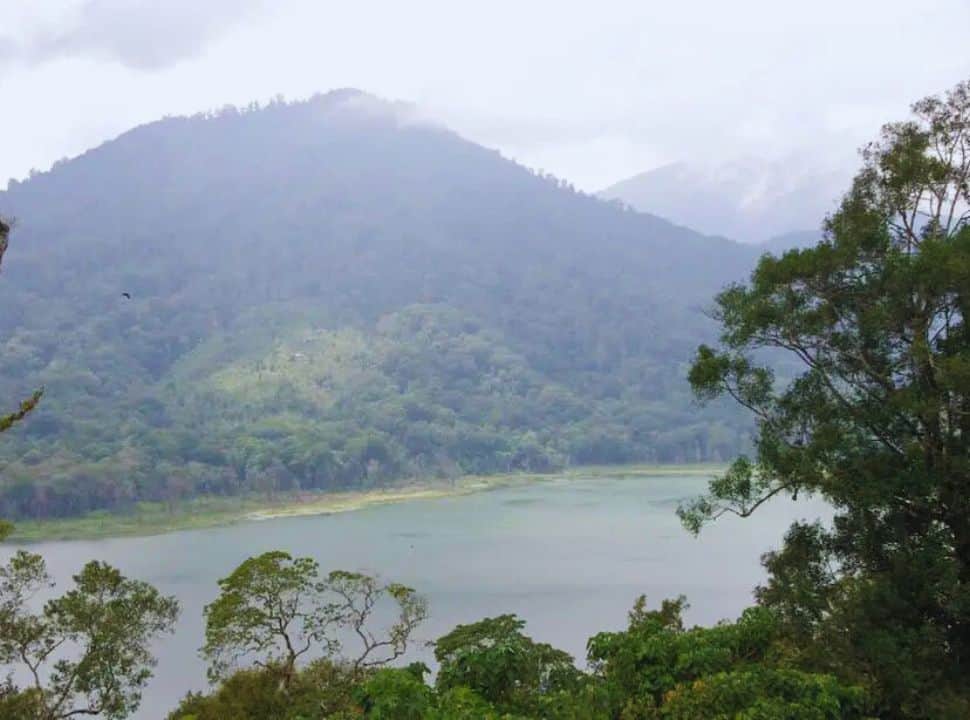
If you want a mix of jungle, temples, and a bit of adventure, join a Bali Twin Lake Jungle Hike in the area near Munduk.
You’ll hike through rainforest, visit ancient temples, and end the tour canoeing on Lake Buyan and Lake Tamblingan. A perfect nature-filled half-day trip!
Trek through the rainforest around Lake Tamblingan, canoe to Ulun Danu Tamblingan Temple, and end with a refreshing swim at a hidden waterfall. For more details have a look HERE
11. Go Jungle Trekking in Sambangan
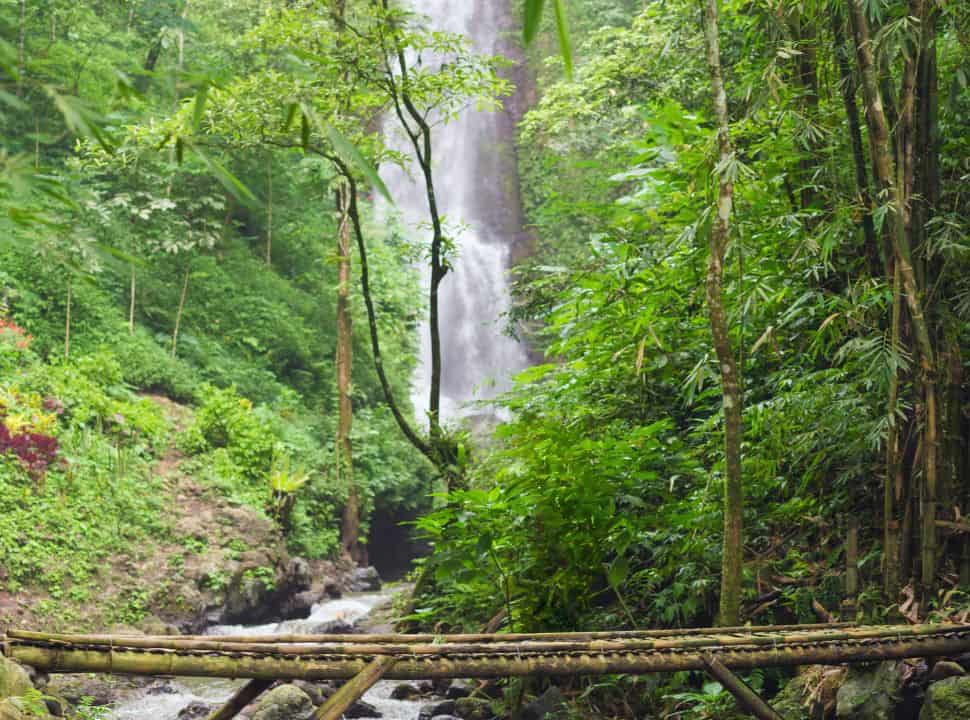
If you still want more waterfall magic, head to Sambangan a 1 hour drive northeast from Munduk. This village surrounded by rainforest and fed by natural springs.
Here you can offer 2 guided routes:
Scenic Waterfall Route (approx. 3 hours)
Visit Cemara, Canging & Dedari Waterfalls—perfect for a calm swim and scenic photos.
Adventure Route: “Blue Lagoon” + 3 Waterfalls (approx. 3 hours)
Visit Kroya, Kembar & Pucuk (Blue Lagoon)—this is for the adventurous!
Expect natural slides, cliff jumps, and heart-pumping fun.
There are plenty of local guides in this village who can take you on the hike, but most don’t have websites or online booking. If you want details, the easiest way is to contact Sambangan Village Tourist Information (Sambangan Secret Garden) directly at +62 812 4632 0871.
If you love waterfalls but want an adrenaline kick too, try a canyoning tour in the Munduk area. It’s a fun, action-packed way to experience the jungle from a whole new angle. Book it HERE.
Munduk Bali Travel Guide: Practical Info
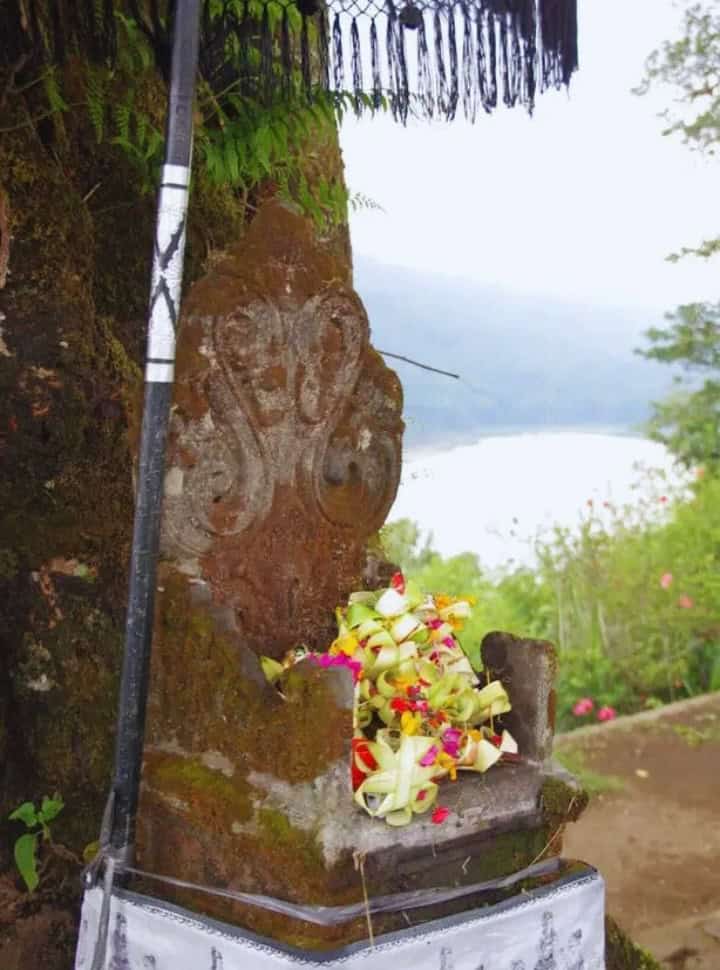
Munduk village is perched in the mountains of central Bali, at 800 meters above sea level. Many travelers pass through this region only on day trips, often combining it with a visit to Lake Bratan. Others pass by while traveling from the south of the island to Lovina.
Munduk’s main road, Jalan Kayu Putih, winds through the mountains with numerous twists and turns. Along the way, small signs occasionally point you to accommodations or restaurants tucked away on little side roads. Other than that, there are few landmarks.
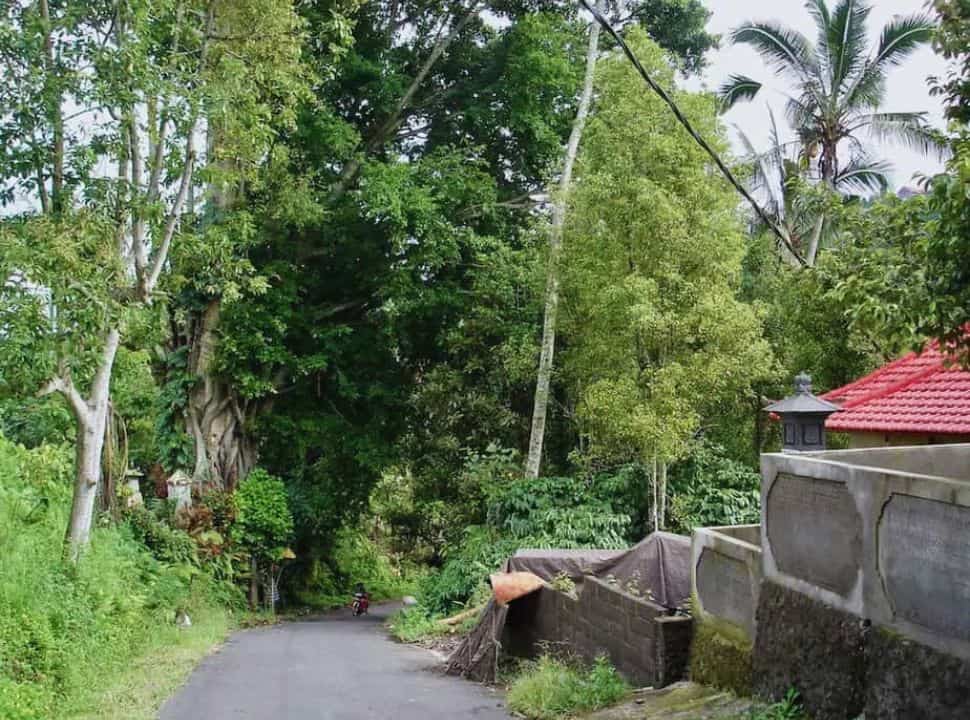
As you approach the center of town, the number of signs increases. This is historically where most of the accommodations were located. Today, many more lodgings are accessible via small paths that lead into the rice fields, offering peaceful stays surrounded by nature.
Tip: Don’t expect ATMs or Starbucks here—this simplicity is part of Munduk’s charm.
Getting to Munduk
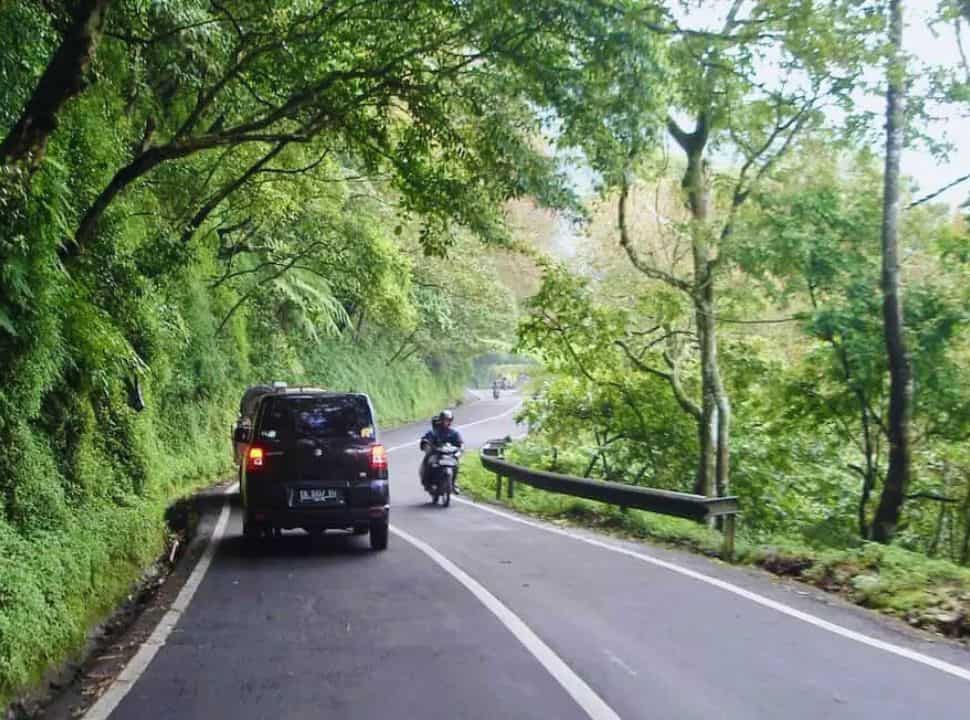
- From Ubud: ~1h 45min
- From Lovina: ~45min
- From Kuta: ~2h
Munduk sits along the scenic route between Pancasari and Seririt. If you drive from Pancasari up the rim of the old volcano, you can either turn right toward Singaraja and Lovina or continue left along the crater rim, passing Danau Buyan and Danau Tamblingan to reach Munduk.
A recommended stop is the Ngiring Ngewedang coffee house, whose name translates to “Please stop by and come in.” From here, you can enjoy stunning views of Lake Tamblingan on one side and the ocean on the other. Local coffee is available, and the staff are happy to show you the traditional brewing process.
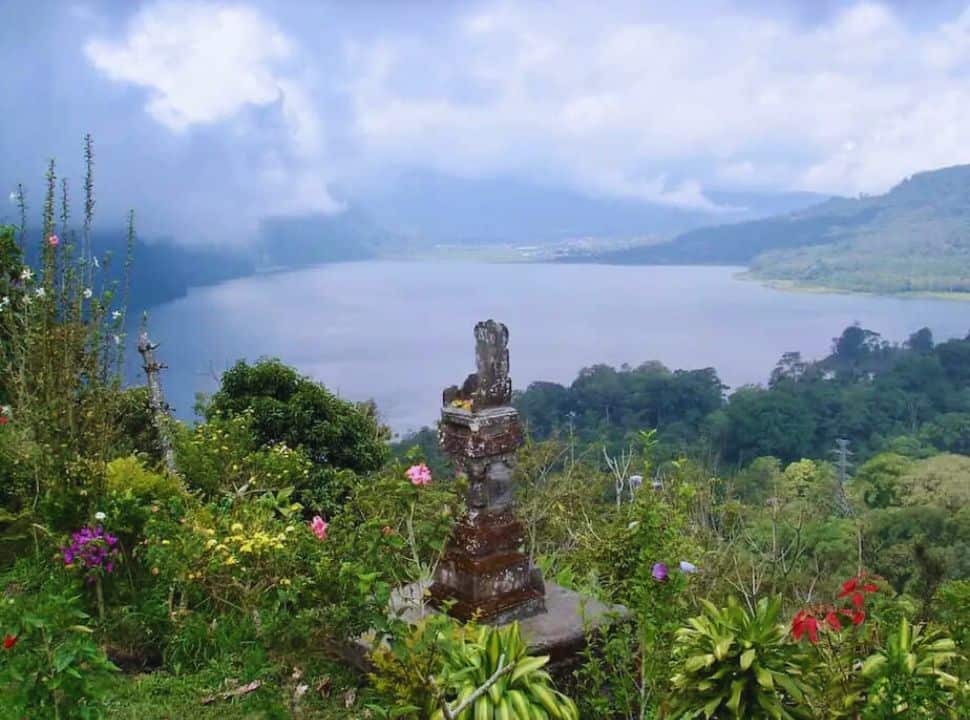
After this stop, the journey continues along the crater rim until a junction where you turn right. A 5 km stretch of downhill hairpin bends will bring you to the village.
Munduk isn’t like Ubud or Sanur—this is a quiet, tucked-away mountain village, and getting around takes a little planning.
If your trip to Munduk is longer than 1.5 hours, we recommend arranging a driver to bring you. When it’s time to leave, your accommodation can usually help book a driver back, no problem.
Of course you can also ride from wherever you’re staying in Bali – we did that many times ourselves. The drive from Ubud to Munduk is scenic and totally doable. But Kuta? Forget it. Traffic is intense, and you’ll spend half the day in jams.
👉 Tip: Use Google Maps to locate your accommodation. Signage is minimal, and the lush greenery can make finding your destination tricky.
Weather in Munduk
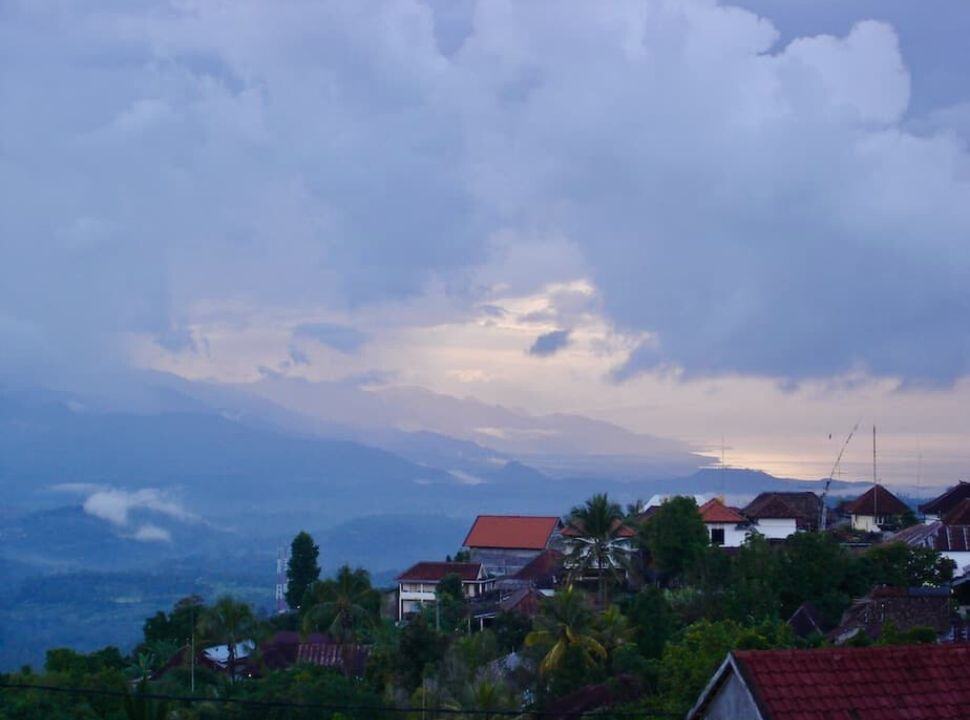
- Average 30°C by day, ~20°C evenings.
- Rainy season: November–March,
- Dry season: Best for avoiding rain, ideally August.
- Bring a sweater for evenings
Munduk’s high-altitude location makes it one of the coolest villages in Bali. We visited in February, during the rainy season, and experienced cloudy, wet, and chilly weather.
Temperatures can drop significantly. The average temperature hovers around 30°C during the day, but evenings can feel just above 20°C. After spending time in Bali’s tropical sun, anything below 30°C feels quite cool.
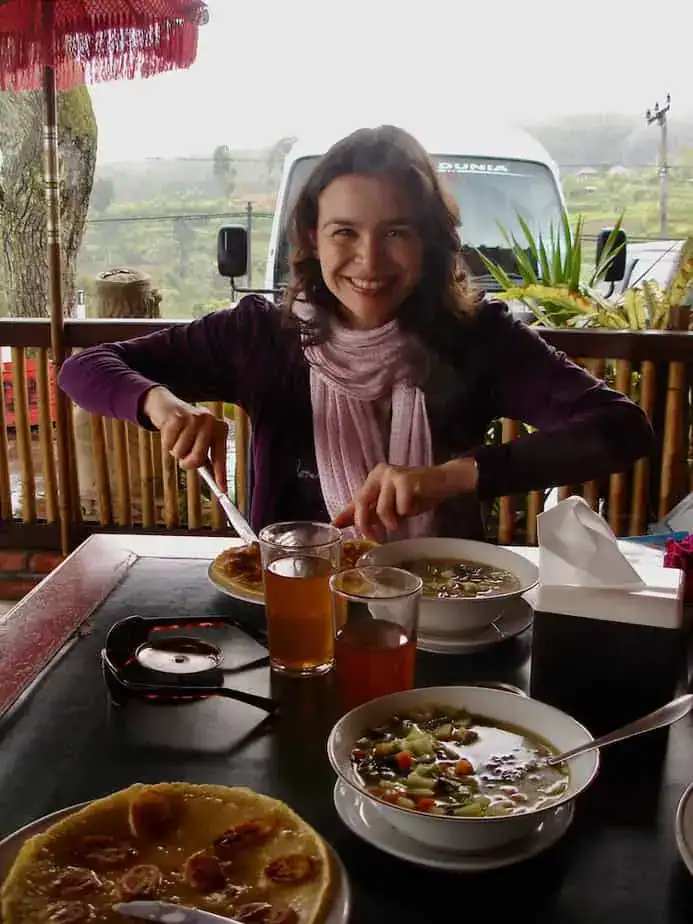
During the rainy season (November to March), rain is predictable, often falling around 3 pm. Most days are partly cloudy, with occasional sunshine.
In the evenings, dramatic clouds form, and you’ll likely need a sweater and long pants. Many home stays lack air conditioning, which gives you an idea of how chilly it can get.
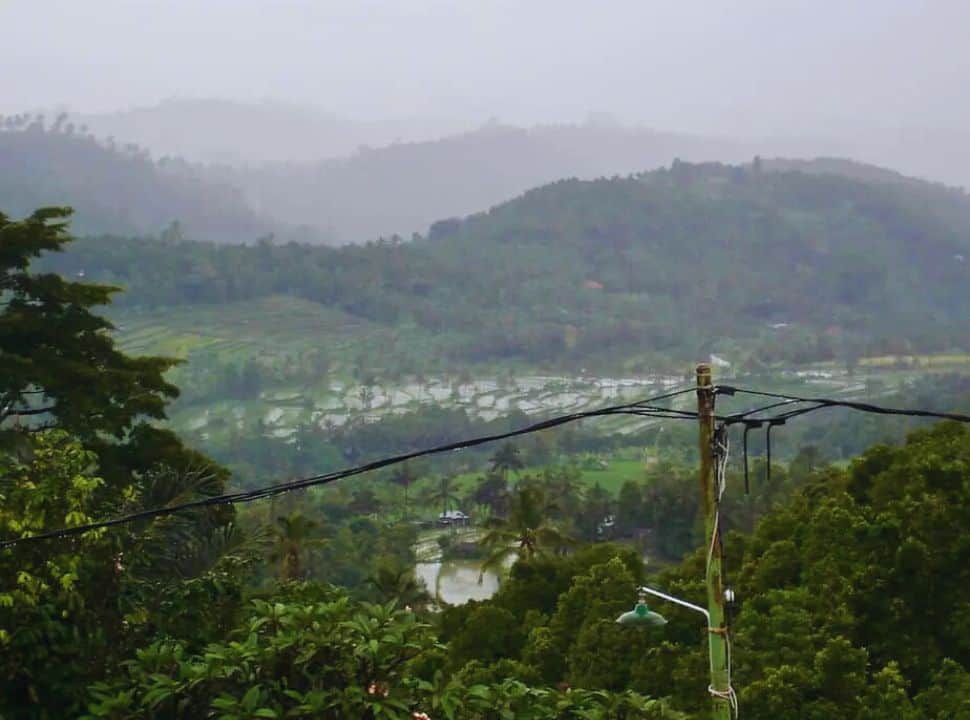
The dry season is the best time to avoid rain, ideally in August. However, the occasional rainfall in the mountains adds to Munduk’s beauty—the scent after a tropical shower is unforgettable. Don’t let rain deter you; the village has a unique charm during this season.
Getting Around Munduk Bali
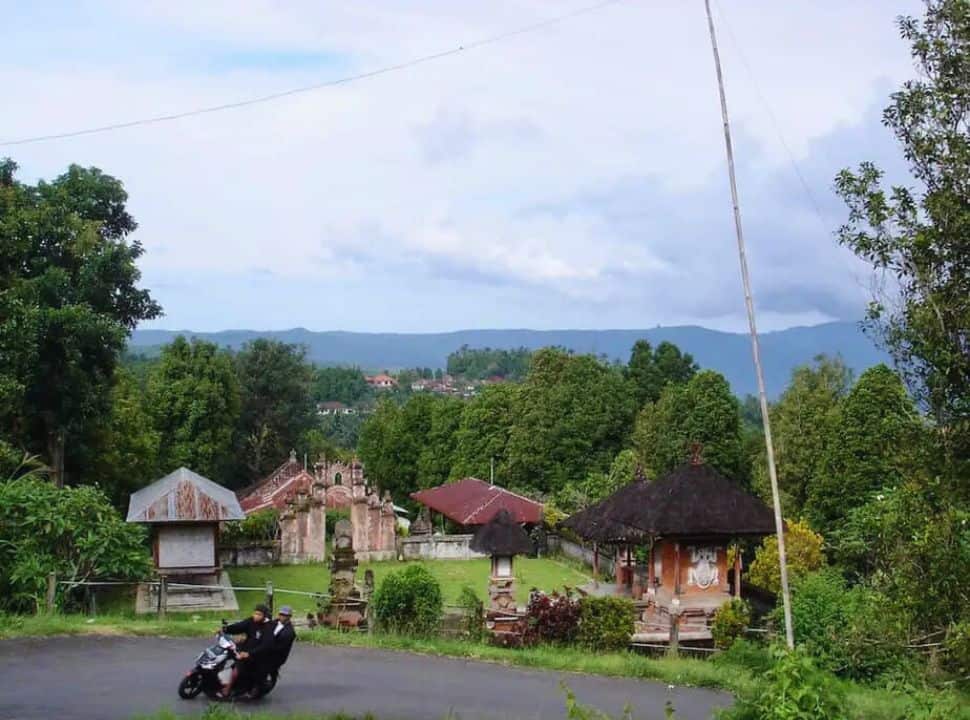
Once you’re in Munduk, the best way to explore is by motorbike. Scooter rentals aren’t everywhere like in Bali’s busier towns, but most accommodations can arrange one for you—just expect to pay a bit more than the usual ~Rp 70,000/day.
a motorbike is perfect for exploring little streets and hidden paths that cars can’t reach. Just make sure you’re comfortable on two wheels—you don’t want to end up in one of the many canals next to the rice fields!
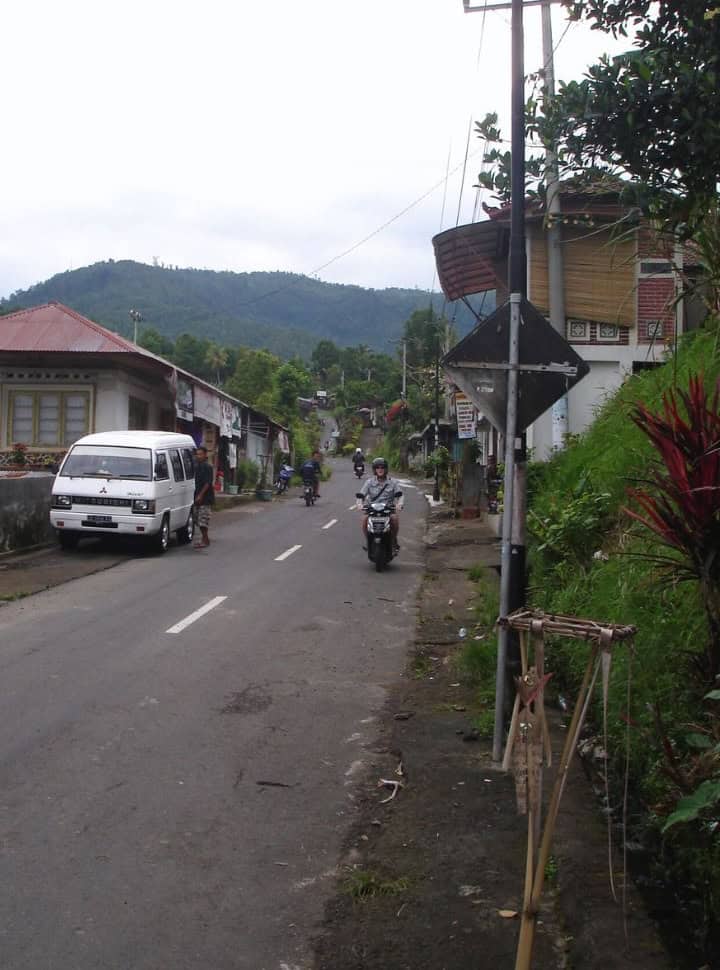
If motorbiking isn’t your thing, don’t worry—a private driver can take you around for day trips. Or, if you’re staying in the rice fields, staff may even offer to give you a lift to the main road for a small fee.
Of course, there’s always the classic option: walking. Munduk is made for it—hiking is basically the main activity here. Just check online which accommodation is best positioned to start and end your hikes.
How Much Time Should You Spend in Munduk?
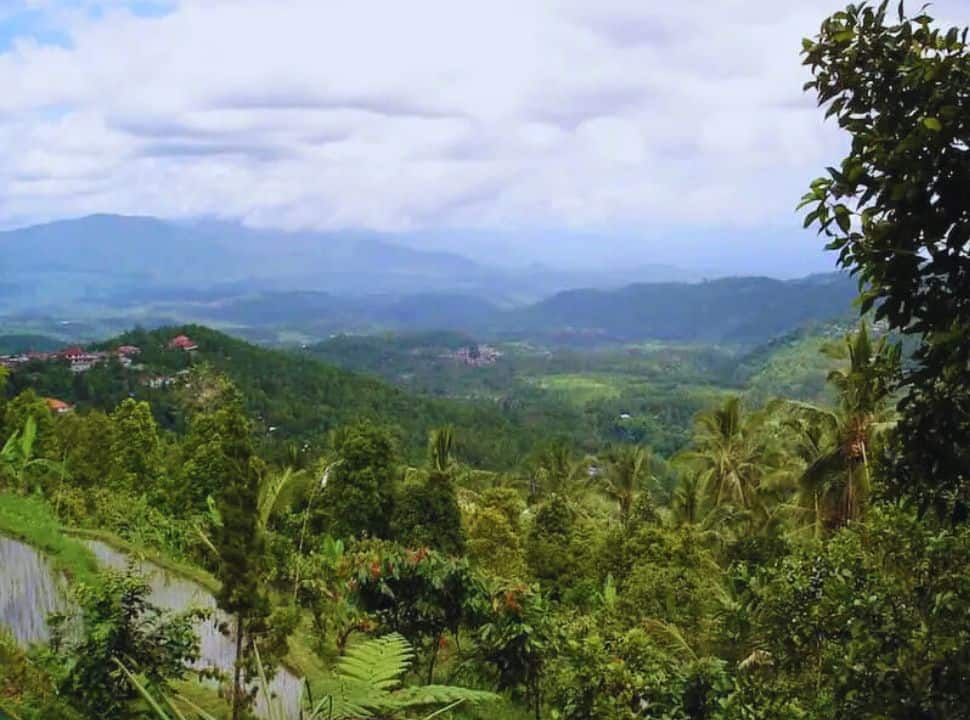
To truly experience Munduk, you’ll want at least a full day, but two nights—or even three—is ideal. Trust us: Munduk is worth every minute.
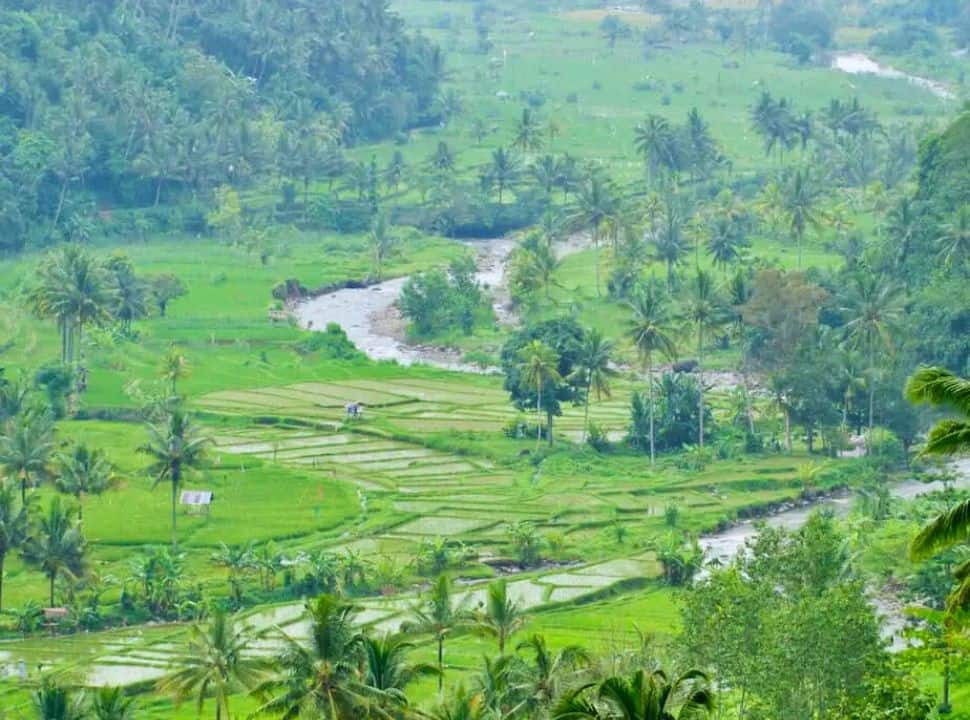
The views alone—lush rice fields, rolling green hills, and misty mountains—are enough to make you want to stay longer. Every passerby stops to admire them, and you’ll find yourself doing the same again and again.
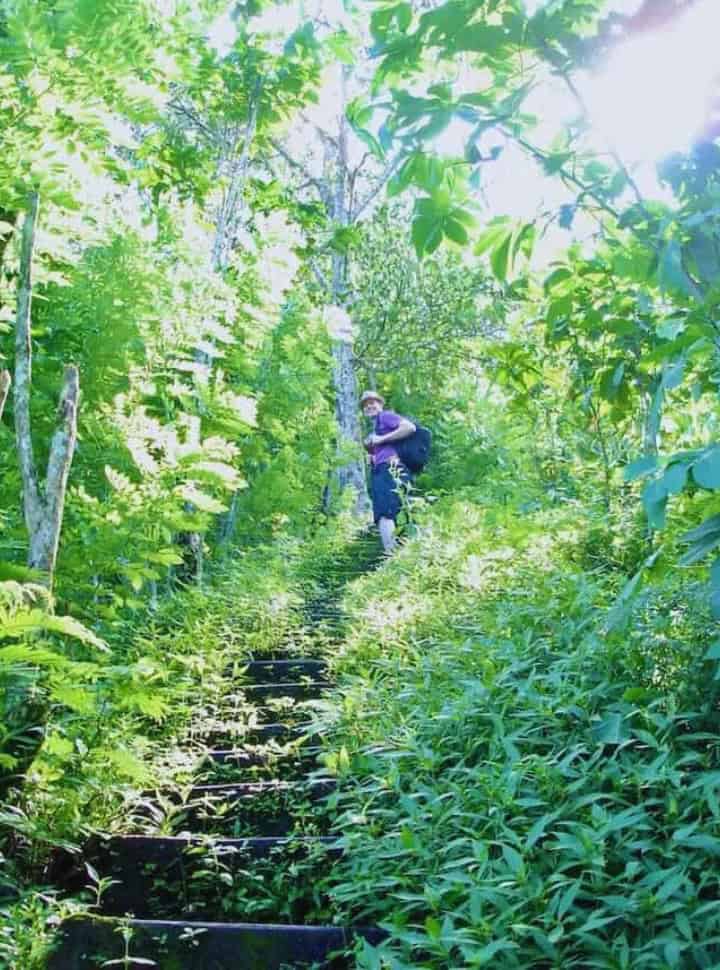
But what makes Munduk truly special isn’t just the scenery. It’s what you do with it: wandering through rice fields, strolling among coffee and clove plantations, or getting delightfully lost in small Balinese hamlets. That’s where the village comes alive.
Many operators in South Bali offer day trips to Munduk, usually combining Lake Bratan, the Twin Lakes viewpoint, a short waterfall hike, and lunch with a view.
We get it—it sounds tempting. But in our opinion, spending half the day in a car from Ubud or Kuta is just… exhausting. Munduk deserves to be savored at your own pace, not rushed through. Our advice? Stay, explore slowly, and return another time if you want to see more.
Our Ulitmate 3 day Munduk Itinerary
Day 1: Arrival & Village Exploration
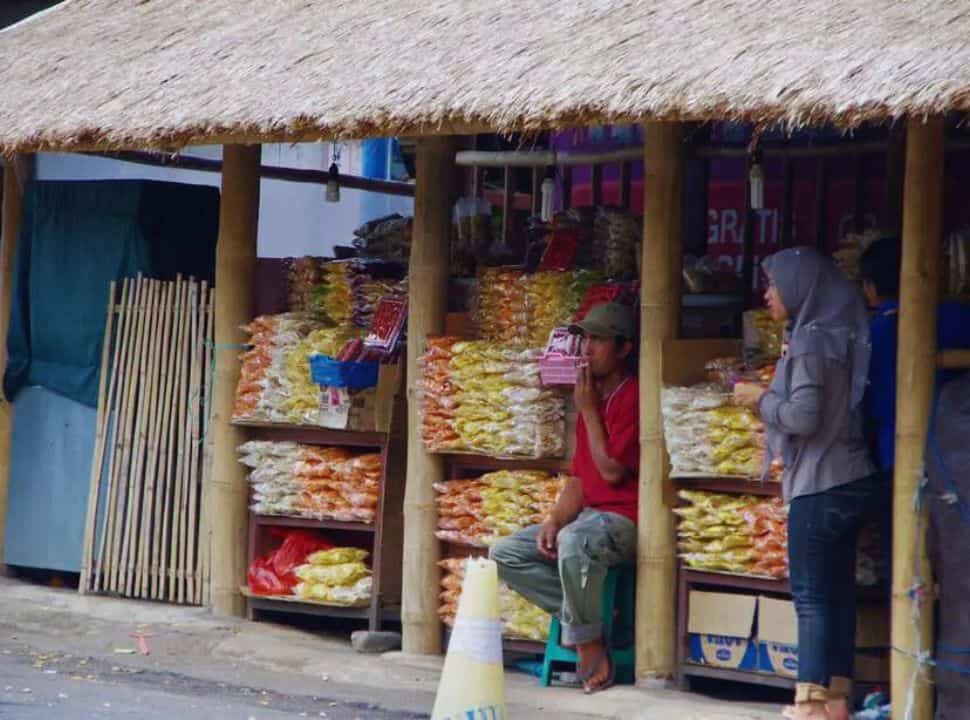
Morning (Arrival)
- Travel to Munduk (driver recommended if >1.5 hours), when coming from the south make a stops at Bedugul and Ulun Danu Beratan Temple
- Check into your accommodation—ideally central or near rice fields.
Afternoon (Explore Munduk Village)
- Follow the rice field loop trail that will take you to stunning rice field terraces.
- Wander the main street: small warungs, shops, and coffee/clove plantations.
Evening
- Sunset views over the hills.
- Dinner at your guesthouse or a local warung.
- Early bedtime to wake up with the roosters.
Day 2: Waterfall Trek & Plantation Walks
Morning (4-Waterfall Trek)
- Start early (before 8 am).
- Follow the trail from Melanting Cottages through:
- Labuhan Kebo Waterfall (entrance ~10,000 IDR)
- Melanting Waterfall
- Munduk/Red Coral Waterfall
- Golden Valley Waterfall (end with eco-café stop)
- Hike duration: 4–6 hours depending on breaks and swims.
Afternoon
- Optional: short hikes to smaller waterfalls or hidden pools.
- Take a Balinese cooking class.
Evening
- Arrange a motor scooter or driver for the next day (if you don’t have one already)
- If you want more delicious food after your cooking class, go for dinner or just dessert with rice field or hillside views.
Day 3: Day Trips & Scenic Drives
Option 1 – More Waterfalls and Beach time
- Morning: drive from Munduk to Lovina via Singaraja, stopping at viewpoints and waterfalls
- Lunch at Lovina
- Afternoon: Stop at Banjar Hot Springs for a relaxing soak on the way back to Munduk.
Option 2 – Scenic & Cultural Focus (if you missed it on your way to Munduk)
- Morning: Drive to Bedugul → visit Ulun Danu Beratan Temple and lakeside views.
- Continue to Bali Botanical Gardens; explore local fruit stalls.
- Afternoon: Return via scenic mountain roads, stopping at Twin Lakes viewpoints.
- Optional: quick photo at Handara Gate if you’re curious.
Places To Eat In Munduk
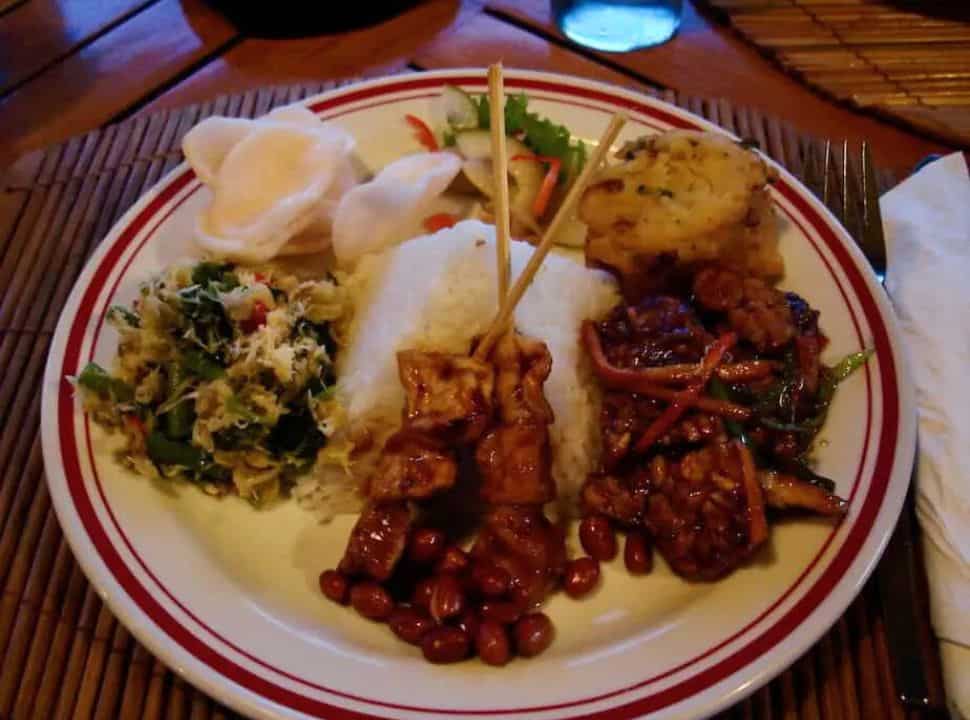
Munduk may be small, but the food scene is big on flavor. Local warungs line the main road and dot the rice fields, offering affordable and tasty Indonesian dishes. You can’t go wrong with classics like Nasi Goreng, Gado Gado, Nasi Campur, or a comforting vegetable soup.
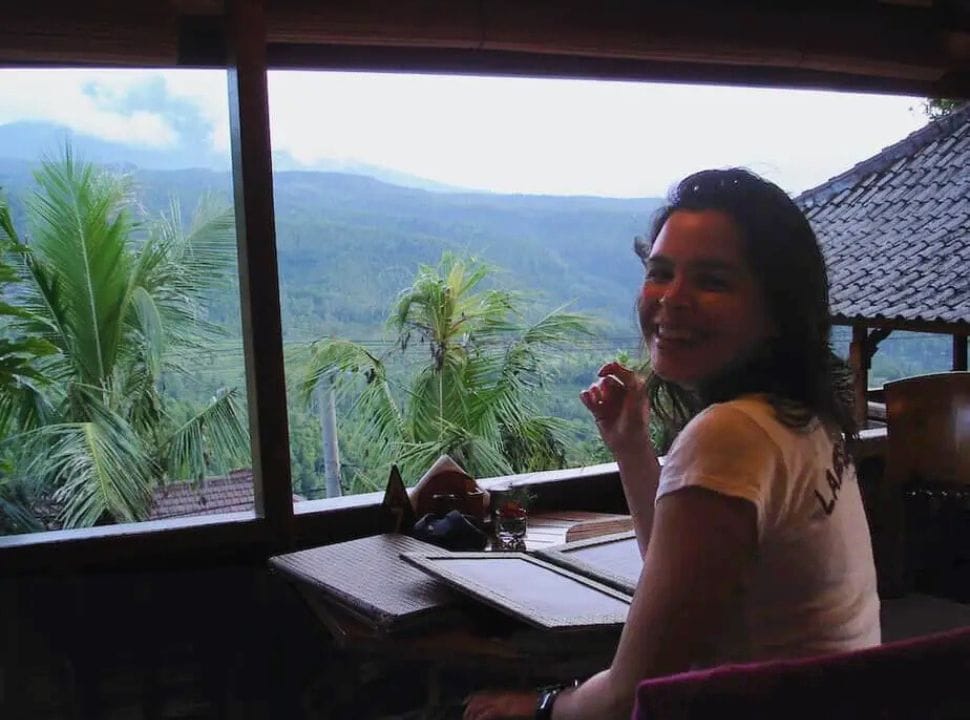
If you’re after a more “dining out” experience, check out Puri Lumbung Cottages. Their menu is extensive, and the tables come with amazing views of Mount Batukaru, Mount Lesong, and Mount Sanghyang—perfect for a leisurely lunch or dinner.
For a meal with a waterfall view, pop into Munduk Eco Cafe in town. And if you’re doing the Munduk Ricefield Loop Walk, there are several warungs right in the paddies—ideal for lunch, but skip them at dinner as it gets dark quickly.
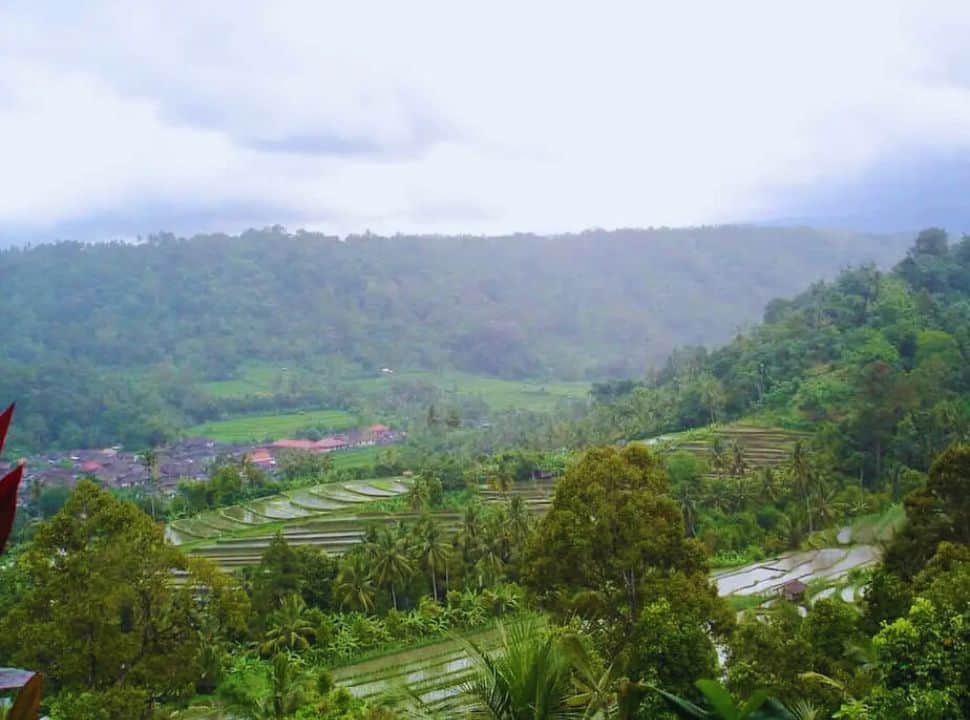
One spot you absolutely shouldn’t miss is Bali Panorama, just outside Munduk on the road to Seririt near Mayong village. Signs along the road make it easy to find.
Why it’s special:
- Gorgeous valley and rice field views
- Fresh, organic ingredients
- Deliciously authentic Balinese cuisine prepared by friendly locals
Once you’re here, the name makes total sense—the view truly is panoramic. It’s one of those spots where both the food and scenery stand out for all the right reasons.
Where To Stay In Munduk
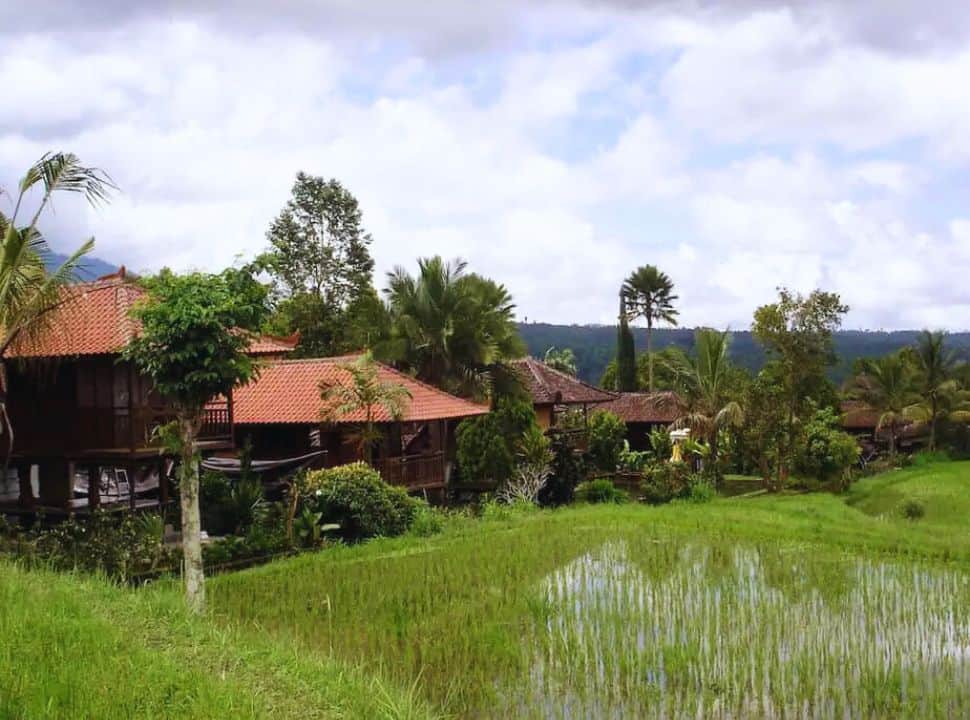
Munduk is one of those magical places in Bali where you can sleep in the middle of rice fields or wake up to gorgeous mountain and valley views. The best part? Even budget travelers can enjoy first-class scenery.
This little village has a wide range of wonderful homestays, and we loved our stay at Meme Surung Homestay, a cozy spot with magical views in the early mornings and evenings. But there are many others—all built to maximize the scenery. That’s Munduk’s unique selling point, and the owners know it.
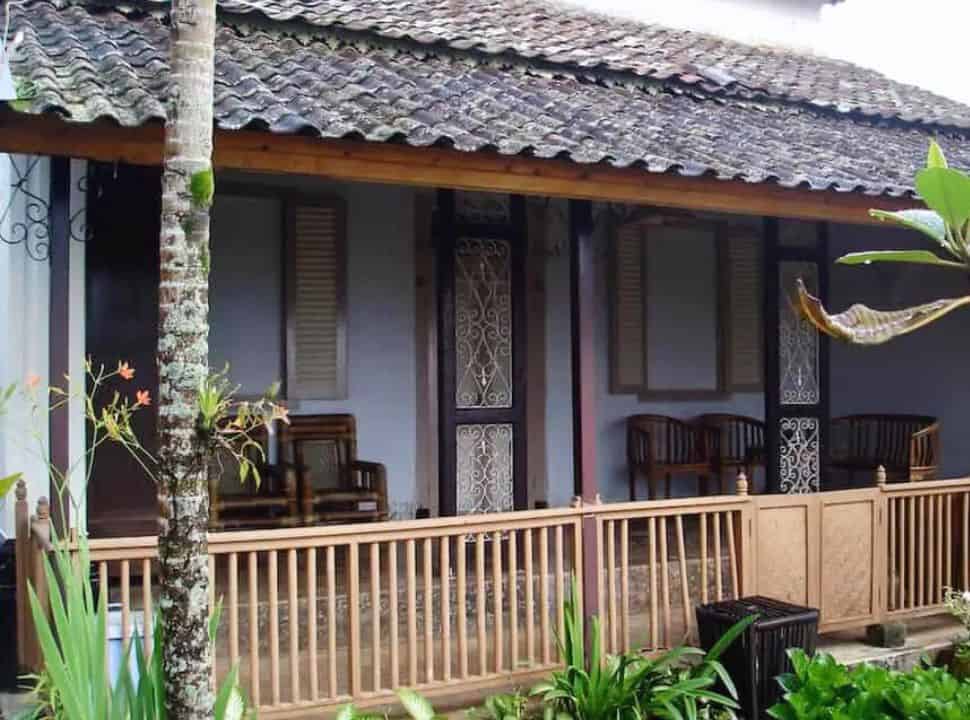
Most accommodations are locally owned, which means you not only get an authentic experience but also great insider tips on what to see and do. Plus, chatting with the owners is a highlight on its own.
A small heads-up: if you’re staying in the rice fields or at a homestay, you’ll likely wake up early to the sounds of birds, roosters, and morning village life—it’s part of the charm.
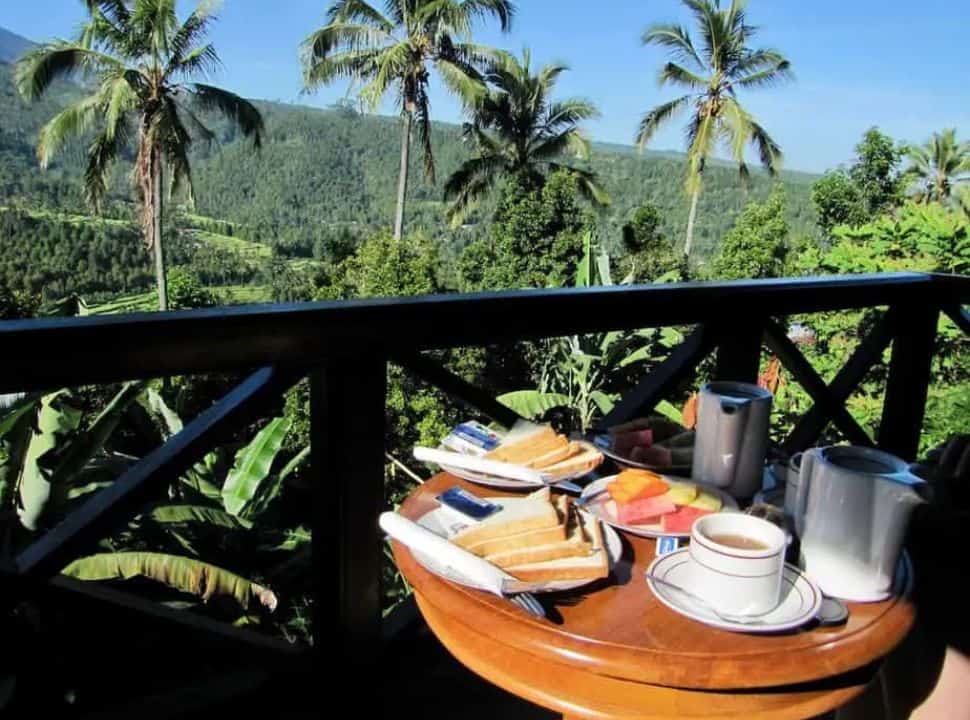
Here are just a few of the many great places to stay in Munduk:
📍 Budget Meme Surung Homestay – Charming homestay with magical valley views, simple rooms, and en suite bathrooms. The owners are friendly and can help arrange hikes and local activities.
📍Mid-Range Desa Eko – A little outside of town but absolutely worth the escape, this peaceful forest-view cabin offers direct hikes to waterfalls, a creekside yoga deck, a fantastic restaurant with diverse dishes and fresh juices, and a choice of stylishly comfortable tents or a cozy studio.
📍Mid-Range Puri Lumbung Cottages – Eco-tourism leader in Munduk with old rice barn bungalows set in tropical gardens. Offers cultural courses like batik, wood carving, and Balinese dance, plus a highly recommended restaurant.
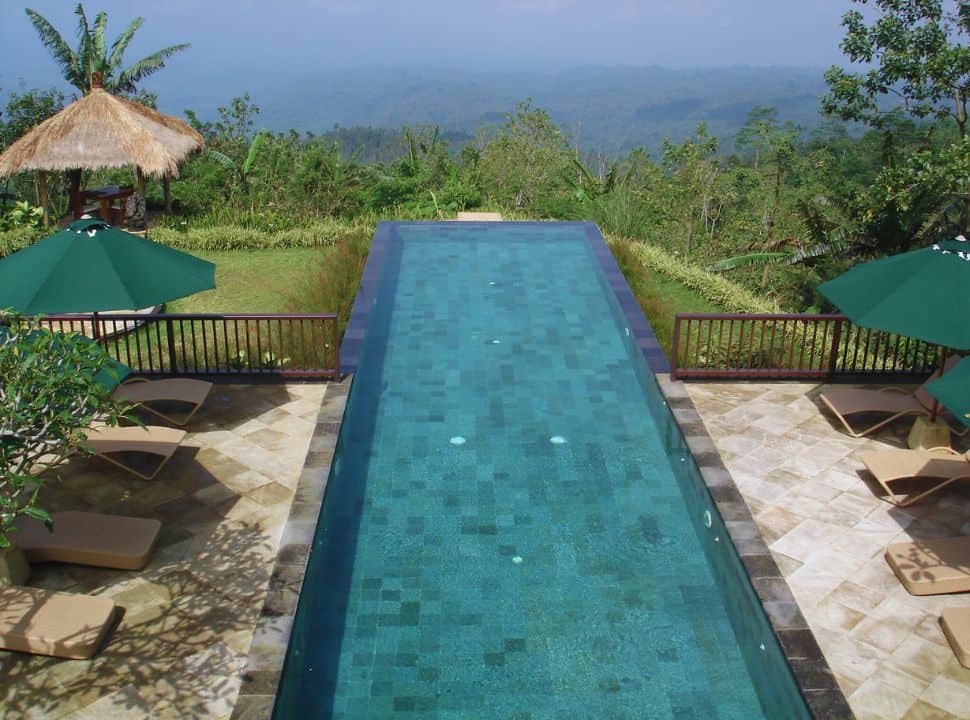
📍Luxury Munduk Modig Plantation – Luxury resort on a working coffee plantation just outside Munduk, featuring villas with breathtaking views and an open-air garden shower. Their famous infinity pool is perfect for a morning photo and a relaxing soak.
Wrap Up: Munduk Bali Travel Guide
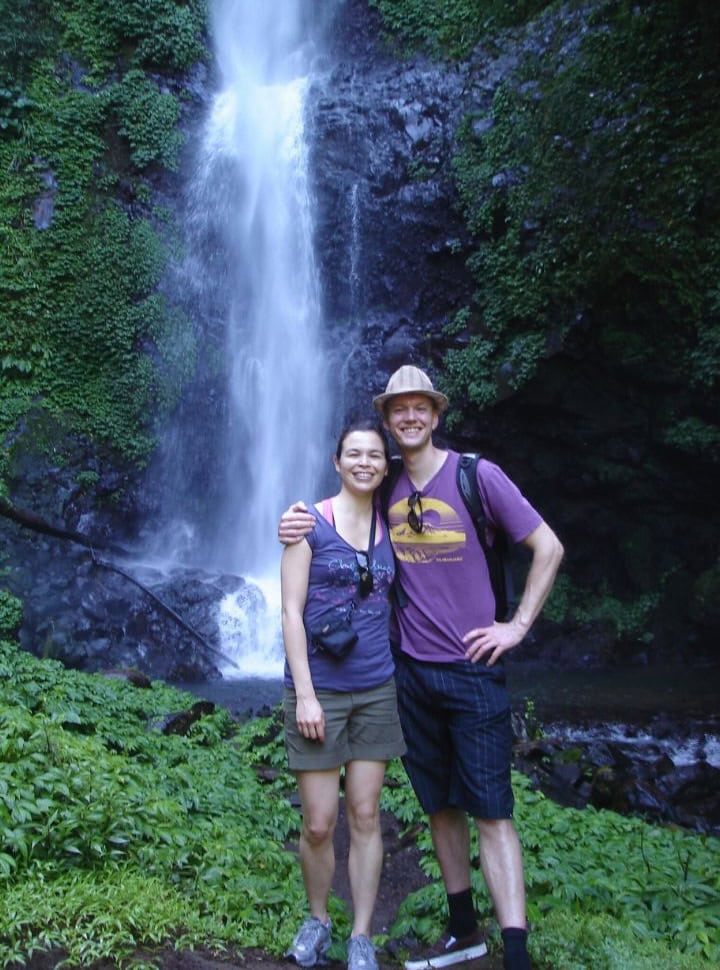
Munduk stole our hearts for so many reasons. We loved the easy access to nature, with rice fields, jungle trails, and waterfalls right at your doorstep. Waking up to the sounds of roosters, birds, and the village coming alive made us feel part of real Balinese life, and we appreciated how eco-oriented the village is—local initiatives, sustainable stays, and responsible tourism are all front and center here.
If you love hiking, chasing waterfalls, and swimming in them, Munduk is an absolute dream. And on top of that, it’s a great base to explore North Bali, with cooler temperatures and lush mountain views providing a refreshing break from the heat of the south.
Munduk, Batukaru or Sidemen?
Some people ask us how Munduk compares to Batukaru or Sidemen. Honestly? All three are excellent for green travelers looking to experience authentic Bali away from the crowds.
But each Bali desitnation its own character:
- Munduk charms with waterfalls, plantations, and a cozy village tucked in the mountains.
- Batukaru feels more mystical, with dense jungle, sacred temples, and a quiet forest vibe.
- Sidemen is all about rice terraces, traditional villages, and serene rural life with spectacular views.
This diversity is exactly what makes Bali so special. There’s no “one better than the others”—each spot tells a different story of the island. It’s more reason to plan a long trip, or better yet, come back again and again to explore every green corner.
If you’re craving nature, local life, waterfalls, and a slower pace, Munduk should definitely be on your Bali itinerary.
Want to visit more of rural Bali and discover hidden gems? Read more on:
Things to do in Batukaru – A Must Visit Gem
Our favorite things to do in Sidemen – Bali at its best
Ubud Vs Sidemen – Which Bali destination is better for you?
PIN IT TO SAVE IT FOR LATER
Monico was born in Kuwait and grew up in Indonesia, Malaysia, and Australia, which gave her a unique perspective on the world from a young age. Her first solo travel experience took her to Indonesia, where she volunteered at an orangutan rehabilitation center, and since then, she has focused her travels on environmental and conservation projects in places like Panama and Australia. Along with her love for wildlife, Monico enjoys exploring historic European cities, swimming in the sea, and tasting street food in Asia.