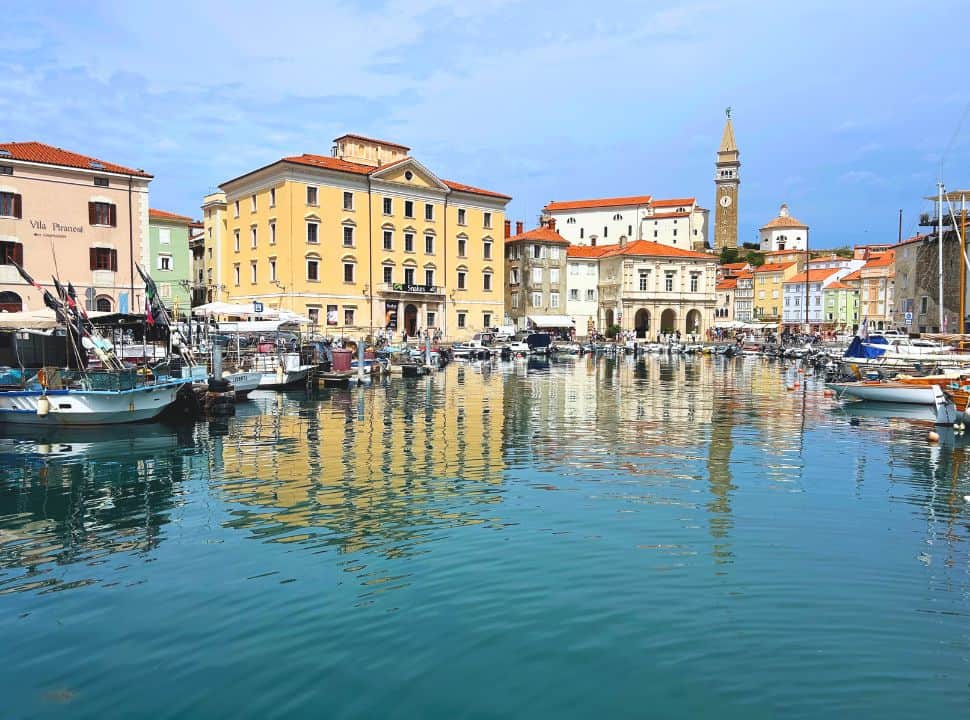
Slovenian Coastal Towns Itinerary: 3 Days At The Sea
Explore the seaside with our 3-day Slovenian Coastal Towns Itinerary
While the mountains and lakes of Slovenia are absolutely stunning, we soon found ourselves drawn to the coast, also known as the Slovene Riviera. We hadn’t originally planned to spend five full days there, but with thunderstorms rolling through the mountains, we figured the Adriatic might offer a slightly drier alternative.
In reality, we still got our fair share of rain, but we also had a great time exploring Slovenia’s small but scenic coastline, tucked between Italy and Croatia along the Adriatic Sea.
We do think that five days on the coast was a bit too much. Two to three days is probably the sweet spot to get a good feel for the area without stretching it. After our time there, we put together a 3-day Slovenian Coastal Towns itinerary we’d follow next time, now that we know the area a bit better.
Disclaimer: This post may contain affiliate links. If you make a purchase or booking through one of our links we may earn a small commission (don’t worry, it’s at no extra cost to you).
The 3 Day Slovene Riviera Itinerary in a Quick Glance
Day 1 – Piran
Day 2 – Izola & Strunjan Nature Reserve, Moonbay
Day 3 – Koper & Triëste, Italy
Is the Slovenian Coast Worth Visiting?
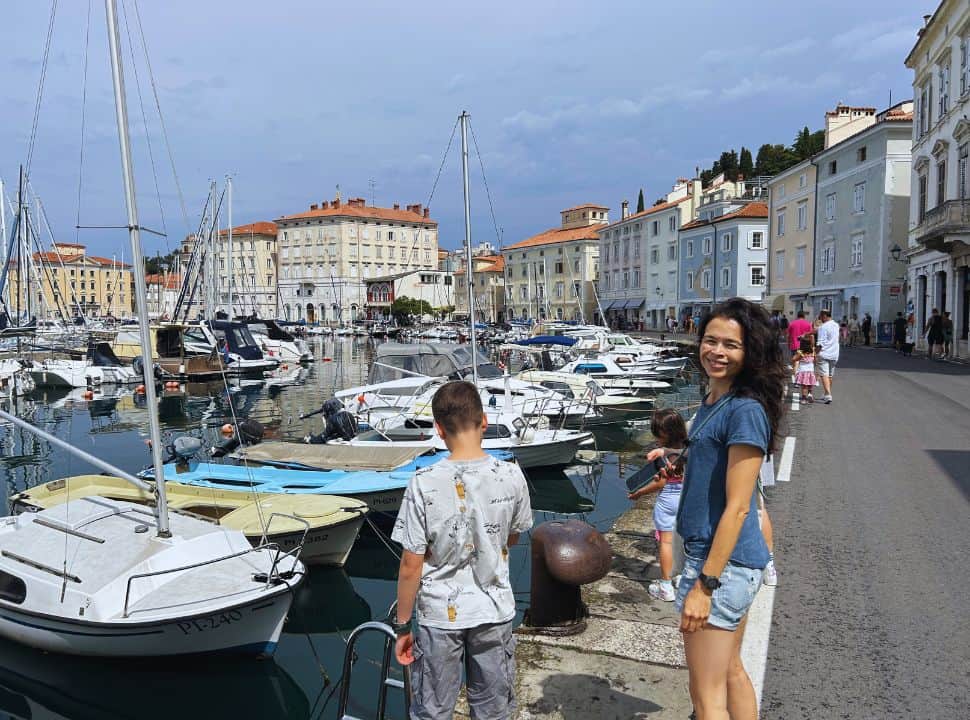
To be completely honest, as beach lovers, we weren’t blown away by the beaches themselves. That said, if you’re in Slovenia for more than a week, we’d still highly recommend adding this part of the country to your itinerary.
It feels noticeably different from the rest of Slovenia, with coastal towns like Piran, Izola and Koper offering a mix of Venetian charm and relaxed seaside atmosphere. It’s the perfect way to experience the country’s diversity.
Our 3 day Slovenian Coastal Town Itinerary
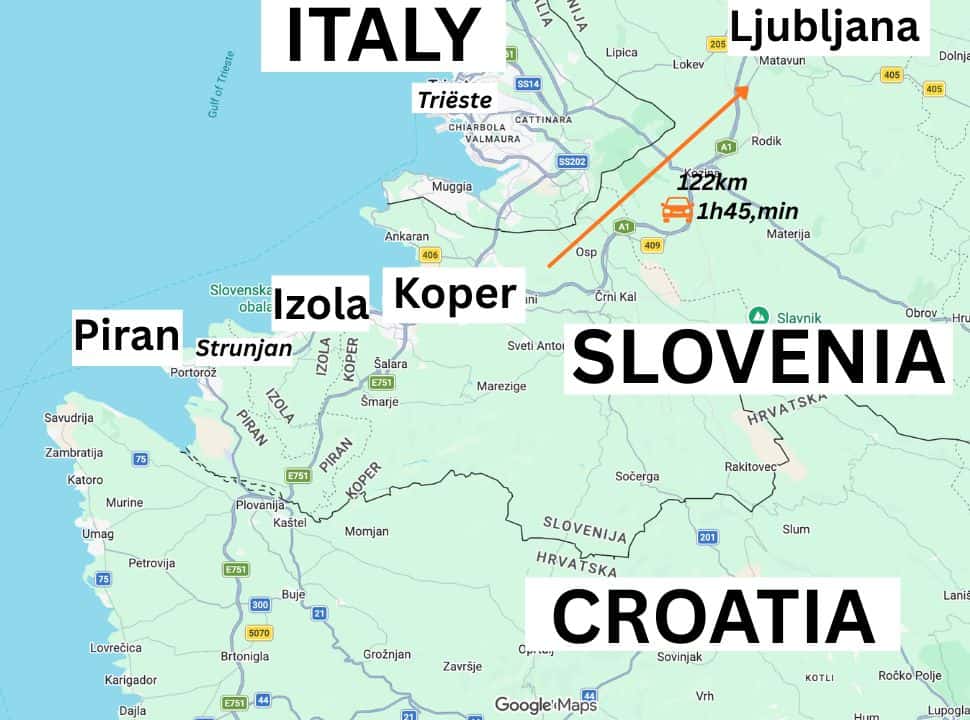
Based on what we visited, saw, and (honestly) missed, we’ve put together a 3-day itinerary for the Slovenian coast. It’s designed for anyone who wants a mix of charming seaside towns, nature, and time by the water.
You can easily pick and choose as well. One or two of these days work perfectly on their own. Each day offers something different, and all of them show a different side of the Slovene Riviera.
We didn’t add Portorož into the itinerary, known for its resorts and casino. We did pass through it, but after getting off the bus and seeing mainly large hotels, shops, and a busy beach boulevard, we quickly moved on. It just didn’t feel quite as charming to us, though of course it may suit a different kind of traveller.
Day 1 Piran
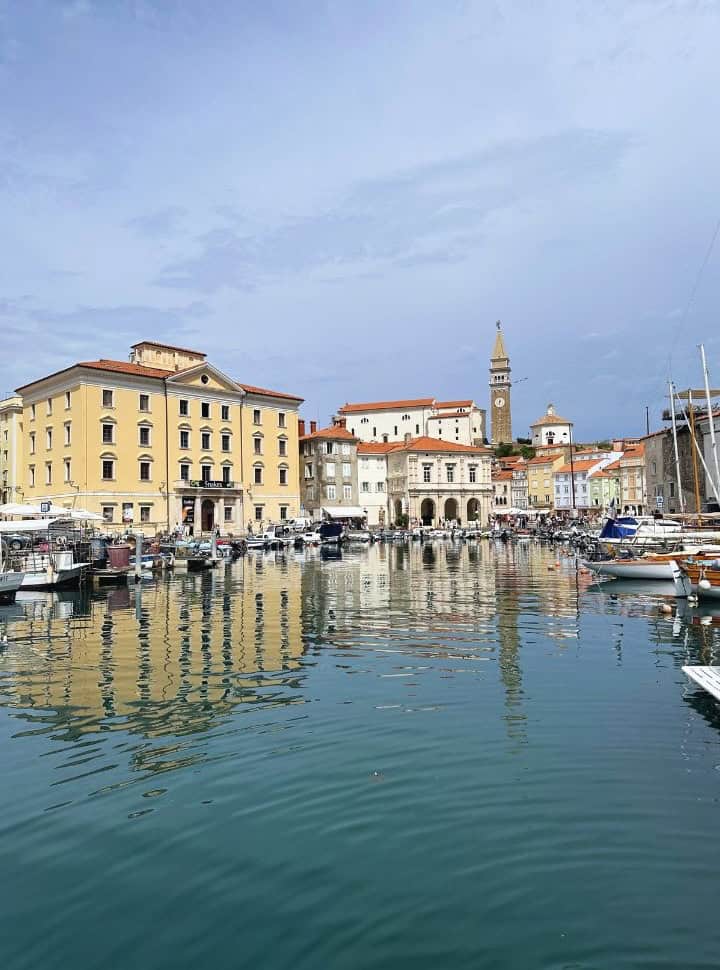
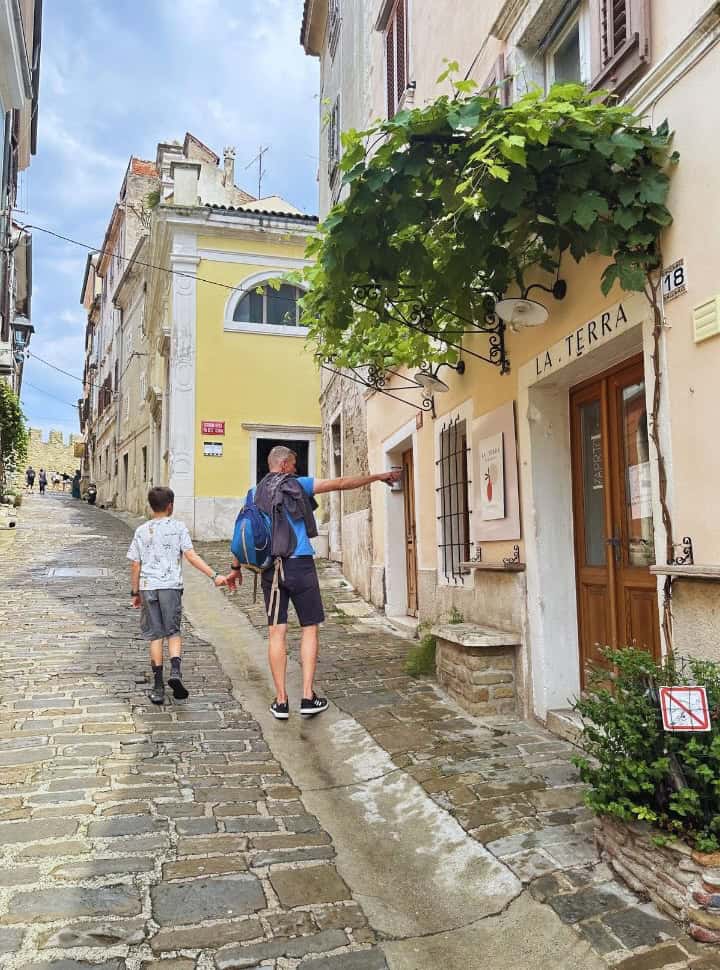
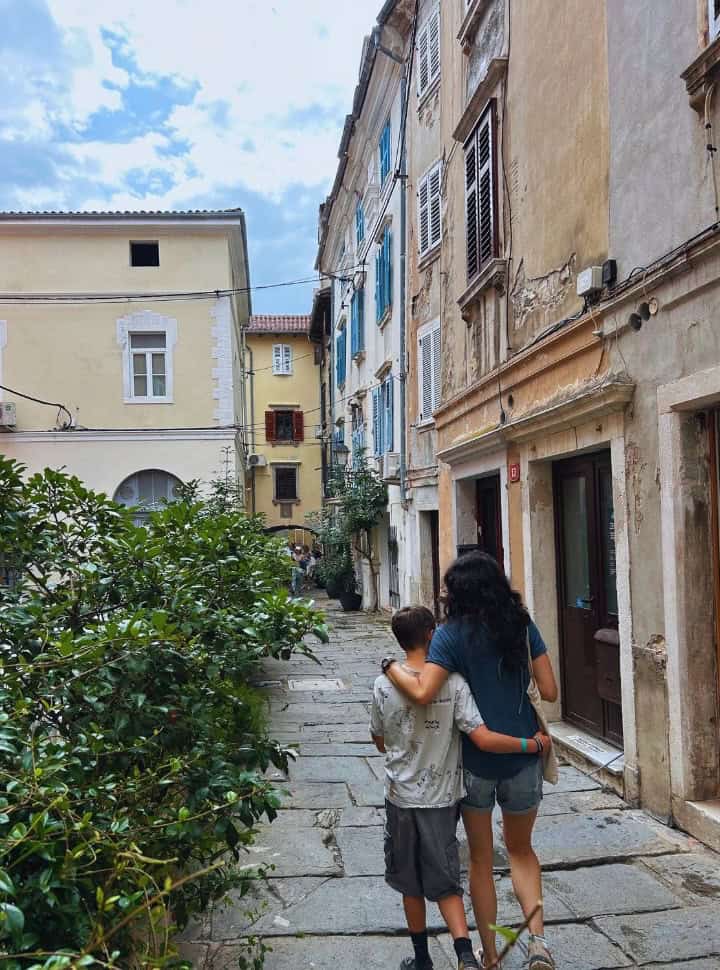
Piran is probably the most popular and visited coastal town in Slovenia and is known for its strong Venetian influences. The colorful buildings, lively squares and narrow cobbled streets give it a real sense of character.
We’d recommend keeping a visit to Piran simple: wander without a plan, enjoy a good meal by the sea, take in the views, and explore every little street you come across.
Cars are not allowed in the historic centre of Piran. If you are driving, you need to park outside the town in one of the public garages, such as Garage Arze or Garage Fornače, and take the free shuttle into the centre.
If you are staying along the coast, there are regular bus connections between the coastal towns and Piran. This is what we did.
Morning: Start in Tartini Square
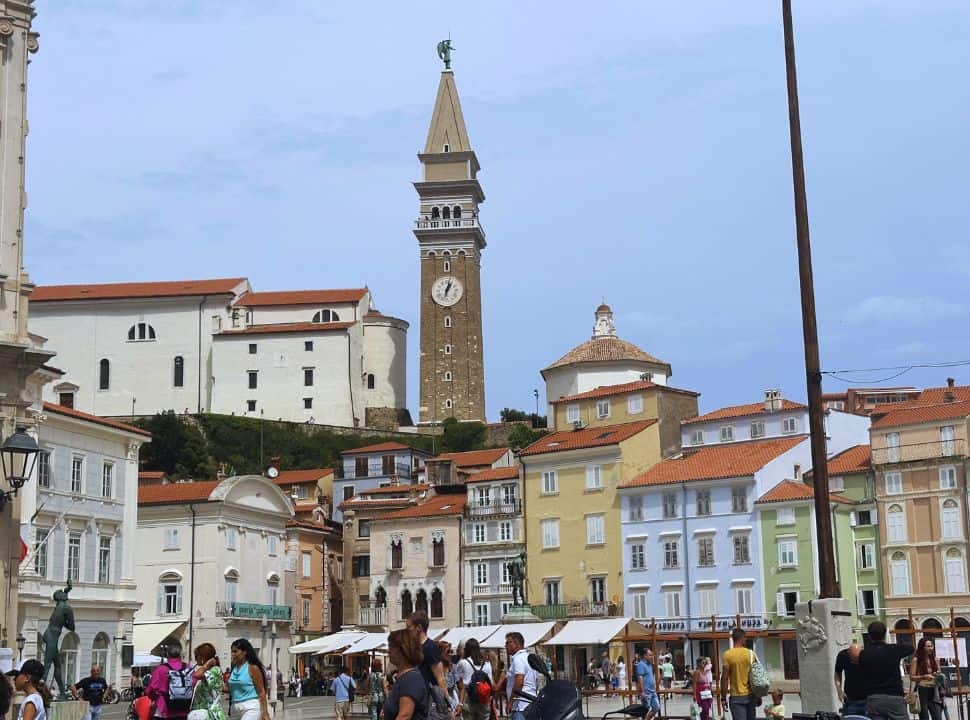
If you arrive by bus and walk along the waterfront past the harbour, you’ll naturally end up in Tartini Square, the heart of Piran. Mornings are the best time to be here, before the crowds arrive.
We visited on a cloudy summer day. The colours weren’t as bright as they would be in full sun, but it still had plenty of charm. The square is surrounded by beautiful Venetian-style buildings, and it’s a great first impression of the town before you head into the maze of narrow streets behind it.
Mid-Morning: Climb Up to St. George’s Church
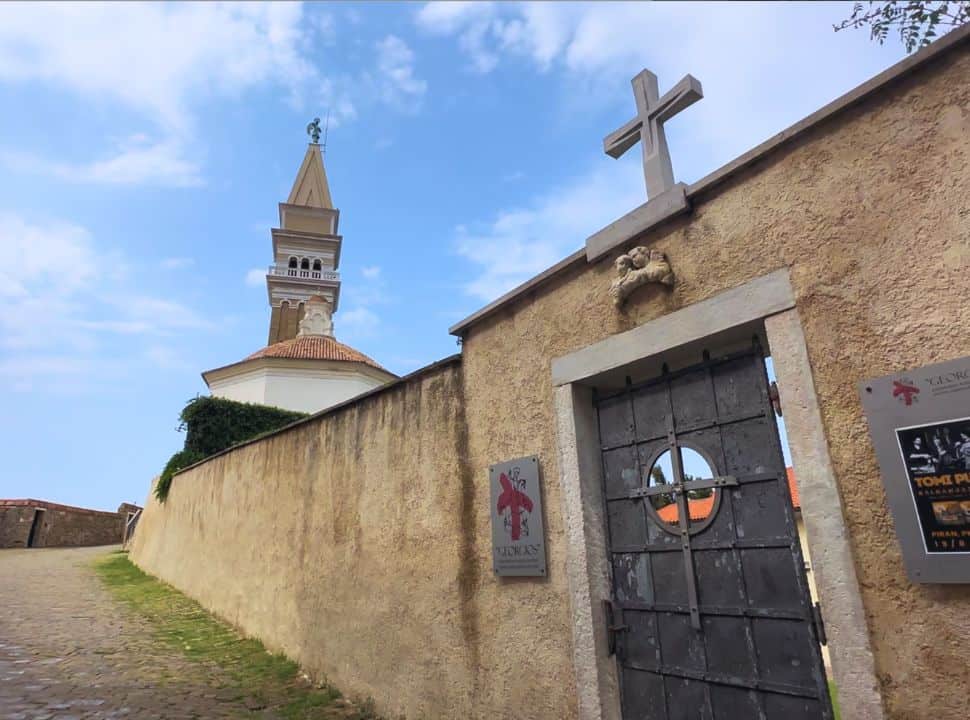
From the square, we walked uphill towards St. George’s Parish Church. You can actually see the bell tower from almost anywhere in town.
With no expectations at all, the view completely surprised us. From the top, you get a fantastic panorama over Piran and its harbor. When we were there, the rain had just stopped, so it stayed quite cloudy. On a clear day, you can apparently see all the way to Croatia and Italy.
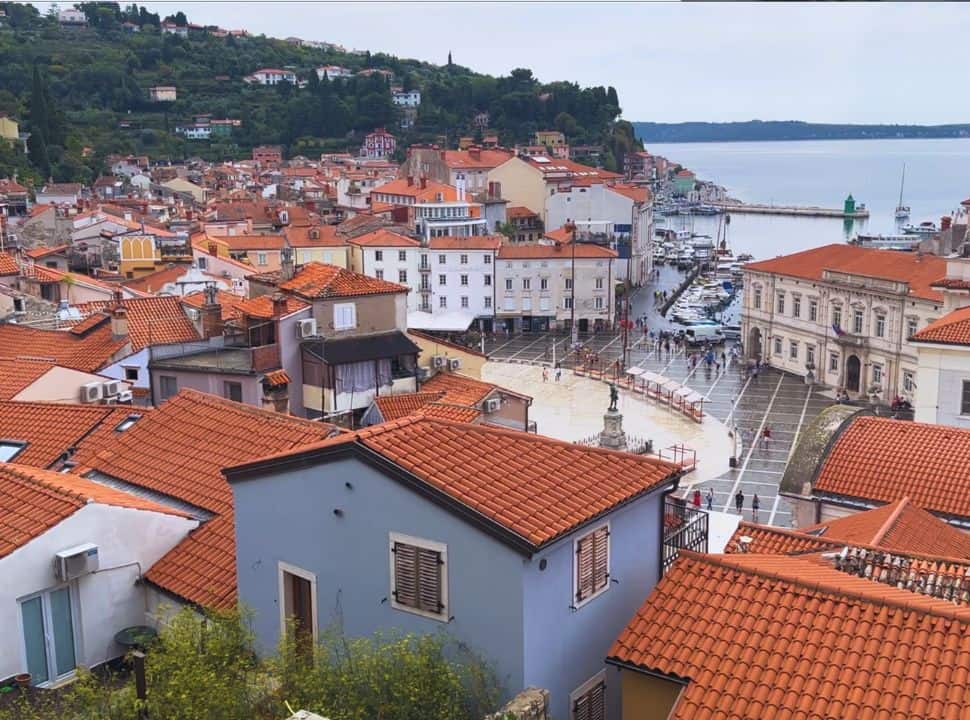
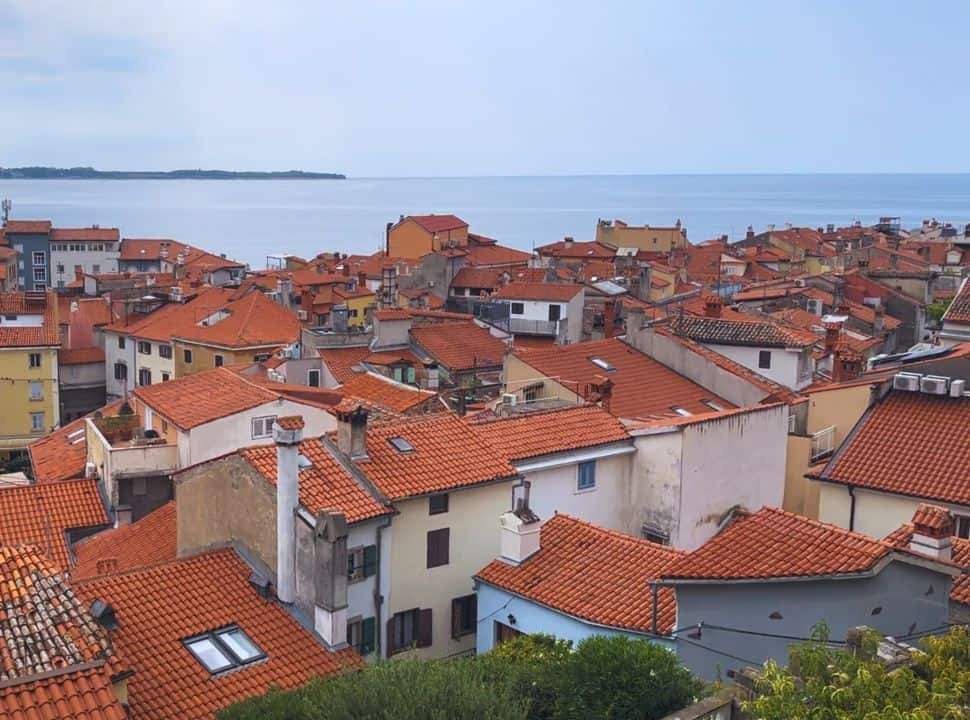
If the bell tower is open, it’s worth the extra climb for an even better view.
- Entrance Fee: €3 (cash only)
- Opening Hours: 10:00 – 20:00 (summer), 10:00 – 16:30 (winter)
Lunch: Seafood with a view or Cute square terrace
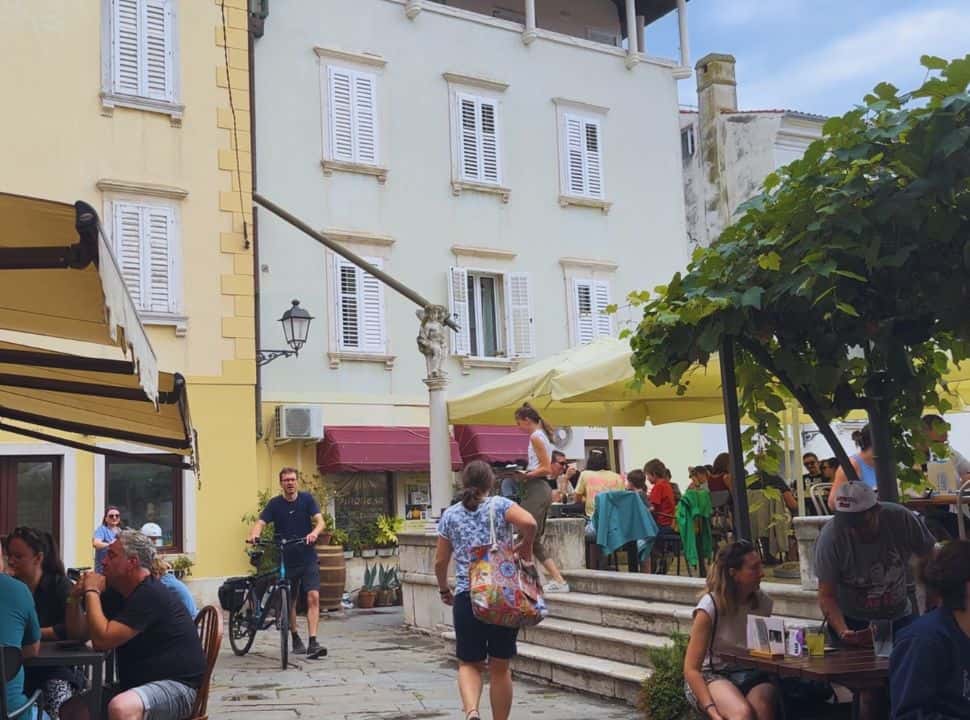
For lunchtime, we recommend heading back down towards the waterfront. Piran has plenty of restaurants, many with outdoor terraces right by the sea. Order seafood, a simple pasta, or just sit with a drink and enjoy the view.
If you feel like finding a cozy place more into town, then we suggest the many restaurants located along the little squares and within the narrow streets. There are lots to choose from.
Afternoon: Walk the Town Walls
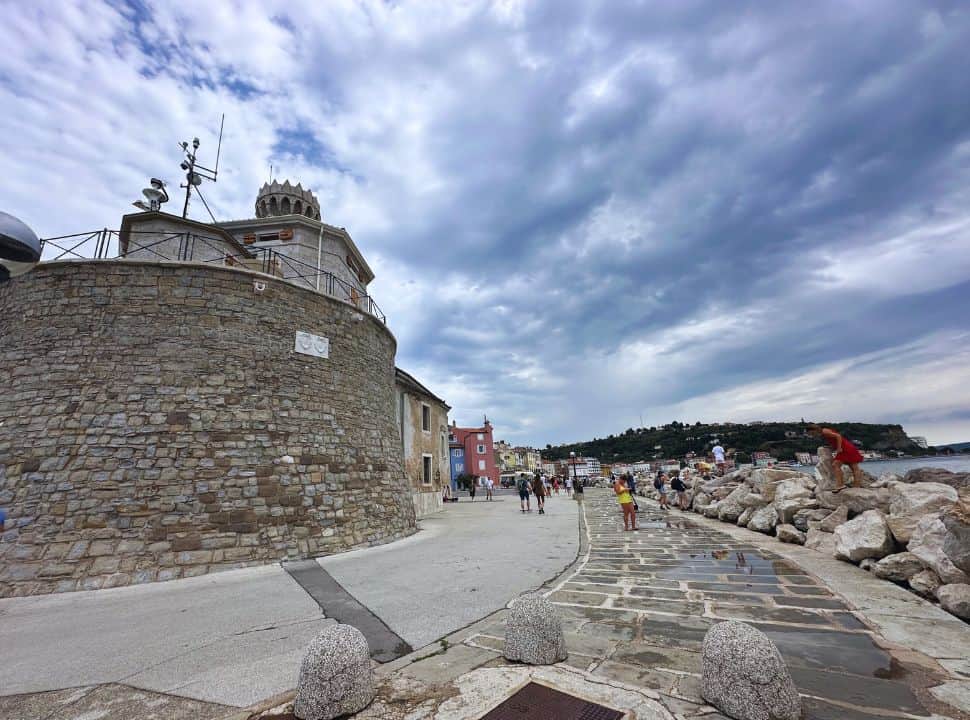
After lunch, we highly recommend visiting the Walls of Piran. This is the one thing we regret missing. We were caught out by the weather and didn’t go, but in hindsight, it’s a must-do.
The views from the top are said to be the best in town. You can see across the entire Piran Bay, along the Slovenian and even Italian coastline, and on a clear day, as far as the Julian Alps.
There’s also a small lighthouse you can climb, which used to be home to a lighthouse keeper in the 1870s. It’s the perfect spot for a nice extra perspective over the town and walls.
- Entrance: €3 adults, children under 12 free
- Opening hours: 08:00–20:00
Late Afternoon: Coastal Walk & Swim
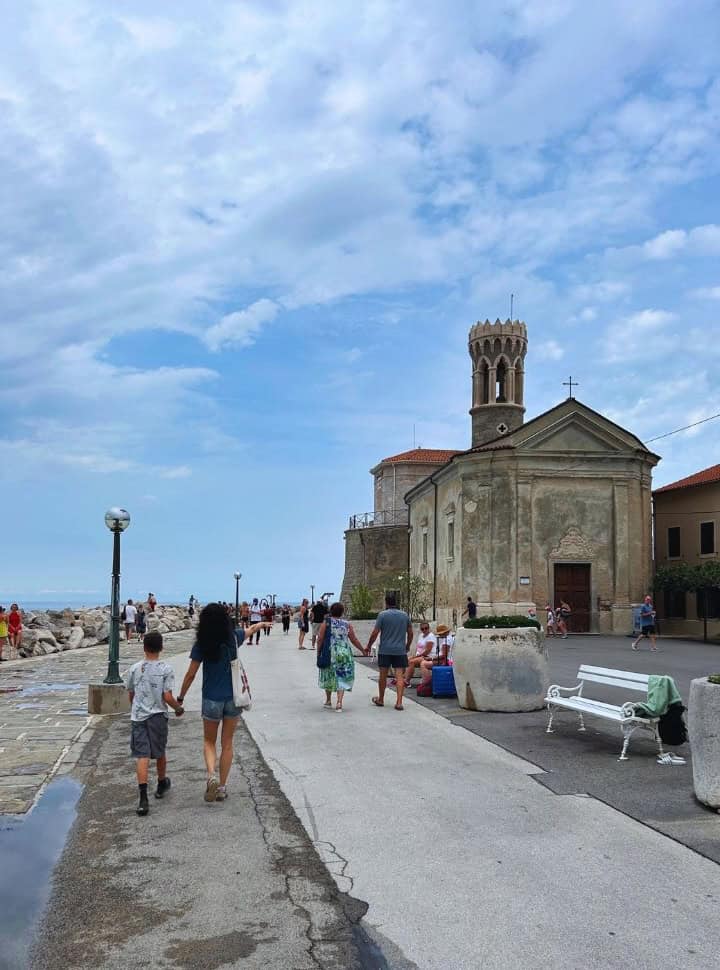
Once back in town, take some time to walk along the waterfront promenade. Unlike many seaside destinations, Piran doesn’t really have sandy beaches. Instead, you’ll find cement platforms, some hidden between boulders, small ladders into the sea, and locals casually jumping straight into the Adriatic.
We were surprised to see locals lounging on sun chairs along the promenade, completely unfazed by passing tourists or even cloudy weather.
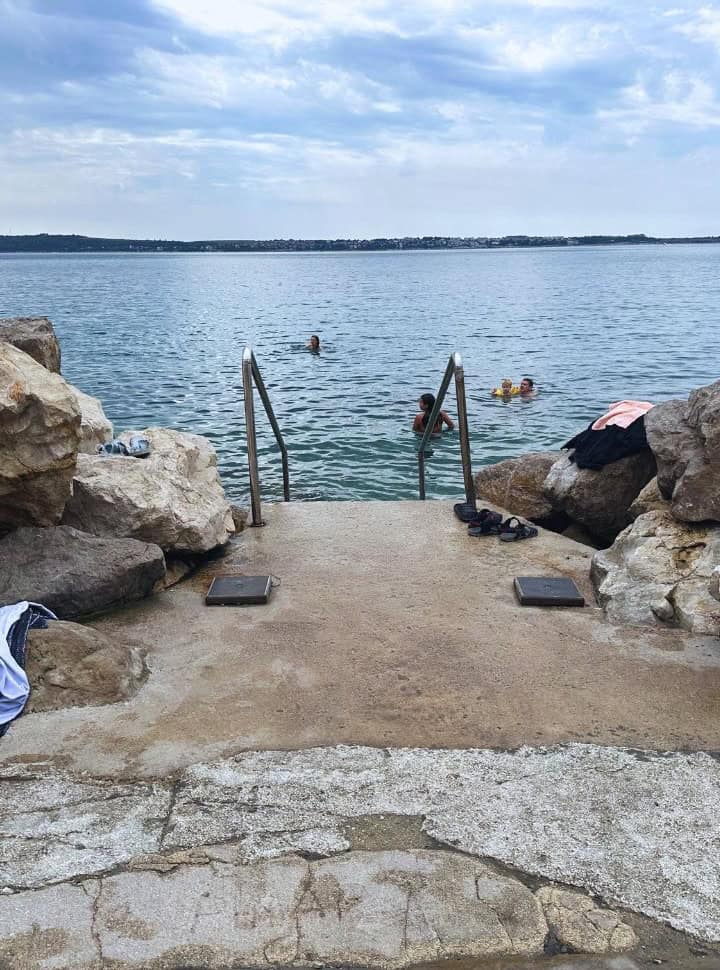
If you’re visiting in summer, bring your swimwear. A quick swim is one of the best ways to experience the town.
For a quieter feel, keep walking towards the tip of the peninsula where there are more peaceful spots to sit by the water.
Sunset: The Best Time in Piran
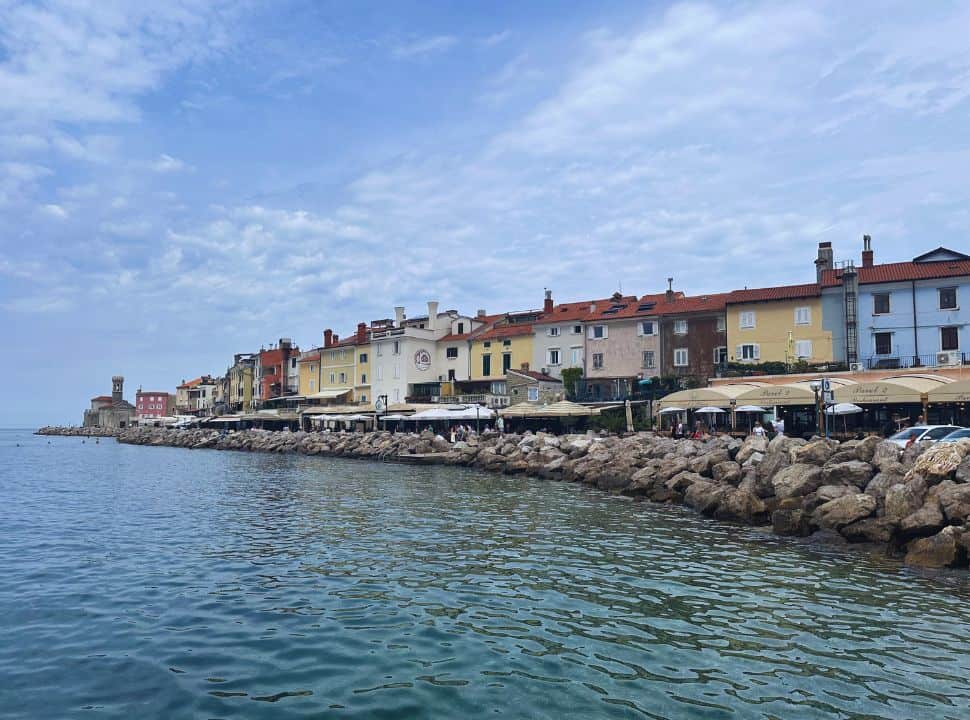
If you can stay until sunset, do it. The sun sets quite late in summer, so even if you miss it, there are still plenty of golden-hour moments to catch.
We didn’t quite make it to full sunset, but there are lots of waterfront spots where you can still enjoy the evening light after dinner.
Find a spot along the waterfront, grab a drink, and watch the day come to an end over the Adriatic.
Our Ideal Day in Piran
If we were planning it again, we’d spend:
- 2–3 hours wandering through the old town and Tartini Square
- 1 hour visiting St. George’s Church and the viewpoints
- 1–1.5 hours enjoying a relaxed lunch by the sea
- 1 hour exploring the town walls
- 2–3 hours strolling the waterfront, swimming, and soaking up the atmosphere
- Sunset along the coast with a drink in hand
If you’re looking to explore beyond the towns, we found a great website with some beautiful hiking trails in and around Piran. It’s a fantastic way to discover a quieter side of the Slovenian coast and enjoy some of its best coastal scenery. Find the trails here.
Day 2 Izola & Strunjan Nature Reserve, Moonbay
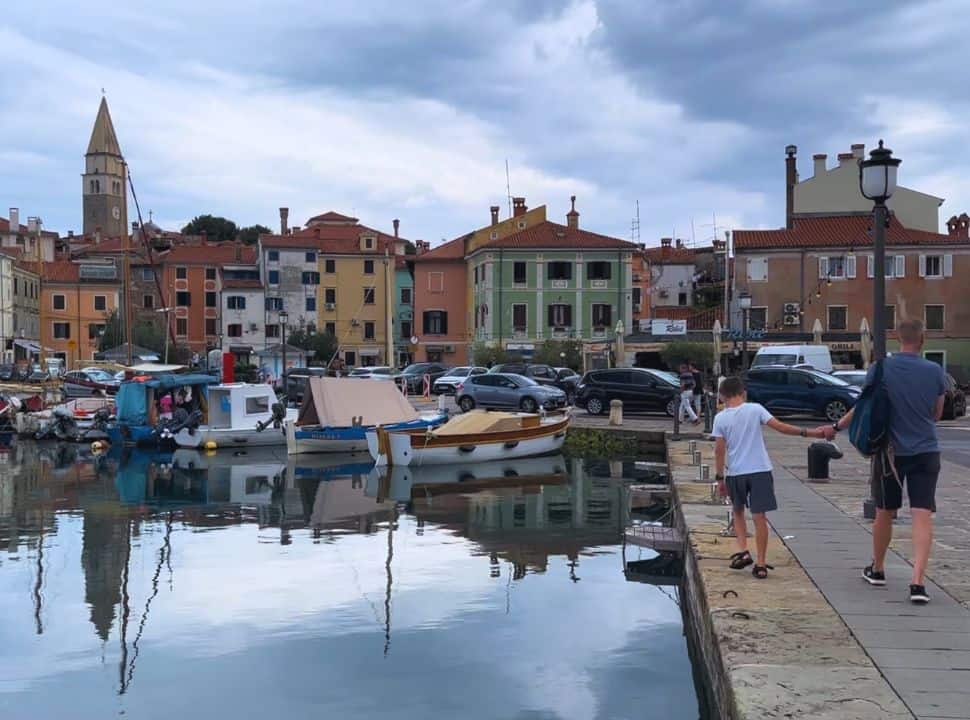
We were really pleasantly surprised while wandering around Izola. It feels a bit like a smaller, quieter version of Piran, which also means it’s noticeably less crowded.
It’s a small, easy place to explore on foot, and you can see most of it in a short walk. That makes it perfect to combine with a visit to the nearby nature reserve or a beach in the afternoon.
Morning: Explore Izola
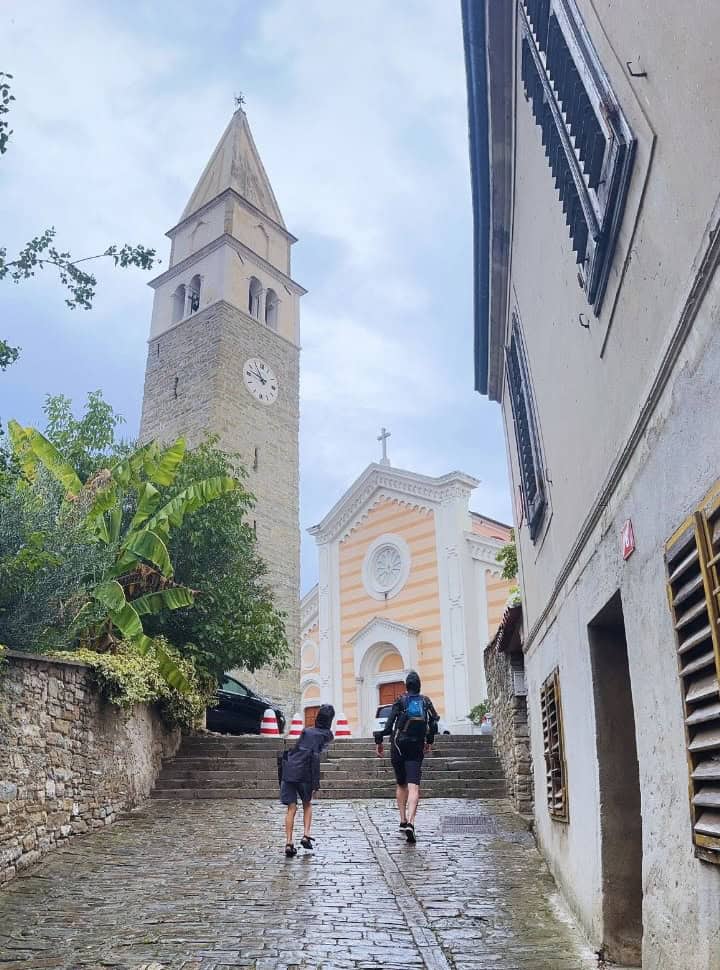
The first time we visited Izola, it was pouring rain, so we didn’t see it at its best. We came back again on a sunny afternoon and quickly realised just how much the weather can change the atmosphere. Suddenly the town felt much more charming and alive.
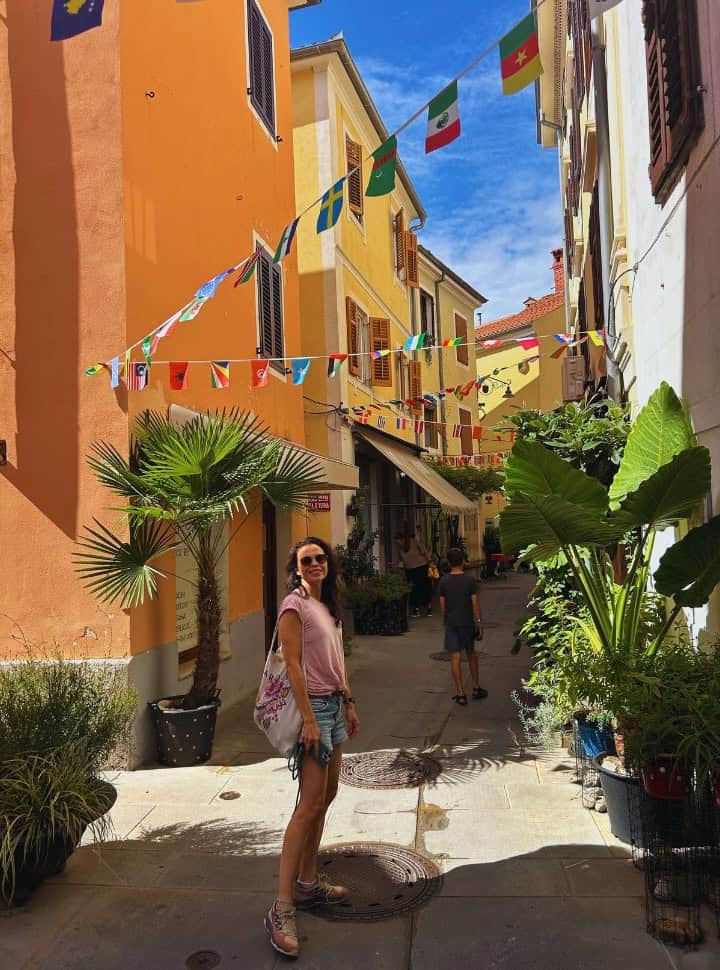
Izola doesn’t have many big sights. And that’s exactly its charm. It’s more of a relaxed seaside town where you can enjoy breakfast, coffee, or a slow walk through the streets and along the harbour.
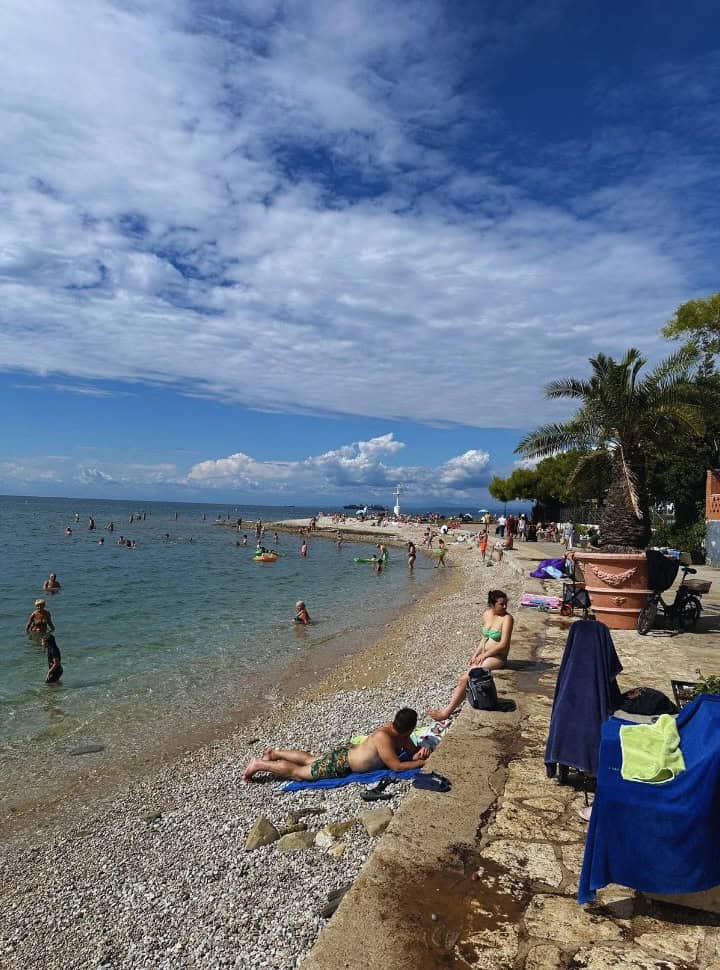
If the weather is good, you can even stop for a quick swim at Svetilnik Beach nearby.
Lunch: Seafront Dining or going local
Around lunchtime, pick one of the restaurants along the harbour or waterfront. Seafood is the obvious choice here, but there are plenty of options if fish isn’t your thing.
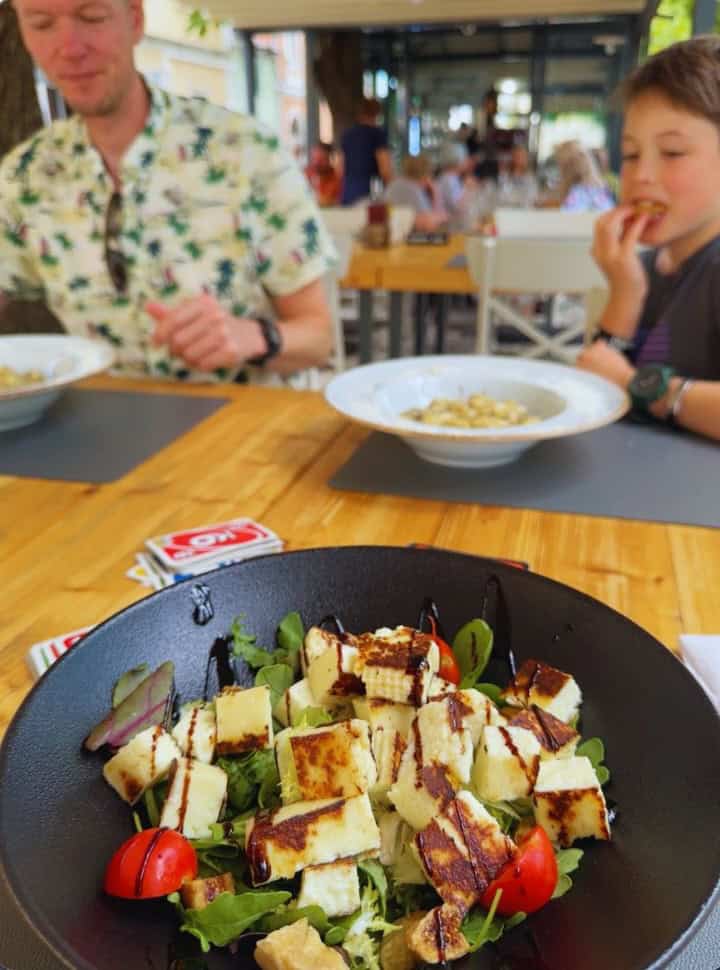
Somehow we ended up in a restaurant away from the city center, that was obvious famous for it’s meat dishes. Since we are vegeterian, we luckily enjoyed the various options but if you are a meat eater, this is the place to be.
The atmosphere was great. We were there on a Sunday, and families getting together for sunday lunch added to the charm.
Afternoon: Strunjan Nature Reserve & Moon Bay
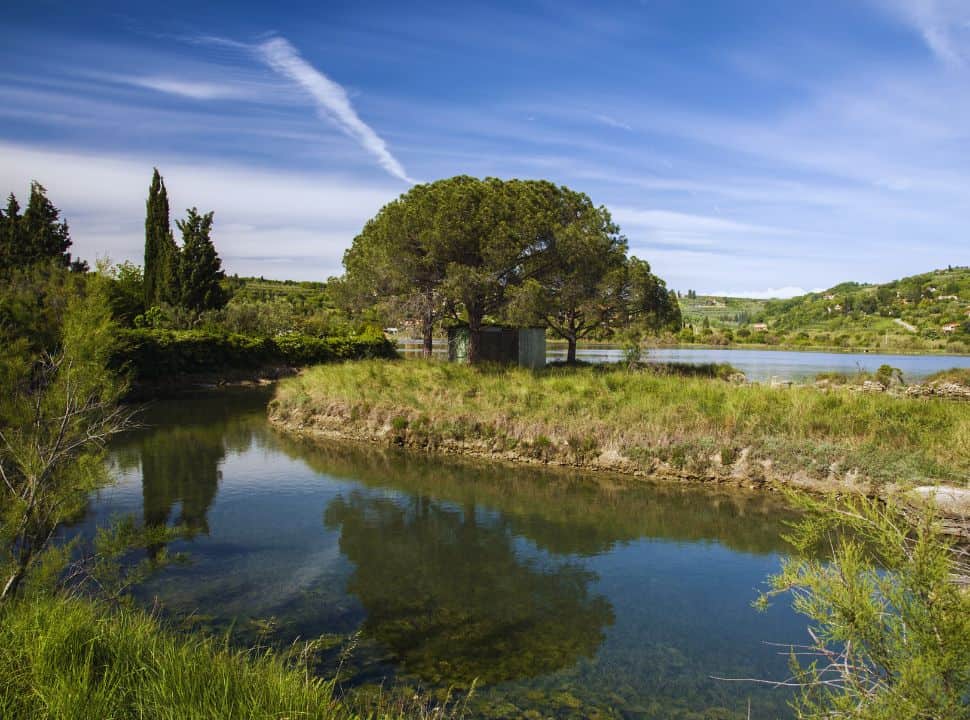
After lunch, head towards Strunjan Nature Reserve. If you’re driving, there are several parking places. The one closest to the beach fills up quickly on warm days, so you might need to head to the one a bit further away. From there, follow the walking paths towards the cliffs and Moon Bay.
We actually didn’t make it to Strunjan Nature Reserve or Moon Bay ourselves. Our campsite was located in the next bay, with its own little beach just a short walk away. Whenever the sun came out, we simply couldn’t resist spending a few hours there instead.
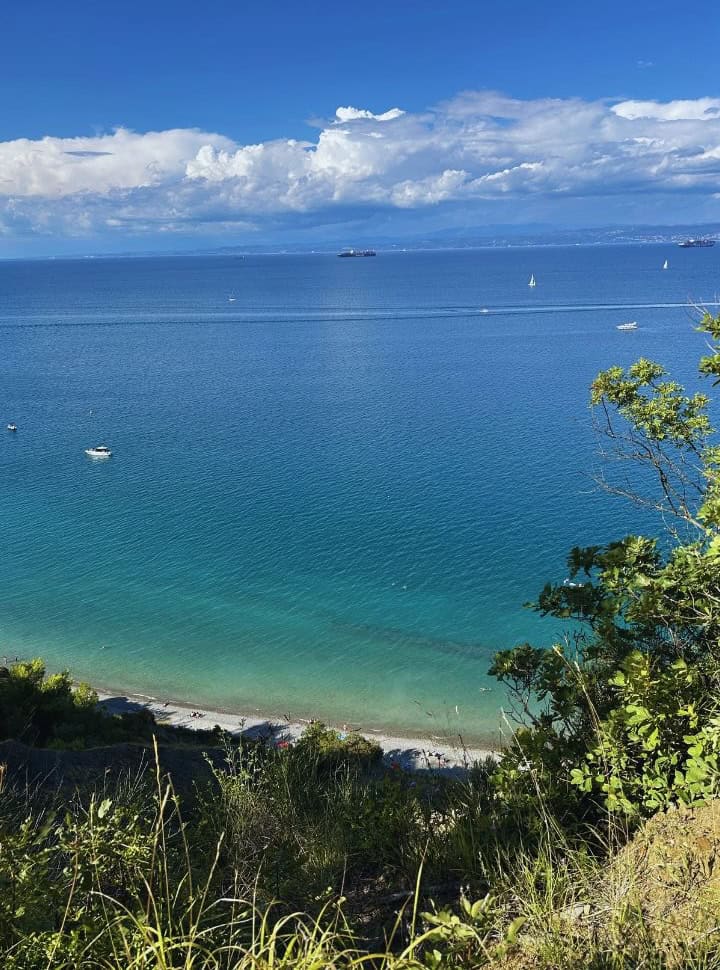
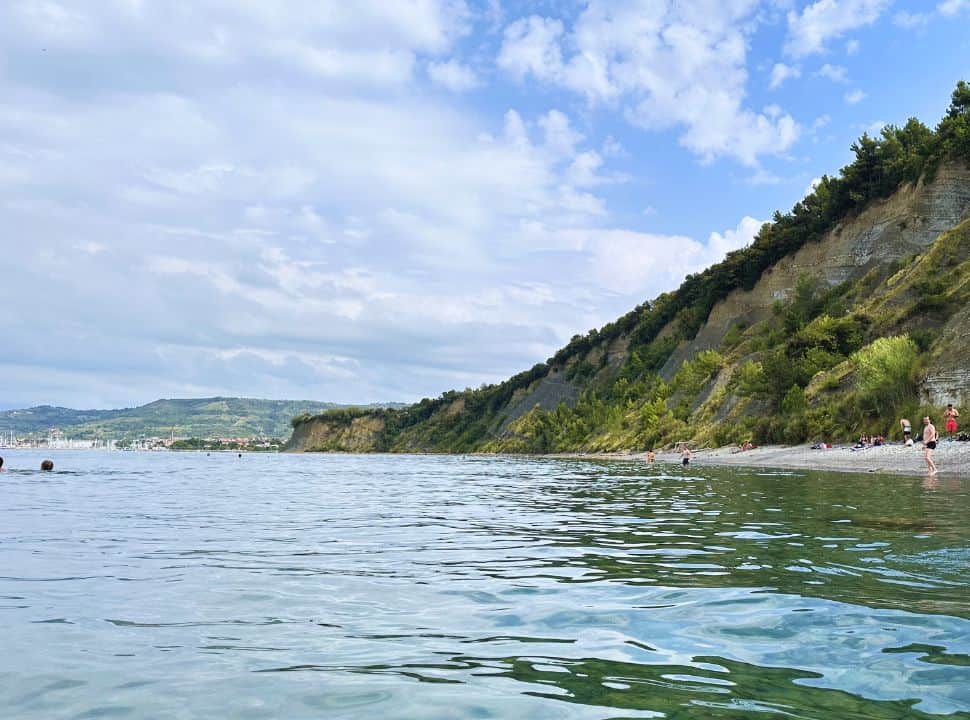
Still, we recommend hiking to Moon Bay. The viewpoint over Moon Bay (Mesečev Zaliv) is said to be one of the most beautiful along the Slovenian coast. The hiking trail also leads you past several other viewpoints along the cliffs.
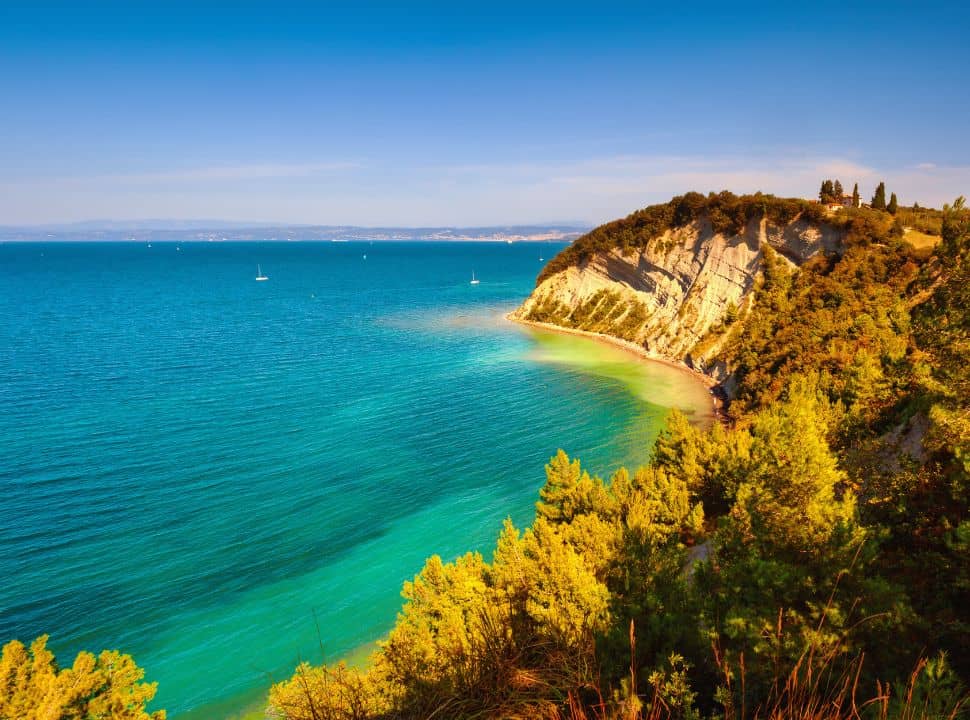
If you have time, you can continue down towards Moon Bay for a swim. The water is known to be crystal clear, and on a sunny days the turquoise colors are really striking.
If Moon Bay just a bit similar to our own little stretch of coast, then we can easily imagine how beautiful it is when the light hits just right.
Late Afternoon: Salt Pans & Sunset
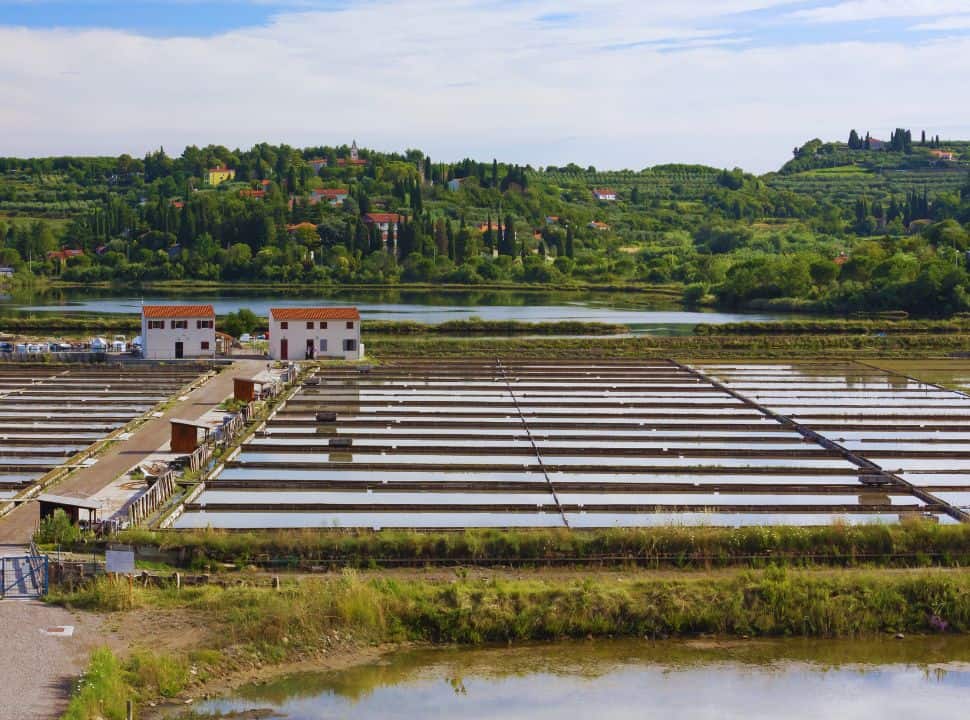
Before heading back, make a quick stop at the Strunjan Salt Pans. They add a bit of history to the day and are an easy detour.
Our Ideal Day in Izola
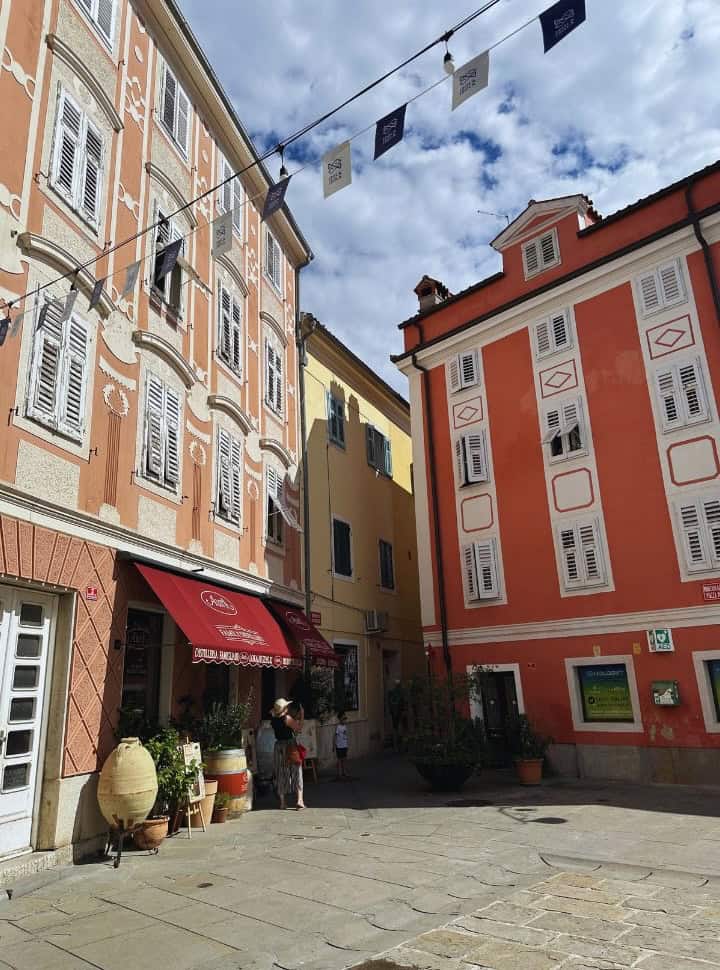
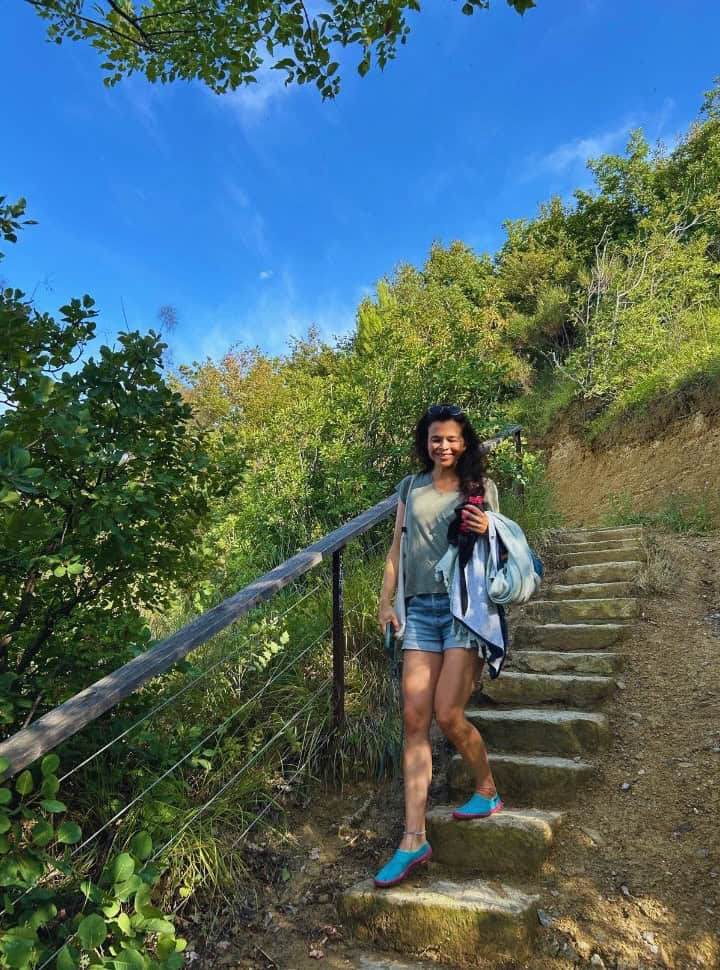
If we were doing it again, we’d spend:
- 2–3 hours exploring Izola
- 1–1.5 hours for lunch and a relaxed harbour break
- 3–4 hours walking through Strunjan Nature Reserve, visiting Moon Bay, and stopping at viewpoints
- Sunset somewhere along the cliffs or back in Izola by the water
Day 3 Koper & Trieste
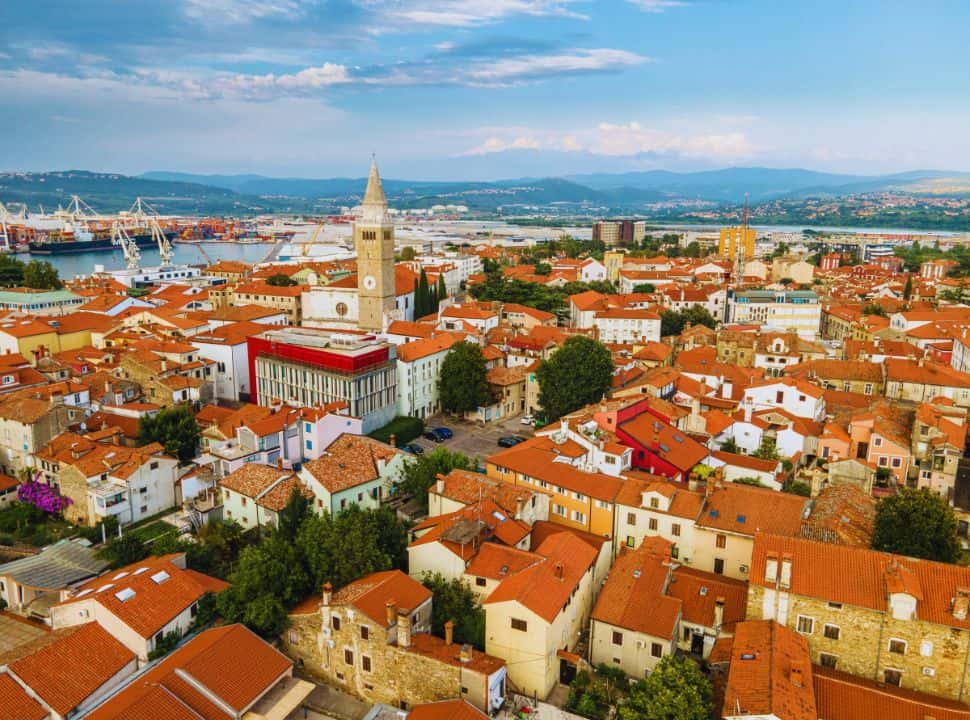
For your final day, we’d combine two countries in one trip, Koper in Slovenia and Trieste in Italy.
To be completely honest, we never really got to experience Koper ourselves. Heavy rain cut our visit short, so we ended up heading straight to Trieste. Looking back, we would still recommend spending a few hours in Koper first before crossing the border.
One thing we did love was how easy it is to travel between the two. Regular buses connect Koper and Trieste in about an hour, making this an ideal day trip if you’re travelling without a car.
Morning: Explore Koper
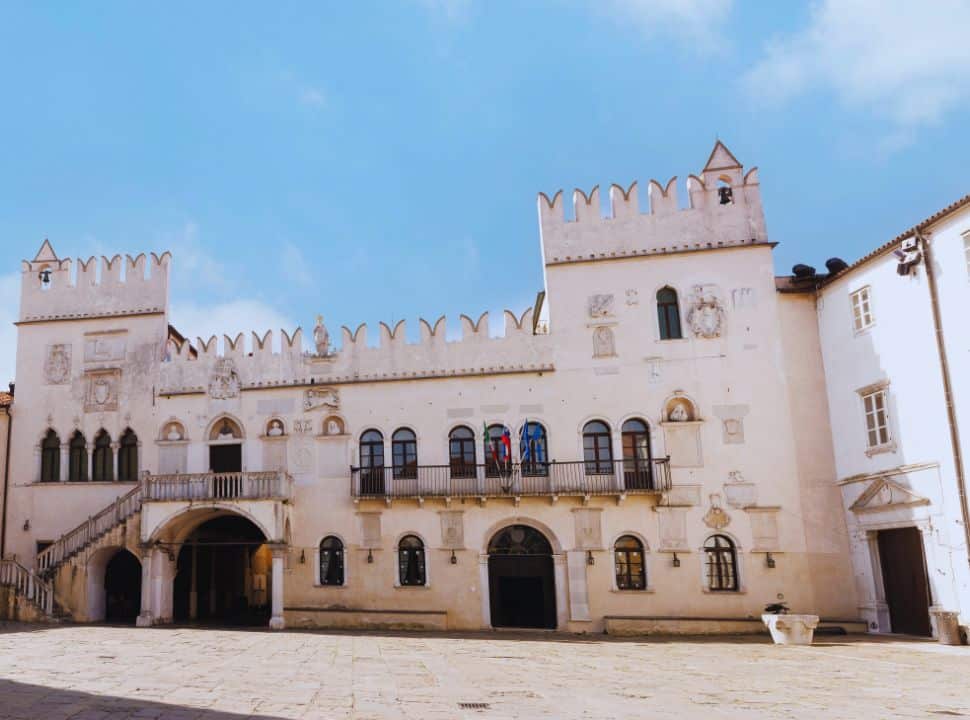
Start your morning in Koper’s old town. It’s Slovenia’s largest coastal town, known for its medieval centre and Venetian influences. Most of the historic sights are centred around Tito Square, where you’ll find the impressive Praetorian Palace and the Cathedral of the Assumption.
From there, simply wander through the surrounding streets. Like the other coastal towns, Koper is compact and easy to explore on foot. Stop for a coffee along the waterfront before heading to Italy, just a 30 minutes drive away.
Lunch: Arrive in Trieste
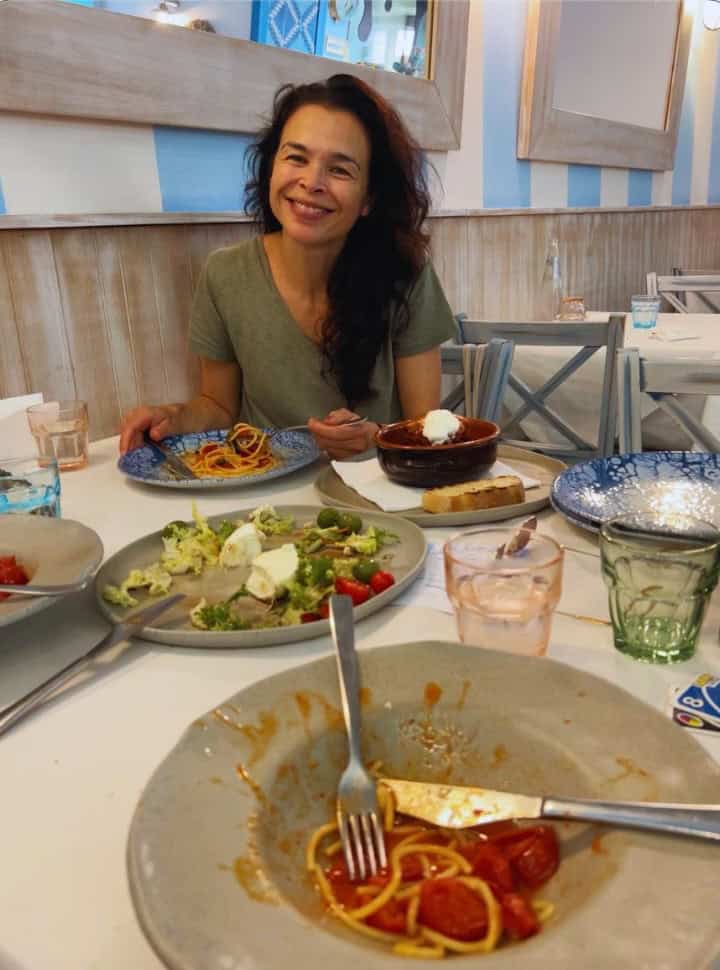
Before you know it, you’ll be crossing the border and arriving in Trieste.
Let’s be honest, the food was one of the biggest reasons we wanted to visit. As soon as we arrived, we headed straight for a restaurant and enjoyed a long Italian lunch.
Whether it’s fresh pasta, pizza, seafood, or simply an espresso, Trieste will give you a splash of Italy that you can only find in Italy itself.
Afternoon: Explore Trieste
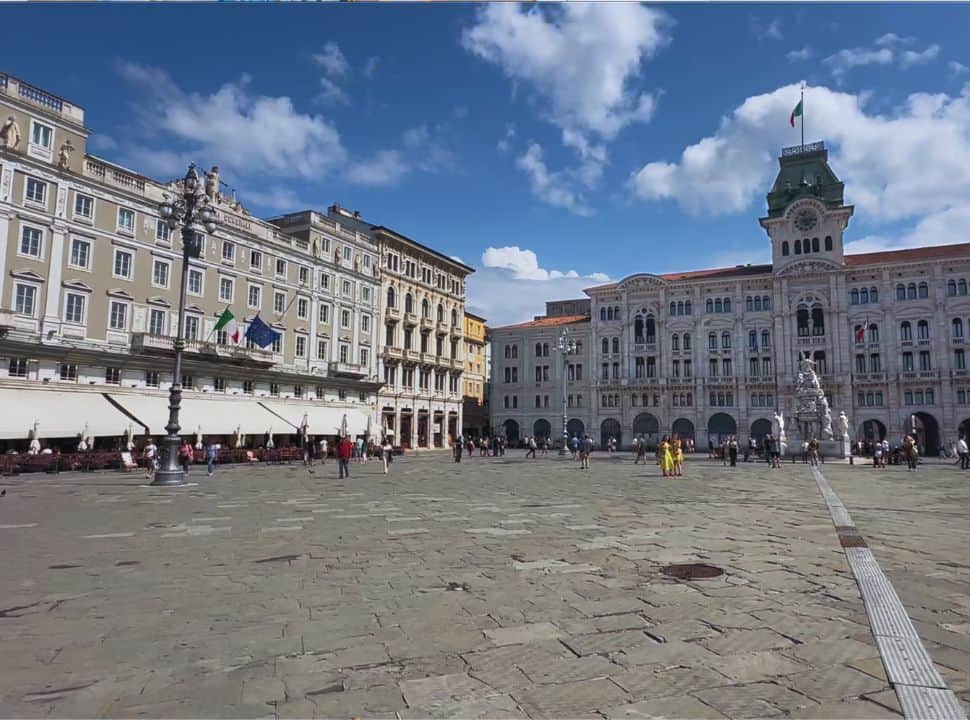
After lunch, spend the afternoon exploring the city on foot.
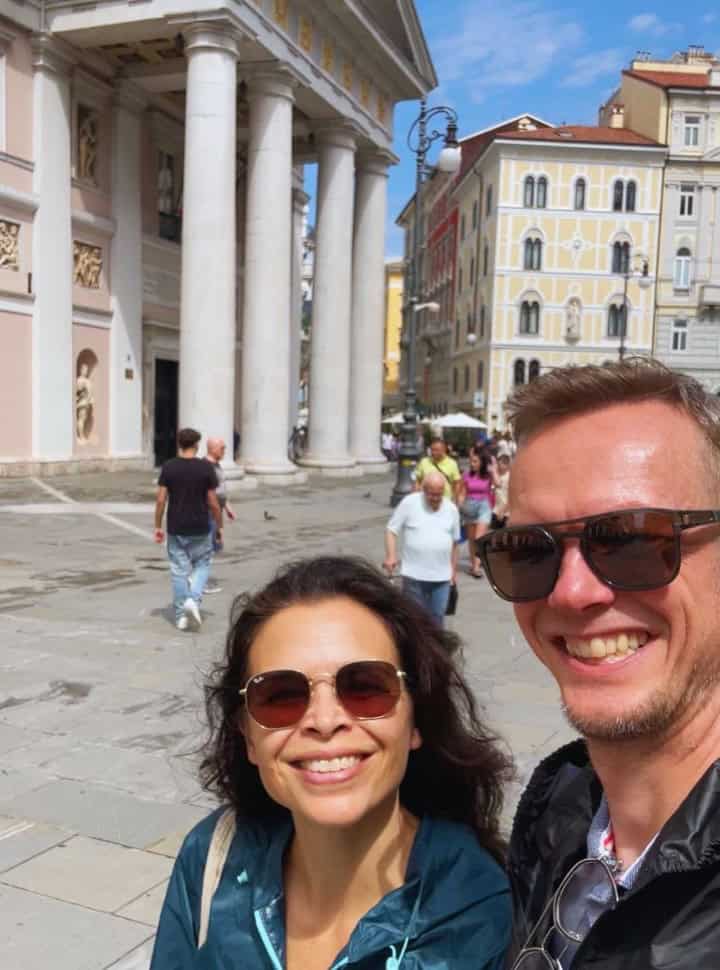
Start at Piazza Unità d’Italia, one of the largest sea-facing squares in Europe. Surrounded by magnificent buildings and opening directly onto the Adriatic, it’s easily one of the most impressive squares we’ve visited.
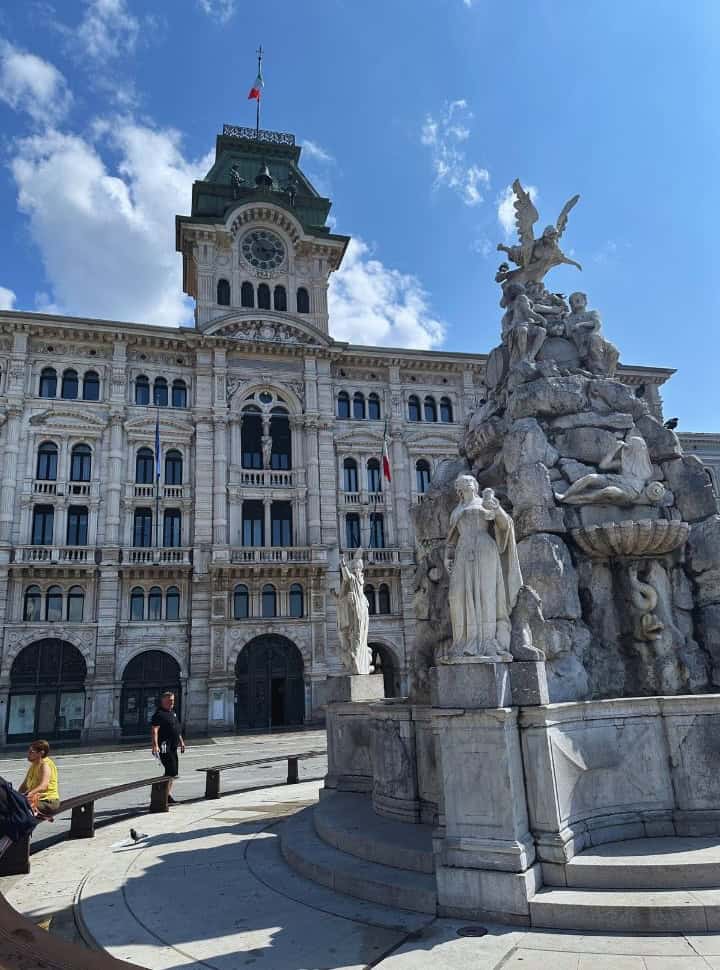
From there, wander through the elegant streets towards Piazza della Borsa before continuing to Canal Grande. We loved sitting here for a while, watching the boats and admiring the beautiful buildings built along the water.
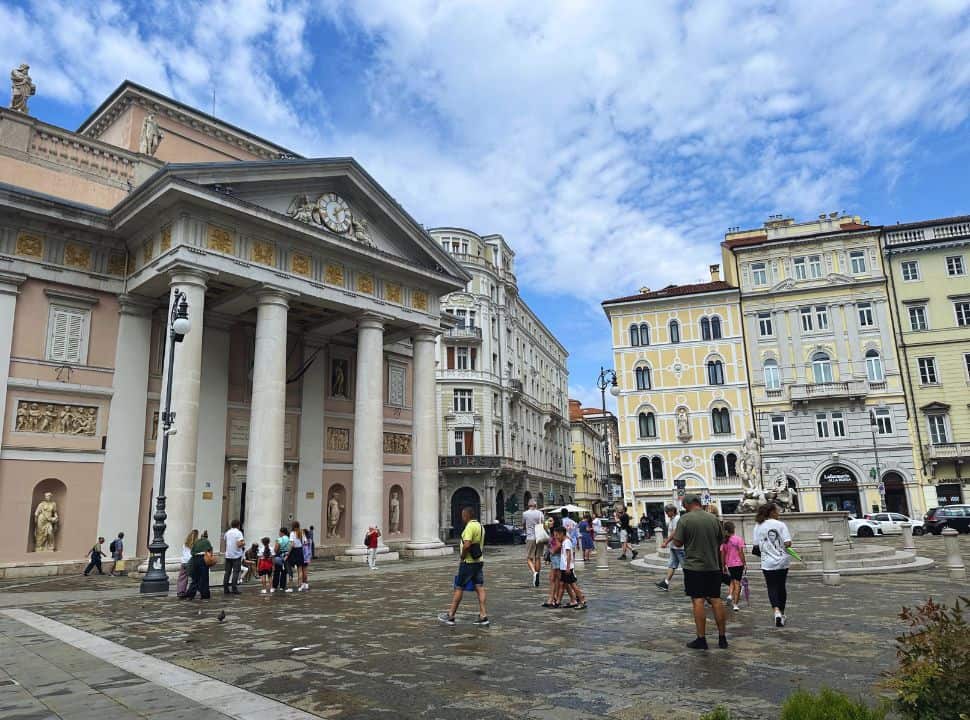
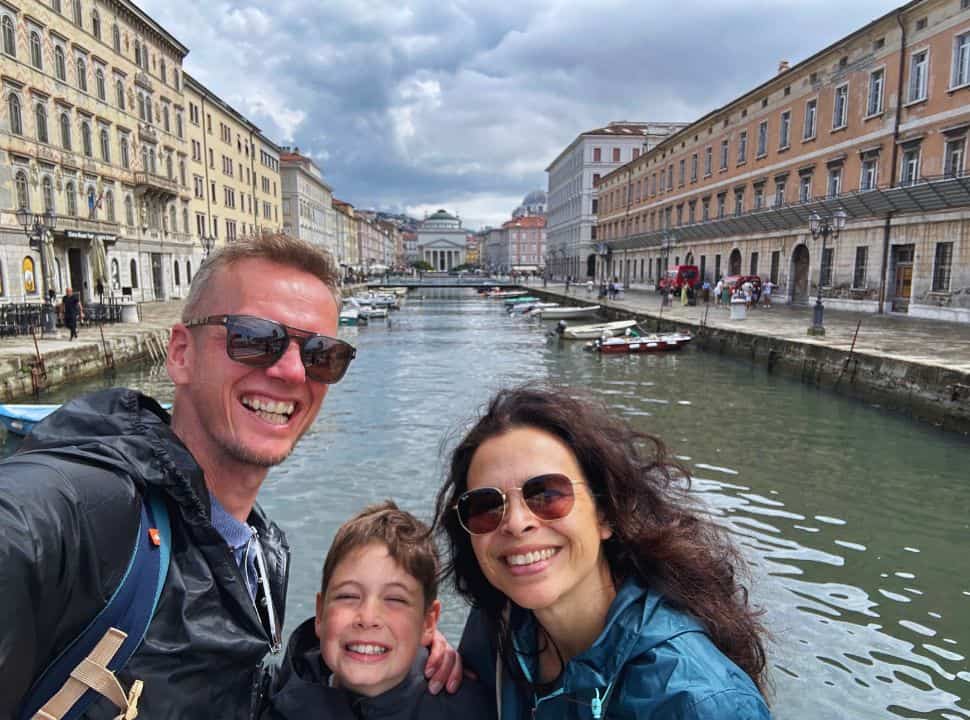
Don’t miss a walk along Molo Audace either. Stretching out into the Adriatic, it’s one of the best places to enjoy the sea views and soak up the city’s atmosphere.
If you have a little more time, head up to Castello di San Giusto for panoramic views over Trieste and the coastline.
Evening: Return to Slovenia
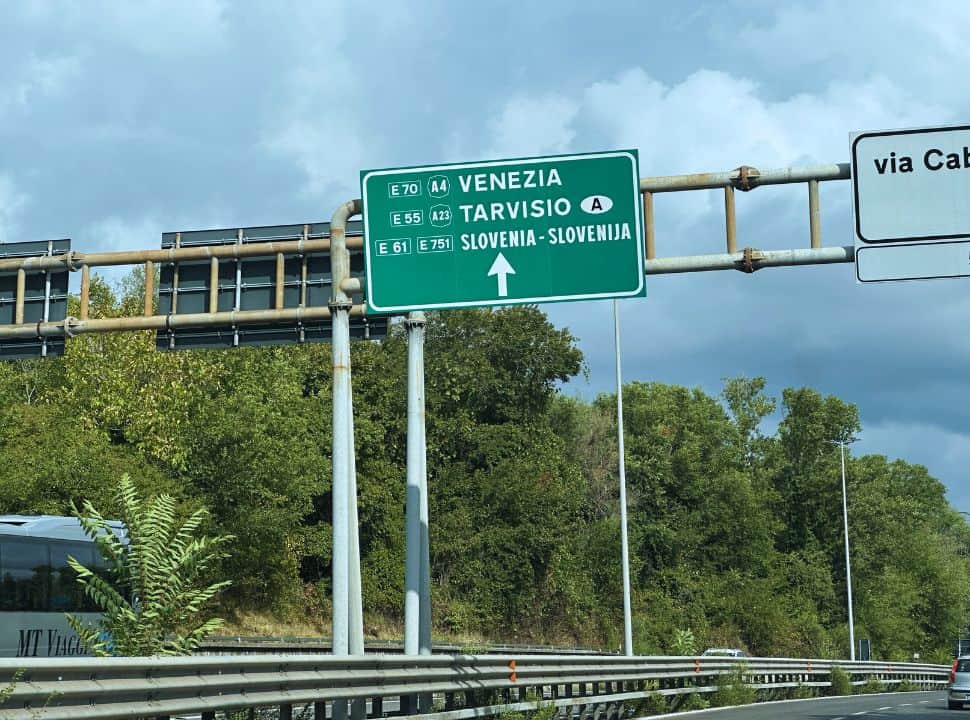
In the evening, head back to Koper or wherever you’re staying along the Slovenian coast.
For us, this was one of the nicest day trips from Slovenia. Within a single day, you experience two countries, two cultures, and two completely different coastal cities without spending hours traveling.
Our Ideal Day in Koper and Trieste
If we were doing it again, we’d spend:
- 2–3 hours exploring Koper’s old town
- 1 hour enjoying a coffee and waterfront stroll
- 1 hour travelling to Trieste
- 1–1.5 hours for a relaxed Italian lunch
- 3–4 hours wandering through Trieste’s historic centre and waterfront
- Late afternoon enjoying coffee or aperitivo before heading back
Where to stay at the Slovenian Coastal Towns
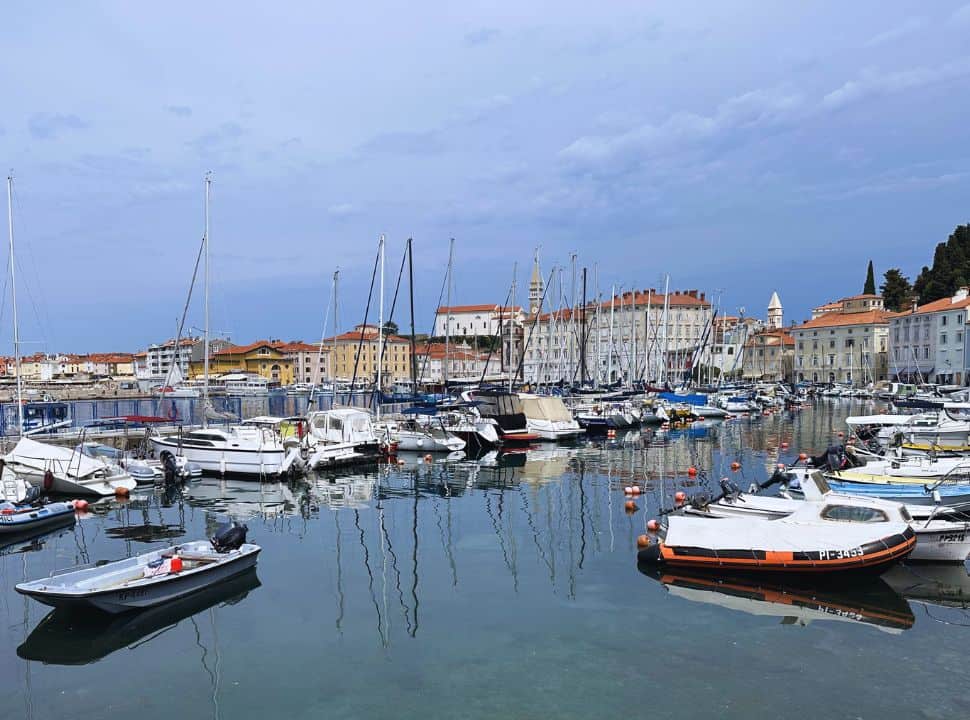
We spent our entire stay at a campsite just outside Izola, and for us it was the perfect base. Its central location made it easy to reach Piran, Koper, and even Trieste, all within a short drive or bus ride.
That said, we completely understand why many people choose to stay in Piran. If your main goal is to soak up its charming streets, waterfront restaurants, and Venetian atmosphere for a day or two, staying right in the heart of town would be a wonderful experience.
Places to stay in Piran
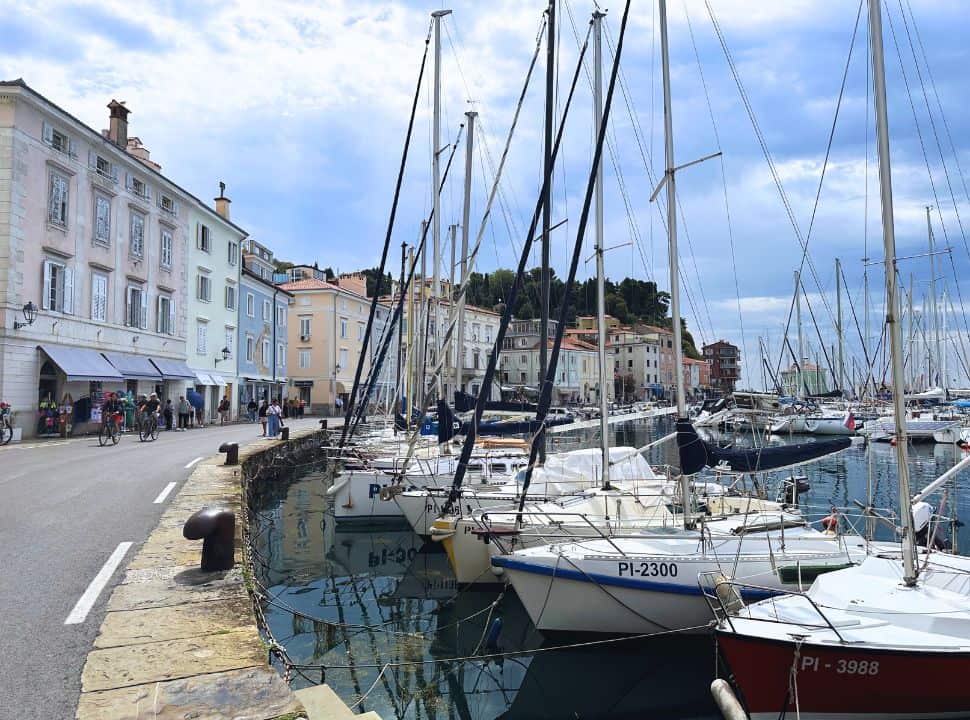
Staying in Piran lets you experience the town at its best – early in the morning before the day-trippers arrive and again in the evening, when the streets become quieter and the sun begins to set over the Adriatic.
Keep in mind that cars are not allowed in the historic centre. You’ll need to park in one of the garages just outside town, which costs around €22 per day, before taking the free shuttle into the centre. Accommodation in or near the old town typically starts at around €150 per night during the main season.
Second Life (Hotel Zala) – Second Life in Piran is a fantastic choice if you want to stay right in the heart of the old town, just a few steps from the waterfront. The friendly staff, exceptional breakfast, cosy rooftop honesty bar, and well-organised parking shuttle makes it one of the popular stays on the Slovenian coast.
If you are looking more for an apartment, self catering accommodation check out:
Apartment Bruna – a wonderful choice if you’re looking for a peaceful stay just a short walk from Piran’s old town. The highlight is the stunning terrace overlooking the harbour, while the warm hospitality, comfortable apartment, and thoughtful touches from Bruna make it feel like a home away from home.
Places to stay in Izola
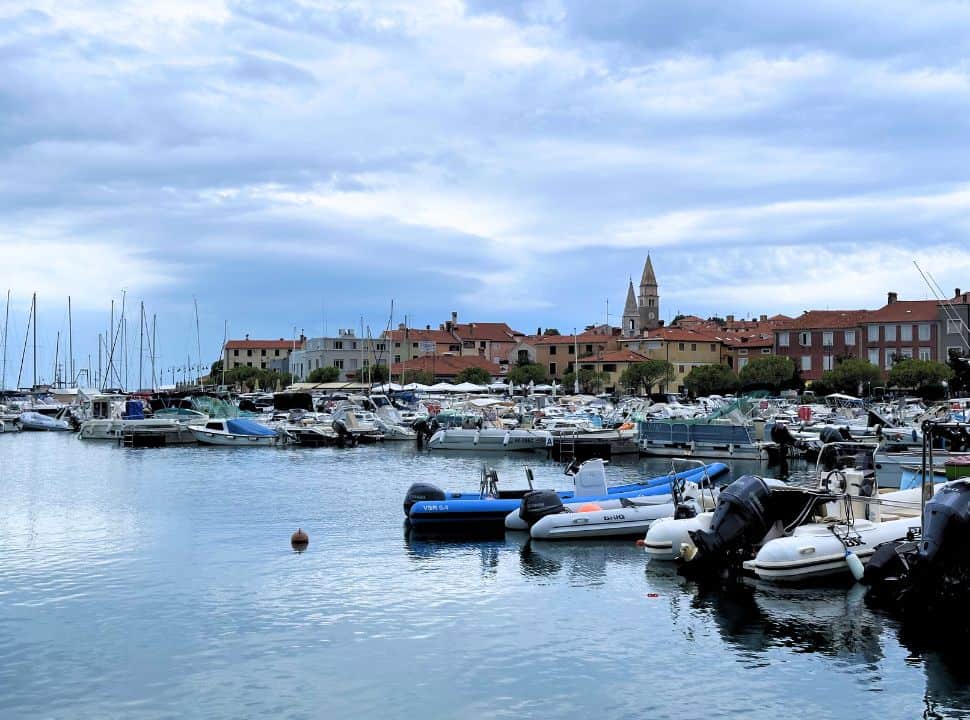
However, if you want something less crowded, cheaper parking and more central, then Izola is a great option.
Hotel Marina – one of the best places to stay in Izola if you want to be right on the harbour and just steps from the beach. The sea-view rooms with balconies are the highlight, while the excellent breakfast, friendly staff, and great on-site restaurant make it an easy hotel to recommend.
Apartma Na terasi is a cosy, well-equipped apartment tucked away in the heart of Izola’s old town, just a short walk from both the beach and the harbour. The peaceful terrace is the standout feature, together with the thoughtful touches from the host, Tina
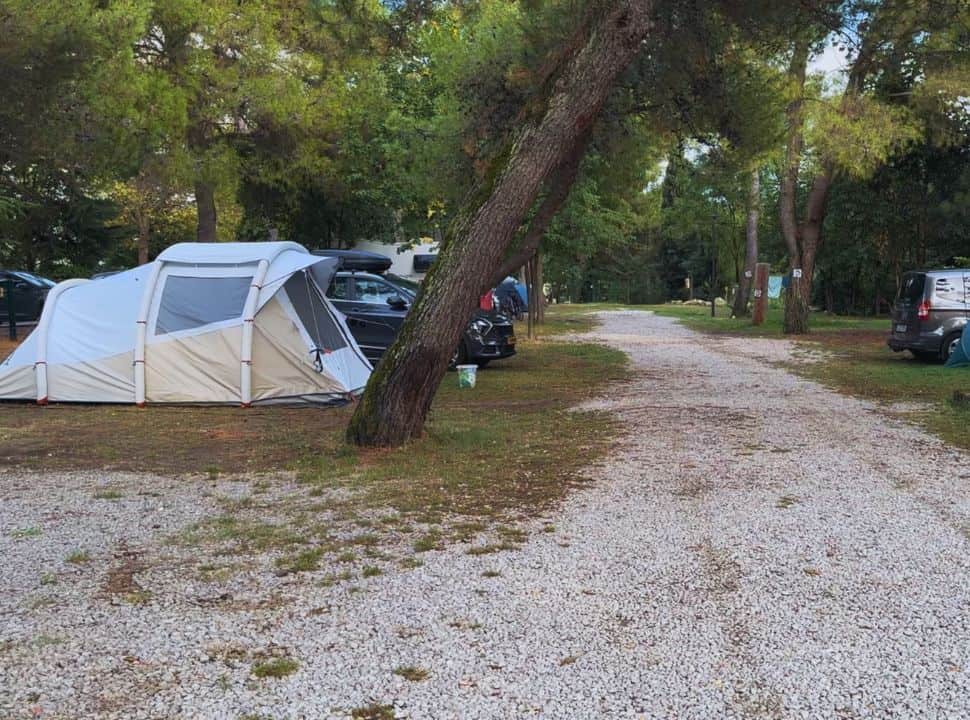
Camping Belvedere – We stayed on a campsite nearby Izola, close to a beach. While the facilities were outdated but clean, and there were so many mosquito’s in the month August, we did love the location. Just a 10 minutes downhill hike we were able to enjoy the wonderful Bele Skale beach. A bus stops just in front, giving easy access to all the villages. We took the bus to Piran, saving the hassle of parking.
Getting Around the Slovenian Coast
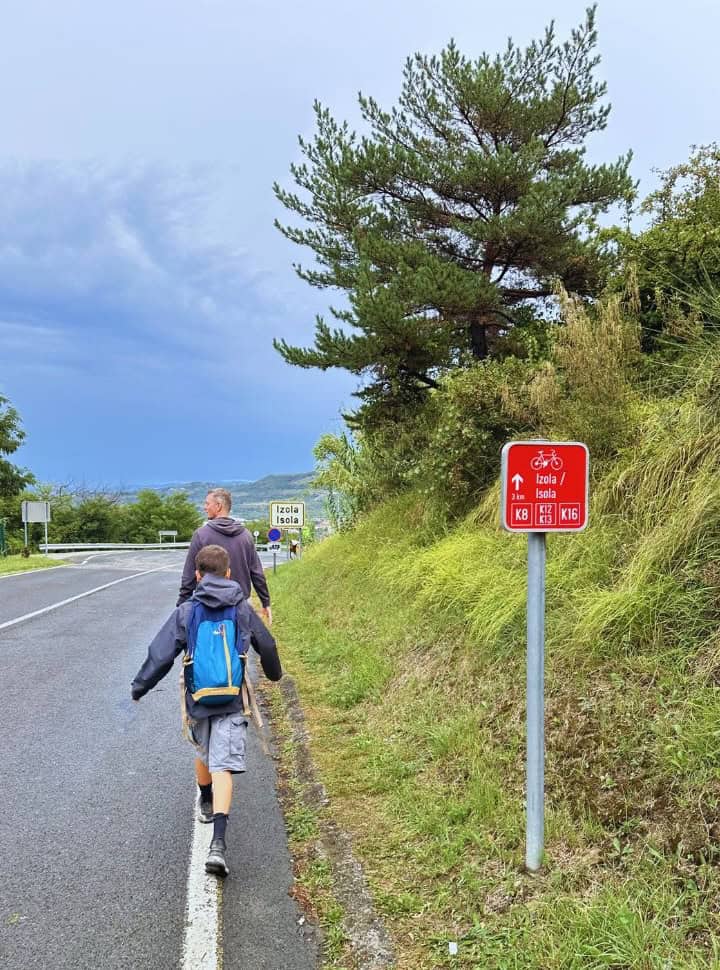
We travelled to the Slovenian coast by car, but once we arrived, we hardly used it. Our recommendation is to leave the car parked and use the local buses instead. They run frequently between the coastal towns, are inexpensive, and save you the hassle of finding parking.
Parking in Piran can be expensive, and cars aren’t allowed in the historic centre. You’ll need to park in one of the garages outside town and take the free shuttle into the centre.
Izola is much easier, with affordable parking just a 5-minute walk from the old town. If you’re staying in one of the coastal towns, the bus is by far the easiest way to get around. Just keep in mind that dogs are generally not allowed on the local buses.
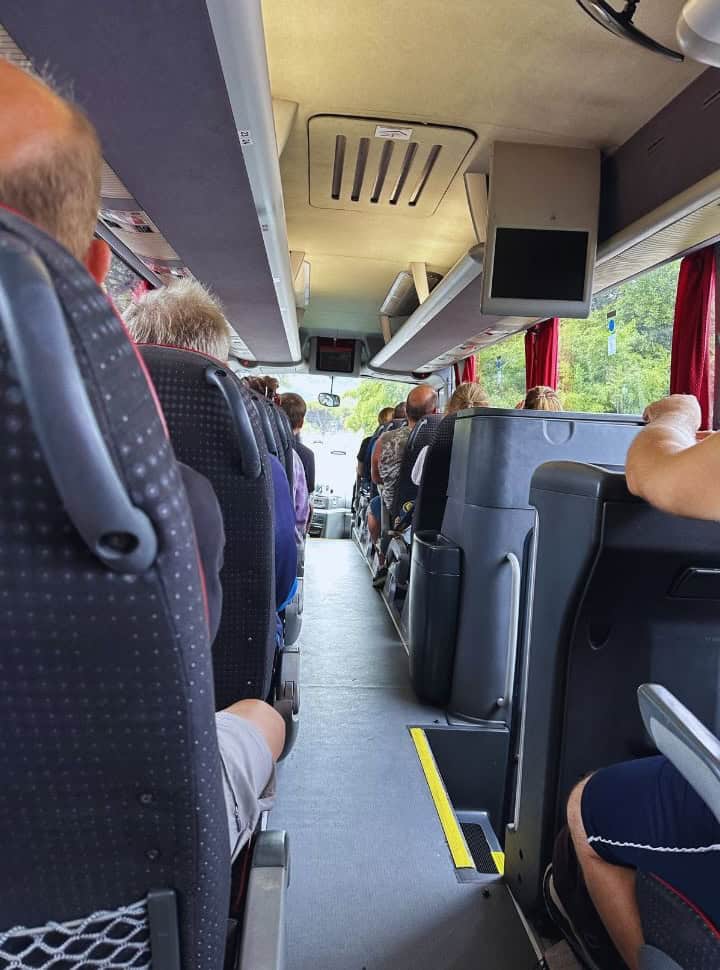
Tickets are pretty cheap, we paid from Izola to Piran 2,50 euro. Make sure to have cash on you as cards are not accepted.
If you’re travelling from Ljubljana without a car, you can also take a direct train to Koper, the only town on Slovenia’s coast with a railway station. From there, regular buses connect you to Izola, Piran, and Portorož. In practice, though, the bus from Ljubljana is often faster and runs more frequently than the train.
| Route | Distance | By bus (approx.) |
|---|---|---|
| Piran → Izola | 9 km | 15–20 min |
| Izola → Koper | 8 km | 10–15 min |
| Piran → Koper | 17 km | 30–40 min |
| Koper → Trieste | 22 km | 45–60 min |
| Piran → Trieste | 37 km | 1–1.5 hrs |
Best Time to Visit the Slovenian Coast
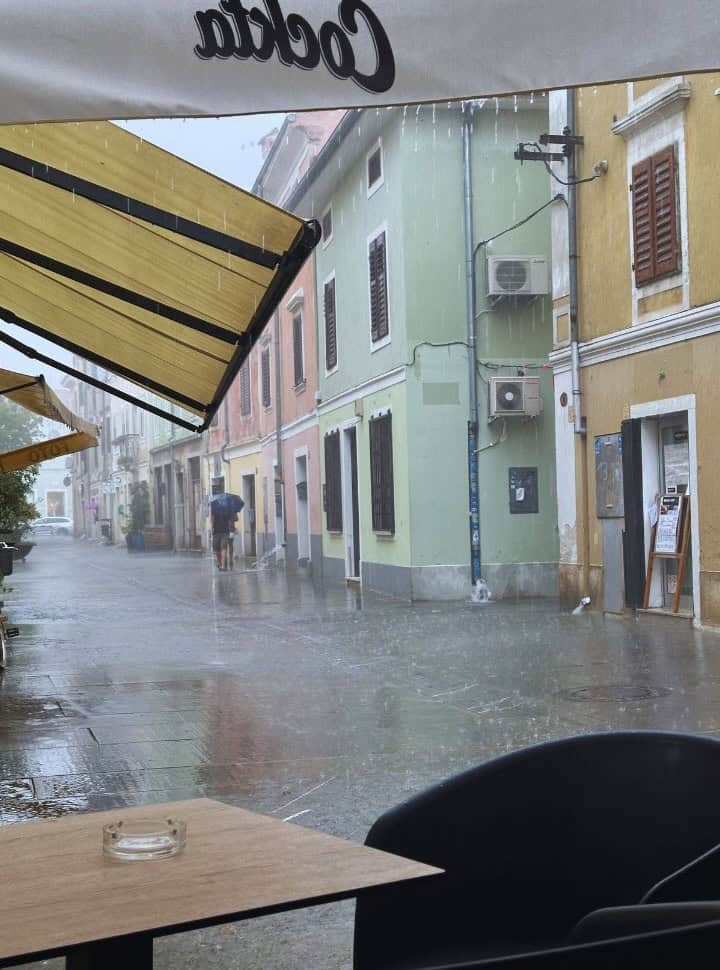
We visited the Slovenian coast in August, right in the middle of the summer holidays. Although it’s the busiest time of year, we were pleasantly surprised that only Piran felt really crowded. Izola and the nearby beaches were much quieter and never felt overwhelming.
The weather, however, was a bit of a mixed bag. We had sunshine, but also plenty of rain and thunderstorms. Even though we headed to the coast hoping to escape the mountain rain, we still got caught in a few showers.
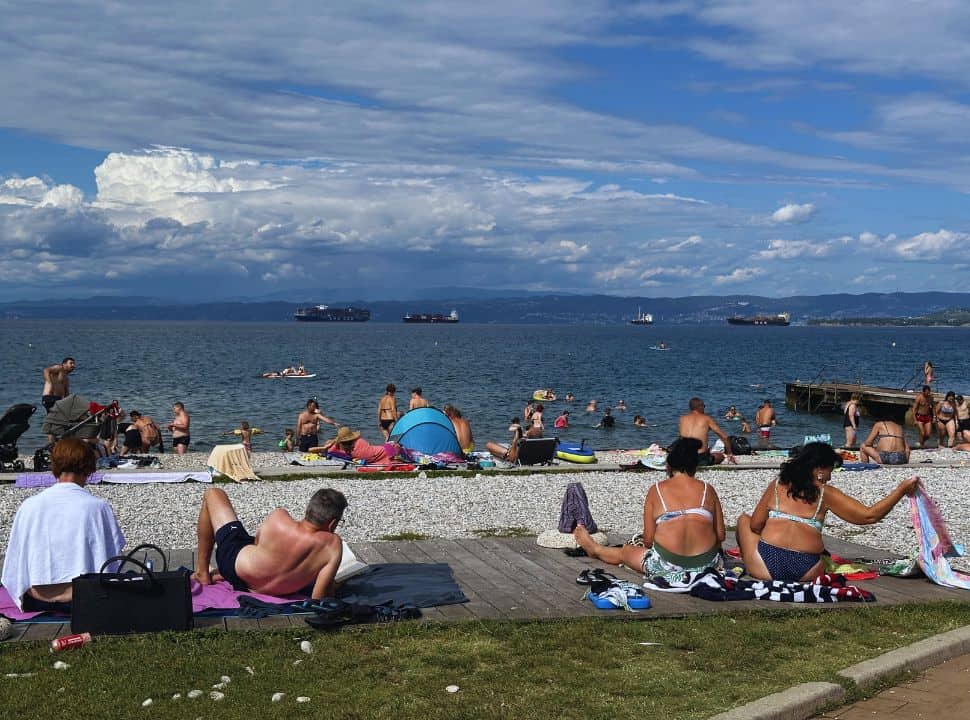
Luckily, when the sun did come out, the coastline looked completely different. The bright blue sky and turquoise Adriatic really bring the colorful towns and beaches to life.
One thing to keep in mind is accommodation. Campsites around Piran were completely full during our visit, so if you’re travelling in July or August, we recommend booking well in advance.
If you prefer quieter streets and lower prices, May, June, September, and early October are probably the best months to visit. The weather is often still warm enough for sightseeing and swimming, but without the peak summer crowds.
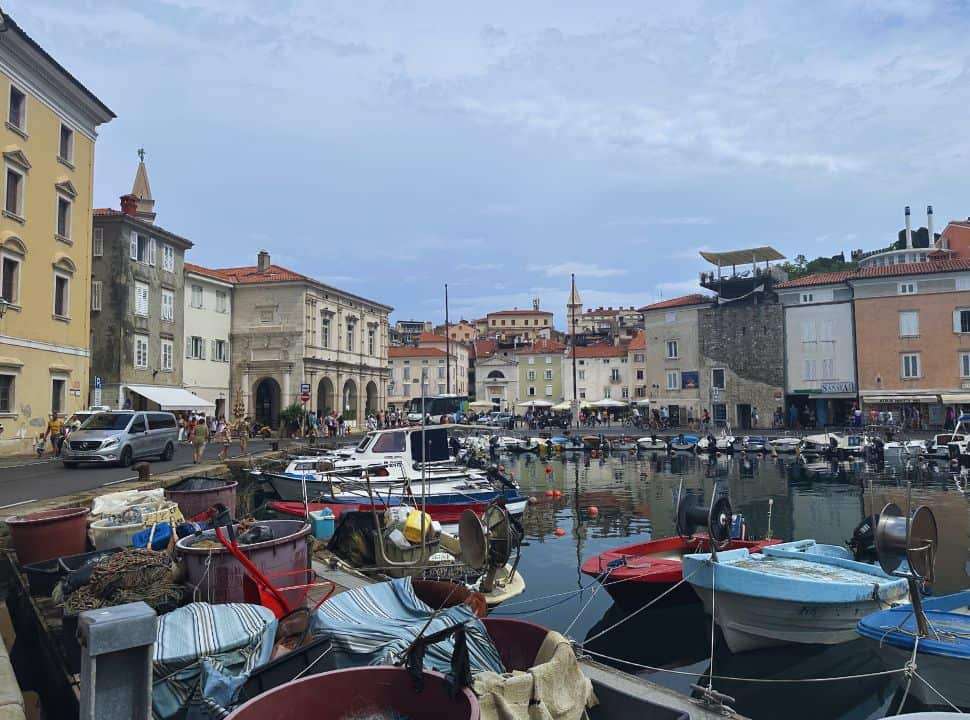
Even winter can be a lovely time to visit. As long as the weather is dry, the coastal towns are still full of charm and perfect for a relaxed city break. Just keep in mind that cloudy or rainy days make the colourful buildings and Adriatic Sea look a little less vibrant than they do under a clear blue sky.
FAQ Slovenian Coastal Towns Itinerary
Is 3 days enough for Slovenia’s coast?
Yes, we think 3 days is the perfect amount of time to experience the highlights of the Slovenian coast. It gives you enough time to explore the charming streets of Piran, combine Izola with Strunjan Nature Reserve or Moon Bay, and spend your final day discovering Koper or even crossing the border to Trieste in Italy.
It’s a surprisingly varied itinerary, with a great mix of historic towns, nature, beaches, and a touch of Italy.
Which town is best along the Slovenian Coast: Piran, Izola or Koper?
It depends on what you’re after. Piran is the most charming and lively, with beautiful Venetian architecture, plenty of restaurants, and the most to see. Izola is smaller, quieter, and was actually our favourite thanks to its relaxed atmosphere and central location. Koper is best known for its historic centre and makes a convenient stop if you’re planning a trip to Trieste.
Can you visit the Slovenian coast without a car?
Yes, you can easily visit the Slovenian coast without a car. Buses run frequently between the towns, are affordable, and save you the hassle (and cost) of parking.
From Ljubljana, you can reach the coast by bus or train, with Koper being the main railway connection point. Once there, it’s simple to continue onwards by local bus.
Is the Slovenian coast expensive?
To be honest, we were a bit surprised by the prices on the Slovenian coast. It felt more expensive than expected, especially since Slovenia is often perceived as a budget-friendly destination.
Accommodation in Piran and nearby towns can be quite pricey in high season, parking adds up quickly, and restaurant meals are similar to Western European prices rather than a “cheap” seaside getaway. Izola and Koper are slightly more affordable, but overall it’s not a low-cost destination. For more details on travel costs in Slovenia, check out what we spent HERE.
Can you swim in the Adriatic sea at the Slovenian Coast?
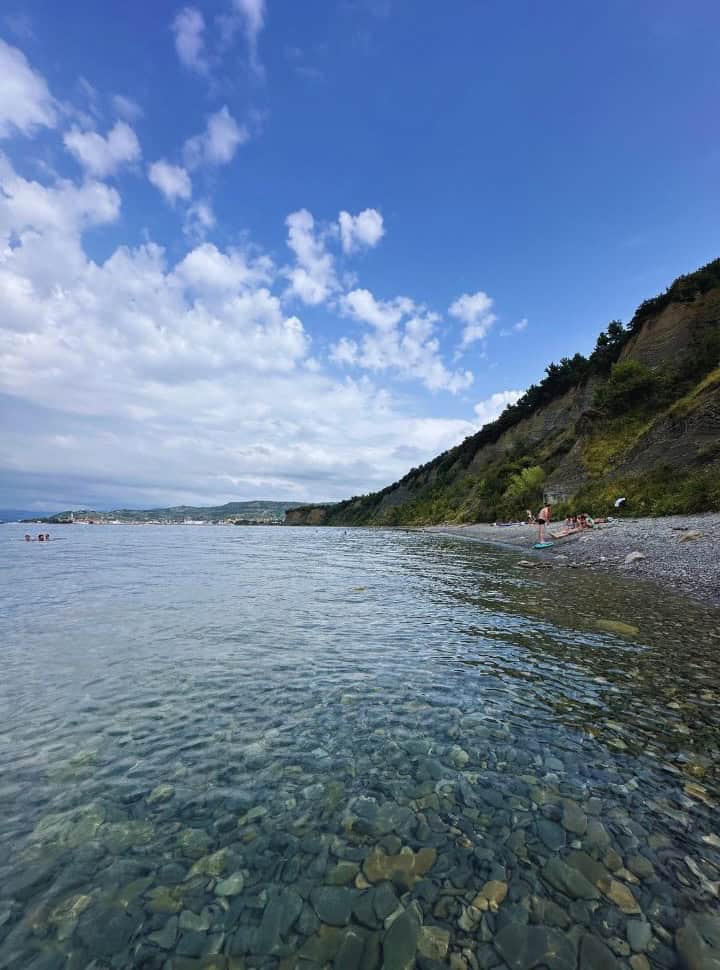
Yes, you can definitely swim in the Adriatic Sea along the Slovenian coast. The water is generally calm, clean, and surprisingly clear, especially on sunny days. While you won’t find long sandy beaches everywhere, there are plenty of spots where you can easily jump in for a swim and enjoy the sea.
Is Portorož worth visiting?
We only passed through Portorož by bus and decided not to stop. It’s a more developed beach resort with large hotels, shops, and a long promenade lined with sunbeds and beach facilities.
It’s known for its sandy beaches and resort-style atmosphere, but it felt quite touristy compared to the smaller towns. We personally preferred the more low-key, local feel of places like Piran and Izola.
Can you combine Slovenia and Trieste?
Yes, you can easily combine Slovenia and Trieste in one trip. If you’re staying on the Slovenian coast, Trieste is an easy day trip just across the border. One afternoon in the city is usually enough to explore the highlights and enjoy the atmosphere before heading back to Slovenia in the evening.
Wrap Up: Slovenian Coastal Towns Itinerary
Looking back, we were pleasantly surprised by Slovenia’s coastline. It’s often overlooked, but towns like Piran and Izola are well worth the detour.
As beach lovers, we didn’t expect much from the swimming spots, but the clear, turquoise water along the coast turned out to be a real highlight.
If we could do it again, we’d spend more time hiking around Strunjan Nature Reserve and Moon Bay, and finally explore Koper, which we missed due to heavy rain.
Would we recommend it? Absolutely—but only if you have the time. It’s a great addition to a longer Slovenia trip or a stop between Italy and Croatia, offering a different side of the country with Venetian towns, relaxed coastal life, and beautiful Adriatic views.
PIN IT FOR LATER
Discover more Slovenia:
Want to know how you can see the highlights of Slovenia in one week, check out our 7 day Slovenia itinerary.
If you are planning a visit to Slovenia, then a visit to Soča Valley is a must. Discover how to enjoy this magnificent valley with our 3 days Soča Valley itinerary.
Slovenia might not be the best beach destination, but this is easily compensated with its many stunning waterfalls. We have listed our favorite waterfalls here.
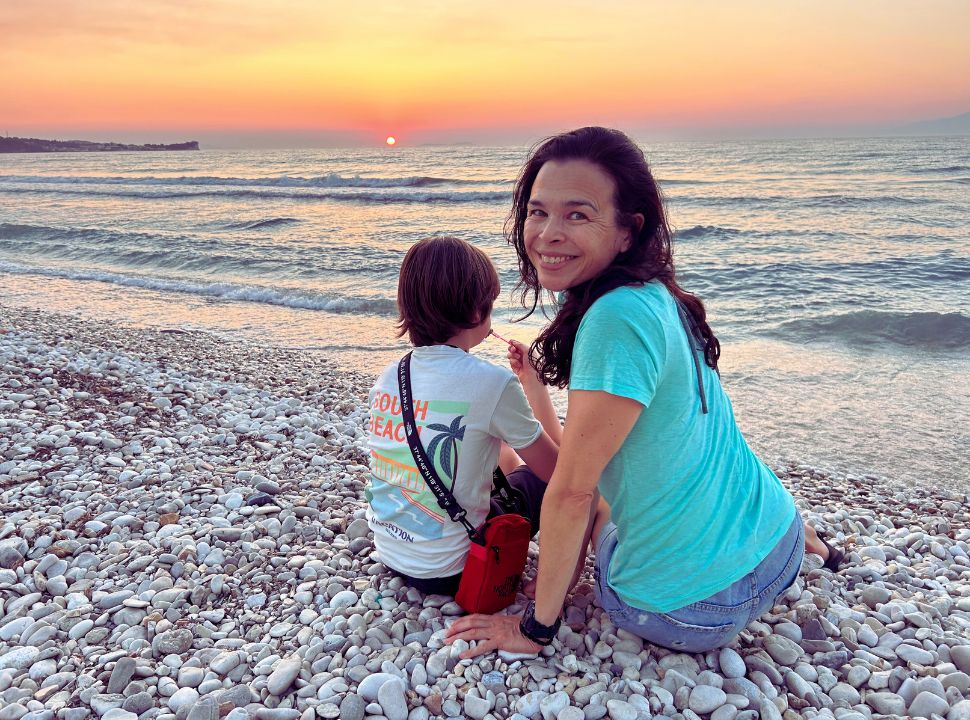
Monico was born in Kuwait and grew up in Indonesia, Malaysia, and Australia, which gave her a unique perspective on the world from a young age. Her first solo travel experience took her to Indonesia, where she volunteered at an orangutan rehabilitation center, and since then, she has focused her travels on environmental and conservation projects in places like Panama and Australia. Along with her love for wildlife, Monico enjoys exploring historic European cities, swimming in the sea, and tasting street food in Asia.